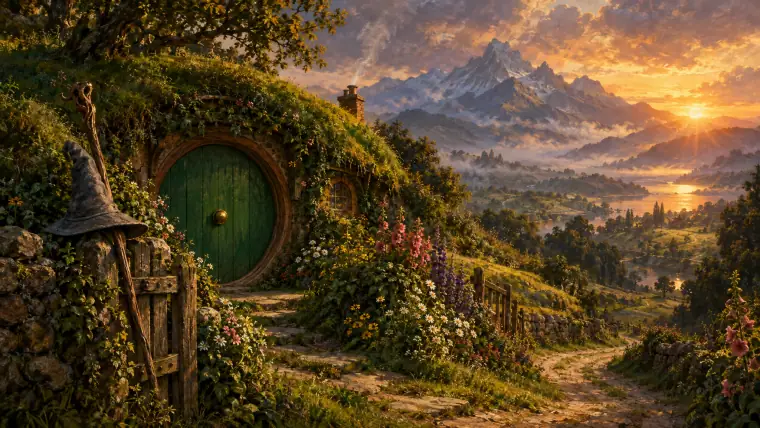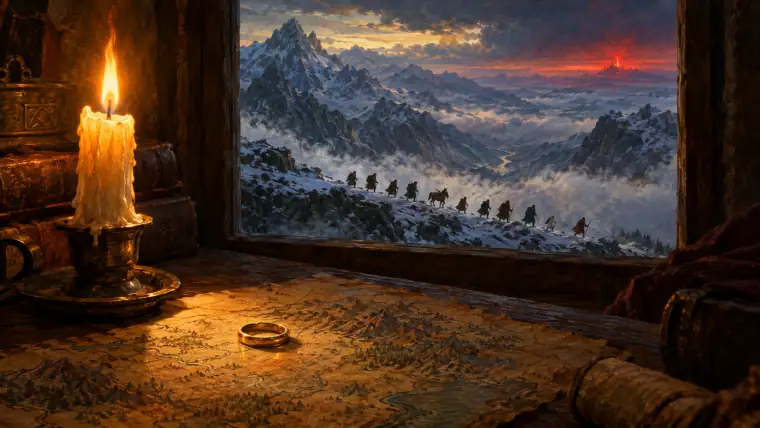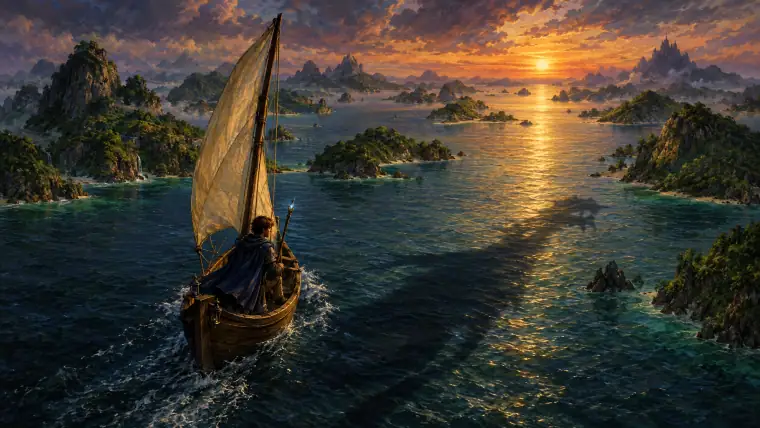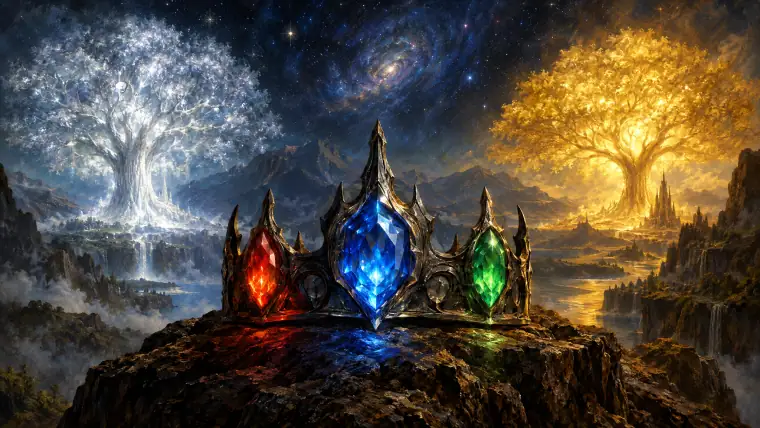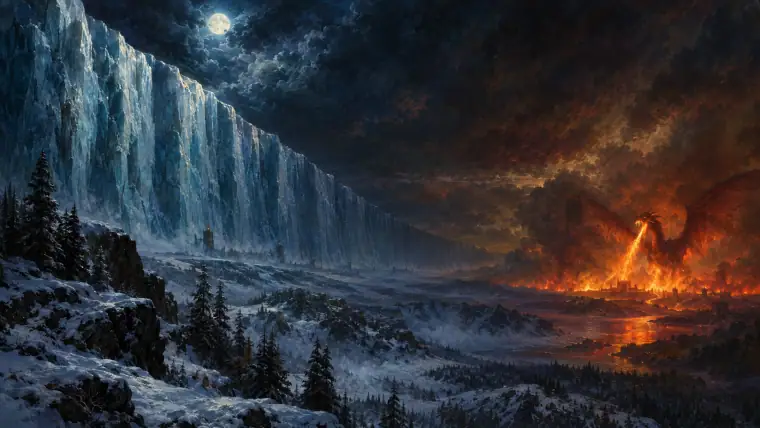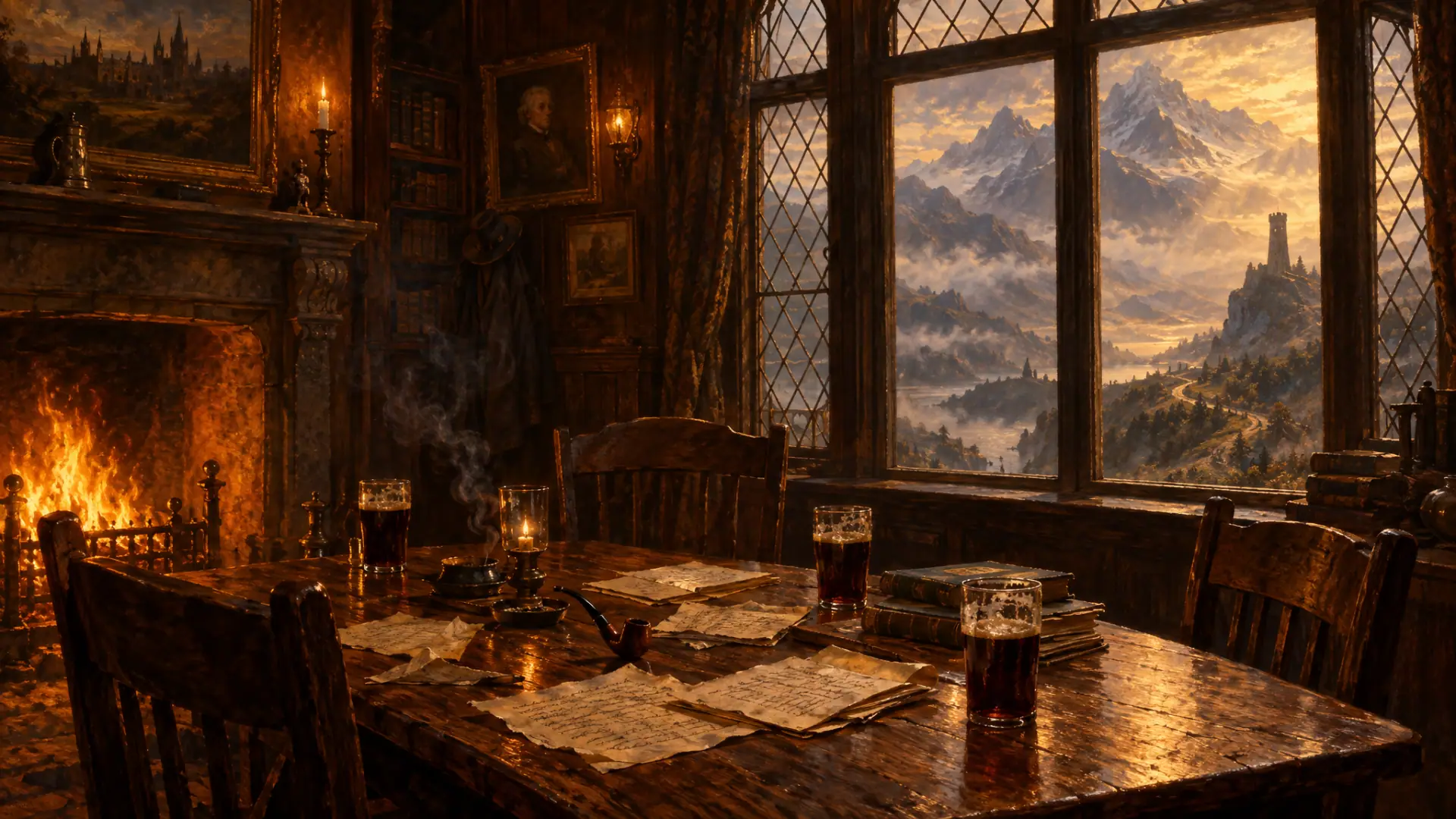
High fantasy is the commercial and imaginative center of the genre and the default setting of the roleplaying hobby. Its invented worlds became the template for D&D's campaign settings, the CRPG, and the MMORPG.
Hallmarks
- A fully invented secondary world with its own history, languages and maps
- World-scale stakes: a Dark Lord, a returning evil, the fate of kingdoms
- Clear moral struggle between good and evil, even when its heroes are flawed
- A quest or war told across many volumes and many viewpoints
- Heroes who grow from humble or hidden origins, often orphans or heirs
- Non-human peoples — elves, dwarves, dragons — with their own cultures
What it is
High fantasy — used here interchangeably with epic fantasy — is fantasy set wholly in an invented Secondary world, told at the largest scale the genre allows. Its stories concern the fate of nations or of the world itself: a The Dark Lord rising, an ancient evil stirring, a kingdom needing its lost heir. It is the genre of maps, appendices, invented languages and multi-volume series, and of heroes who grow from farm boys and orphans into kings and saviors (the trope the archive files as The Chosen One).
The "high" is a literary term, not a judgment of quality. When Lloyd Alexander coined it — in a talk to children's librarians in October 1969, published in 1971 as "High Fantasy and Heroic Romance" — he was borrowing from Northrop Frye's scheme of literary modes, in which "high" stories concern heroes superior to ordinary people. Its antonym is Low Fantasy: magic intruding on our familiar world.
Origins
The genre's ancestors are epic and romance (see Myth & Epic), but the modern form begins when writers stopped setting their marvels in a legendary version of our world and built a separate one. William Morris's prose romances, especially The Well at the World's End (1896), are often named as the first high fantasies. E. R. Eddison's The Worm Ouroboros (1922) staged a Jacobean-flavored war of heroes on a nominal Mercury, and Lord Dunsany invented whole pantheons.
J. R. R. Tolkien defined everything that followed. The Hobbit (1937) and above all The Lord of the Rings (1954–55) supplied a world with deep history, real languages, a Dark Lord and a fellowship of peoples, all underwritten by Tolkien's theory of sub-creation. When the unauthorized Ace Books paperback of 1965 and the authorized Ballantine Books edition put the book in American campus bookshops, demand for "more like Tolkien" created a market almost overnight.
Evolution
Publishers answered that demand. The Ballantine Adult Fantasy Series reprinted Morris, Eddison and Dunsany from 1969; Terry Brooks's The Sword of Shannara, an early flagship of the new Del Rey Books imprint in 1977, proved Tolkienian fantasy could be a bestseller in its own right. Stephen R. Donaldson's The Chronicles of Thomas Covenant (1977) gave it a leper antihero; David Eddings's The Belgariad (1982–84) made its farm-boy-to-destiny arc cozy and funny. Tad Williams's Memory, Sorrow, and Thorn (1988–93) deepened it, and Robert Jordan's The Wheel of Time (1990–2013) stretched it to fourteen volumes.
The 21st century brought "systems" fantasy. Brandon Sanderson's Mistborn and The Stormlight Archive foreground rule-bound magic systems, while Steven Erikson's Malazan Book of the Fallen and George R. R. Martin's A Song of Ice and Fire kept the epic scale but abandoned the clean moral lines (see Grimdark).
Games made high fantasy their home. D&D's elves, dwarves and halflings came from Tolkien; its campaign settings — World of Greyhawk, Forgotten Realms, Dragonlance — are secondary worlds in the high-fantasy mold. Baldur's Gate, Final Fantasy, The Elder Scrolls V: Skyrim and World of Warcraft all inherit the invented continent with an ancient evil waking beneath it.
Critics pushed the form to earn its grandeur. Ursula K. Le Guin's 1973 essay "From Elfland to Poughkeepsie" attacked imitators who wrote high fantasy in flat, modern prose, arguing that style is the substance of an invented world; her own Earthsea (from 1968) showed how much a short book could hold. The debate between Tolkien's heirs and his critics — about language, morality and scale — is still the argument that defines the genre.
How to tell it apart
- High vs. Sword & Sorcery: the cleanest test is stakes. High fantasy asks "will the world be saved?"; sword and sorcery asks "will this person survive and get paid?" High fantasy's heroes serve something larger than themselves; S&S protagonists serve themselves, and magic is usually the enemy's weapon.
- High vs. Grimdark: both can be epic in scale, but high fantasy believes in heroism and a meaningful victory of good. Grimdark keeps the war and the world map and removes the faith.
- High vs. Dark Fantasy: dark fantasy imports horror's dread; a high fantasy may have dark chapters, but its tone is ultimately heroic and often hopeful, ending in Eucatastrophe.
- High vs. Low Fantasy: high is a whole invented world; low is magic breaking into ours.
- High vs. Mythic Fantasy: high fantasy builds a new world and its own legends; mythic fantasy retells legends that already exist in ours.
Where to start
- The Lord of the Rings — the foundation; read The Hobbit first if you like a gentler door.
- Earthsea — Le Guin's compact, philosophical answer to Tolkien.
- The Belgariad — the classic farm-boy epic at its most readable.
- Memory, Sorrow, and Thorn — the bridge between Tolkien and modern epic.
- Mistborn — the modern "magic system" epic in a single first volume.
Marginalia
- Lloyd Alexander coined "high fantasy" in a talk to children's librarians in October 1969, published as an essay in 1971.
- In 1961 Michael Moorcock proposed "epic fantasy" as the name for Howard-style adventure; Fritz Leiber's "sword-and-sorcery" won instead, and "epic" drifted to Tolkien's side.
- William Morris's The Well at the World's End (1896), set in an invented medieval world, is often called the first high fantasy.
- The Lord of the Rings was split into three volumes in 1954–55 largely for reasons of postwar cost; Tolkien regarded it as a single novel.
- Robert Jordan died in 2007 with The Wheel of Time unfinished; Brandon Sanderson completed it in three volumes, the last in 2013.
- TSR's Dragonlance project (1984) married a D&D campaign to bestselling epic novels, a template for tie-in fantasy.
Quick answers
- What is High / Epic Fantasy?
- The genre of the map in the front of the book: invented worlds, world-ending threats and quests that span trilogies — Tolkien's legacy, from Morris and Eddison to Jordan and Sanderson.
- What are the hallmarks of High / Epic Fantasy?
- A fully invented secondary world with its own history, languages and maps; World-scale stakes: a Dark Lord, a returning evil, the fate of kingdoms; Clear moral struggle between good and evil, even when its heroes are flawed; A quest or war told across many volumes and many viewpoints; Heroes who grow from humble or hidden origins, often orphans or heirs; Non-human peoples — elves, dwarves, dragons — with their own cultures.
- When did High / Epic Fantasy emerge?
- 1890s (William Morris); defined by Tolkien, 1954–55.
- Where does the name “High / Epic Fantasy” come from?
- "High fantasy" coined by Lloyd Alexander in a 1969 talk published in 1971 as "High Fantasy and Heroic Romance"
- What are the key works of High / Epic Fantasy?
- The Lord of the Rings, The Well at the World's End, The Worm Ouroboros, Earthsea, The Sword of Shannara, The Belgariad, The Wheel of Time and Memory, Sorrow, and Thorn.