Urban fantasy is where fantasy met the present day and the crime novel. It became one of the bestselling fantasy categories of the 2000s and inspired two of the most influential RPG lines of the 1990s, Shadowrun and the World of Darkness.
Hallmarks
- Magic, monsters and folklore loose in a contemporary city
- A hidden supernatural society living alongside — or under — the mundane one
- Genre engines borrowed from crime: detectives, hunters, investigators, fixers
- Streetwise, often first-person narrators, frequently women
- The city itself as a character: its subways, bars, back alleys and history
- Crossovers with horror, noir and romance
What it is
Urban fantasy puts the supernatural in a contemporary city. Its fairies ride subways, its vampires hold property, its wizards advertise in the phone book. The setting does the work that a secondary world does in High / Epic Fantasy: the familiar backdrop of cars, phones, bars and police precincts makes the impossible feel close, and lets writers play with folklore without inventing an entire world. Most urban fantasy is a branch of Low Fantasy — magic intruding into our reality — though in many examples the magic has been there all along, hidden in plain sight.
Its signature engine comes from crime fiction. Protagonists are detectives, bounty hunters, reporters and hired guns; narration is often first-person, wisecracking and hard-boiled. Readers and publishers commonly separate it from paranormal romance, which uses similar vampires and werewolves but puts the love story first.
Origins
The supernatural in the modern world is an old theme — ghost stories, Gothic novels, Stephen King's small towns — but urban fantasy's specific ancestors appeared in John W. Campbell's magazine Unknown (1939–43), which set gnomes, werewolves and demons in the present with a science-fictional logic. Fritz Leiber's "Smoke Ghost" (1941) found a new kind of ghost made of city soot and industrial grime. Occult detectives such as Manly Wade Wellman's John Thunstone added the investigator.
The modern genre crystallized in the mid-1980s around editor Terri Windling, who published early novels by Charles de Lint (Moonheart, 1984) and Emma Bull at Ace Books. Her shared-world anthology Borderland (1986) imagined a decaying city on the border with Faerie, full of runaway teenagers, elves and rock music; Neil Gaiman later called it "one of the most important places where Urban Fantasy began." Emma Bull's War for the Oaks (1987) staged a war between the Seelie and Unseelie courts in present-day Minneapolis.
Evolution
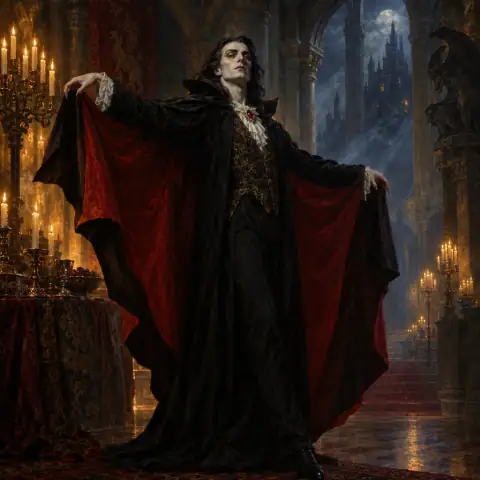
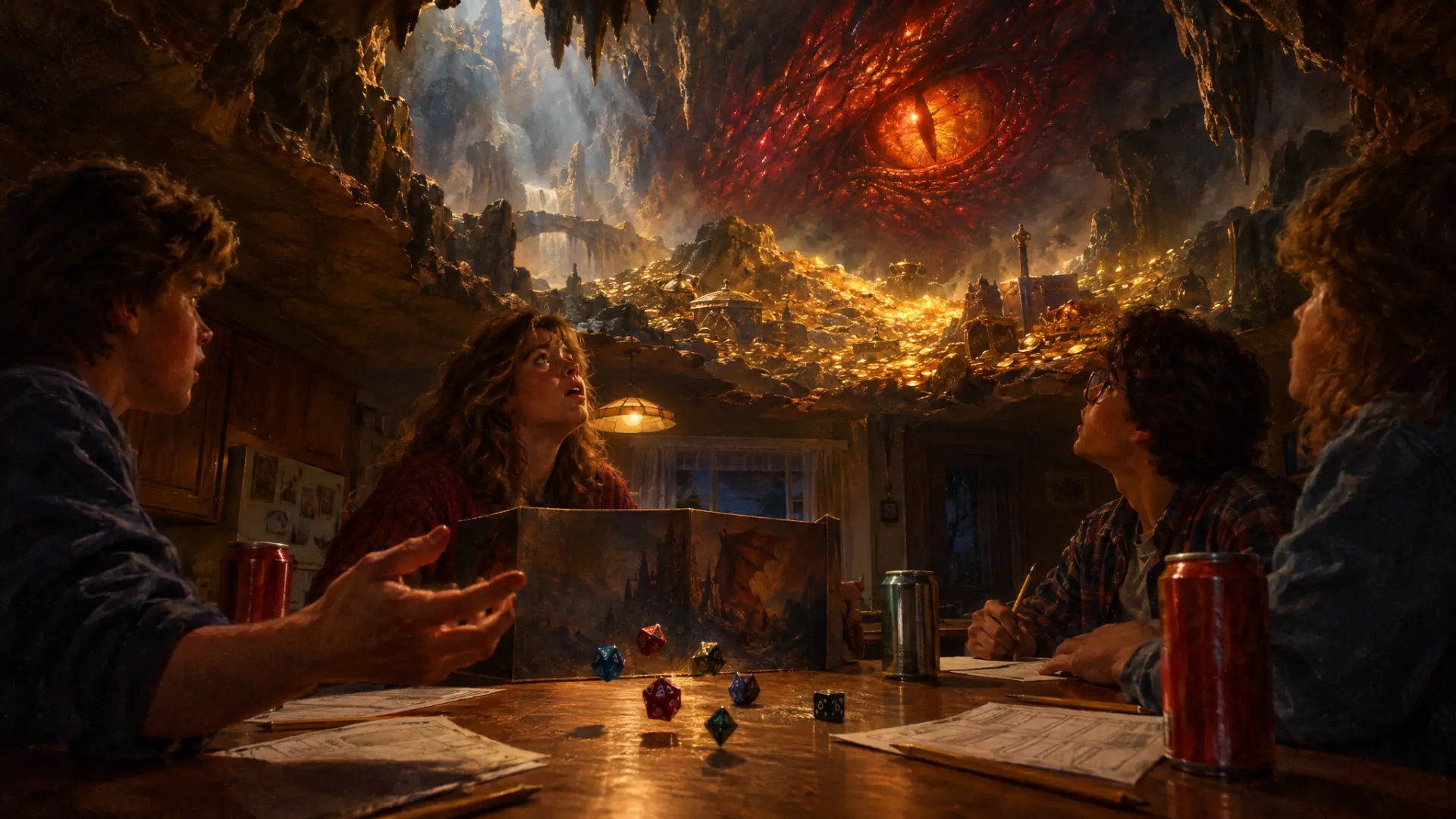
Tabletop games seized the idea almost at once. FASA's Shadowrun (1989) fused cyberpunk and fantasy: magic returns to the world, and elves, dwarves, orcs and dragons navigate a corporate dystopia of the 2050s. White Wolf's Vampire: The Masquerade (1991), created by Mark Rein·Hagen, invented a secret society of vampire clans behind the "Masquerade" that hides them from humanity; its World of Darkness expanded to werewolves, mages and more, and its brooding "gothic-punk" cities shaped a generation of fiction and LARP.
In the 1990s and 2000s urban fantasy became a bestselling category. Laurell K. Hamilton's Anita Blake novels (from 1993) and Kim Harrison's Hollows books built the female-narrated supernatural thriller; Jim Butcher's Dresden Files (from 2000) gave Chicago a wizard for hire; Neil Gaiman's Neverwhere (1996) and Ben Aaronovitch's Rivers of London (2011) found magic beneath London. J. K. Rowling's Harry Potter used a hidden wizarding Britain for a younger audience. N. K. Jemisin's The City We Became (2020), in which New York's boroughs acquire human avatars, won the BSFA Award. On television, Buffy the Vampire Slayer (1997–2003) and later Stranger Things carried the mode to mass audiences.
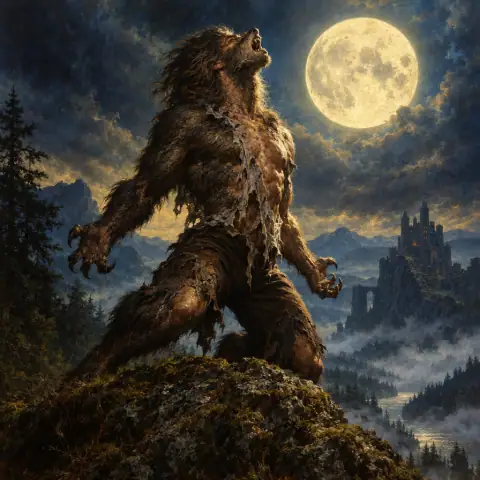
White Wolf's line showed how far the idea could stretch: Werewolf: The Apocalypse (1992) and Mage: The Ascension (1993) extended the hidden World of Darkness to shapeshifting eco-warriors and reality-bending magicians, and the setting was adapted into live-action play and a short-lived television series, Kindred: The Embraced (1996).
How to tell it apart
- Urban vs. Low Fantasy: urban fantasy is low fantasy's modern-city branch. A fairy in a Victorian nursery is low fantasy; a fairy in a nightclub is urban fantasy.
- vs. Dark Fantasy: urban fantasy often features vampires and demons, but it is usually action-driven and heroic; dark fantasy aims for dread.
- vs. Romantasy: paranormal romance and romantasy make the relationship the plot; urban fantasy makes the case, hunt or war the plot.
- vs. Historical Fantasy: both love secret histories; urban fantasy's is set now.
- vs. Science Fantasy: Shadowrun sits on the line — a near-future cyberpunk setting with magic. Urban fantasy proper stays in a recognizable present.
Where to start
- War for the Oaks (Emma Bull, 1987) — the founding novel.
- Borderland (ed. Terri Windling, 1986) — the shared world that gave the genre its streets.
- Vampire: The Masquerade — the RPG that made the hidden city a campaign.
- Shadowrun — elves with cyberdecks.
- Storm Front (Jim Butcher, 2000) — first of the Dresden Files, the modern template.
Marginalia
- Fritz Leiber's "Smoke Ghost" (Unknown, 1941) found a modern ghost made of soot and city grime — an early urban haunting.
- Terri Windling's shared-world anthology Borderland (1986) was later called by Neil Gaiman "one of the most important places where Urban Fantasy began."
- Emma Bull's War for the Oaks (1987) sets a war between fairy courts in contemporary Minneapolis, with a rock guitarist caught in the middle.
- FASA's Shadowrun (1989) crossed cyberpunk with returning magic: elves, orcs and dragons in a 2050s corporate dystopia.
- White Wolf's Vampire: The Masquerade (1991) imagined vampire clans secretly ruling modern cities and launched the World of Darkness.
- Jim Butcher's Dresden Files, which began with Storm Front in 2000, follows a professional wizard-detective in Chicago.
Quick answers
- What is Urban Fantasy?
- Fairies in Minneapolis, wizards in Chicago, vampires ruling the night in every city on Earth: fantasy moved to the modern street, from Borderland and War for the Oaks to Shadowrun and the World of Darkness.
- What are the hallmarks of Urban Fantasy?
- Magic, monsters and folklore loose in a contemporary city; A hidden supernatural society living alongside — or under — the mundane one; Genre engines borrowed from crime: detectives, hunters, investigators, fixers; Streetwise, often first-person narrators, frequently women; The city itself as a character: its subways, bars, back alleys and history; Crossovers with horror, noir and romance.
- When did Urban Fantasy emerge?
- Pulp precursors 1939–43; modern form 1984–87 (Moonheart, Borderland, War for the Oaks).
- What are the key works of Urban Fantasy?
- Shadowrun, Vampire: The Masquerade, Harry Potter and Stranger Things.