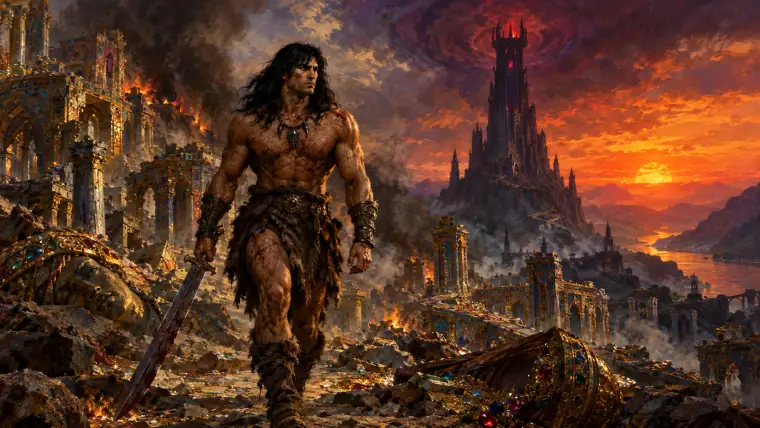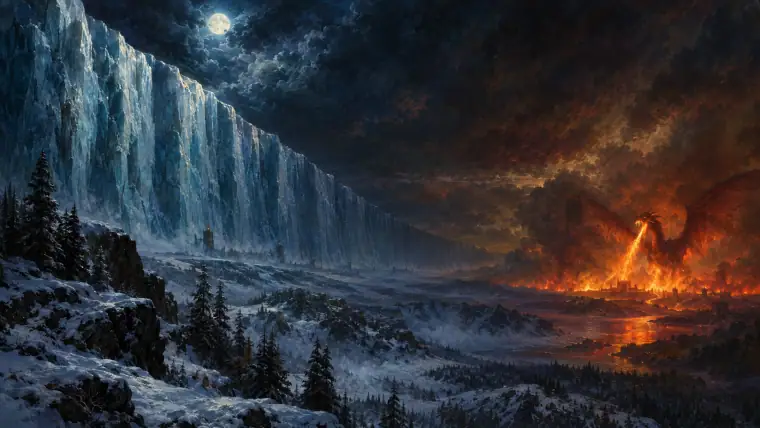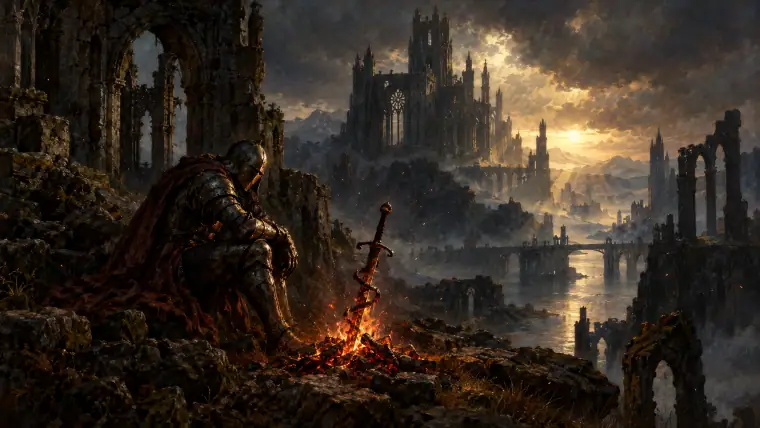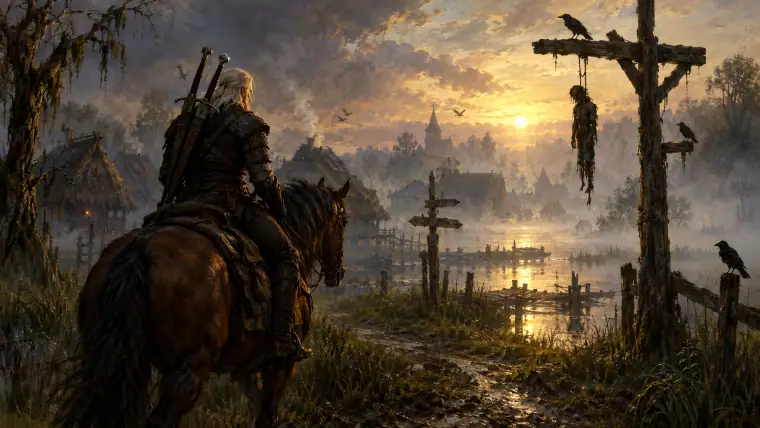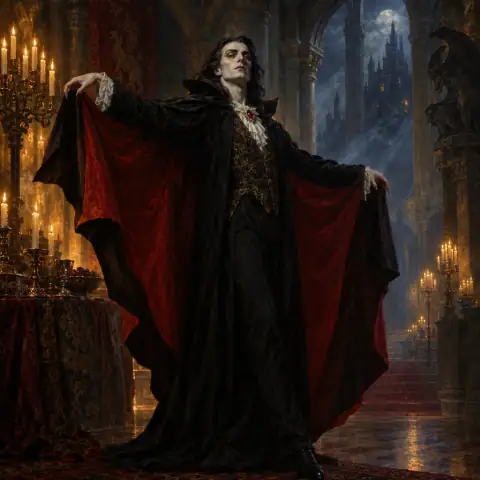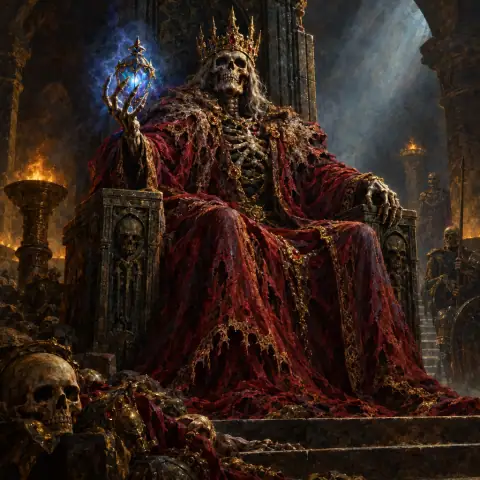
Dark fantasy is where fantasy borrows horror's tools. It explains a long line of antiheroes and Gothic settings in fiction, and in games it produced some of the most influential worlds of the last forty years, from Ravenloft to FromSoftware's Souls series.
Hallmarks
- Horror's dread, grotesquerie and sense of menace inside a fantasy frame
- Magic and the supernatural as corrupting, predatory or incomprehensible
- Antiheroes, monsters with points of view, and heroes who pay terrible prices
- Gothic settings: ruined castles, cursed lands, plague towns, fallen kingdoms
- Victory, when it comes, is partial and stained
What it is
Dark fantasy is fantasy that has let horror in. It keeps the magic, monsters and invented or enchanted settings of fantasy, but uses them to produce dread rather than wonder: magic corrupts, the supernatural preys, and the world itself is sick. Its heroes are often antiheroes, its monsters sometimes narrators, and its victories cost more than they win.
The term is famously loose. The critic Brian Stableford defined it as fantasy that incorporates elements of horror fiction into the standard fantasy formulas, and proposed a useful division: supernatural horror set in our world is "contemporary fantasy," while horror set partly or wholly in secondary worlds is "dark fantasy." In practice the label covers both a horror-first tradition and a sword-and-sorcery-first one, which is why two different writers are credited with inventing it.
Origins
The mood is old: Gothic novels, Edgar Allan Poe, and the decadent fantasies of the late 19th century all mix beauty with terror. The pulp era fused the two decisively. In Weird Tales, H. P. Lovecraft's Dreamlands stories and Clark Ashton Smith's tales of Zothique and Hyperborea placed necromancers, ghouls and cosmic horrors in fantasy settings, and much early Sword & Sorcery pitted its heroes against eldritch sorcerers.
The name arrived in two places. Charles L. Grant (1942–2006), a leading writer of subtle "quiet horror," used "dark fantasy" for stories in which humanity is threatened by forces beyond its understanding — a way to distance his work from gory horror. Karl Edward Wagner applied the term, in a fantasy sense, to his stories of Kane, an immortal, murderous genius who walks through a sword-and-sorcery world like a Gothic villain. The first Kane novel, Darkness Weaves, appeared in a mangled edition in 1970; the next Kane novel, Bloodstone (1975), arrived from Warner Books under a Frank Frazetta cover.
Evolution
Michael Moorcock's The Elric Saga became the archetype of the fantasy branch: a doomed albino emperor bound to a soul-eating sword, destroying what he loves. From there the genre grew in both directions. Horror writers such as Stephen King (The Dark Tower, from 1982) and Clive Barker (Weaveworld, 1987) wrote fantasy with a horror writer's instincts; Anne Rice's vampires showed monsters from the inside.
Games embraced it early. Tracy and Laura Hickman's module Ravenloft (1983) sent D&D parties into a Gothic domain ruled by the Vampire Strahd, and the Ravenloft setting (1990) built a whole cosmology of cursed domains within the mist-bound Demiplane of Dread. Vampire: The Masquerade (1991) sold itself as a game of personal horror. Blizzard North's Diablo (1996) turned a descent through a cathedral into Hell into an action RPG template, and in Japan Kentaro Miura's Berserk (1989– ) set a visual standard for armored despair. Andrzej Sapkowski's Witcher stories, and the games that followed, made the monster-hunter a dark-fantasy hero.
The 21st century's defining dark fantasies may be games: FromSoftware's Demon's Souls (2009), Dark Souls (2011) and Elden Ring (2022), directed by Hidetaka Miyazaki, whose ruined kingdoms and fading gods spawned the Soulslikes genre. Darkest Dungeon (2016) put its adventurers' sanity on the line alongside their Hit points.
How to tell it apart
- Dark fantasy vs. Grimdark: the most confused pair in the atlas. Dark fantasy is defined by horror — the supernatural as source of dread. Grimdark is defined by moral bleakness — human cruelty, cynicism and war — and can have very little magic at all. A haunted, cursed land is dark fantasy; a realistic war of mutual atrocity is grimdark. Grimdark is best seen as a branch of this family (see its own exhibit).
- vs. High / Epic Fantasy: high fantasy may confront a Dark Lord, but it expects light to win. Dark fantasy doubts that, or makes the cost unbearable.
- vs. Sword & Sorcery: S&S uses horror as an obstacle to cut through; dark fantasy lets it seep into the hero.
- vs. Weird Fiction: weird fiction's horror is cosmic and indifferent; dark fantasy's is often moral, personal and Gothic.
Where to start
- The Elric Saga — the doomed antihero in his purest form.
- Karl Edward Wagner, Bloodstone (1975) — Kane at full menace.
- Ravenloft — the adventure that brought the Gothic to D&D.
- The Witcher Saga — The Last Wish collection first.
- Dark Souls — the genre's great modern text, told through ruins and item descriptions.
Marginalia
- Karl Edward Wagner's first Kane novel, Darkness Weaves (1970), was cut and altered by its publisher; his preferred text appeared in 1978.
- Charles L. Grant (1942–2006) used "dark fantasy" for subtle, atmospheric horror in which ordinary people face forces beyond understanding.
- Critic Brian Stableford suggested calling supernatural horror set in secondary worlds "dark fantasy" and horror set in our world "contemporary fantasy."
- Tracy and Laura Hickman's D&D module I6 Ravenloft (1983) gave the game its most famous Gothic villain, the vampire Strahd von Zarovich.
- Michael Moorcock's Elric, first published in 1961, carries Stormbringer, a sword that drinks souls, including those of people he loves.
- Kentaro Miura's manga Berserk, begun in 1989, is a touchstone of the genre in Japan and beyond.
Quick answers
- What is Dark Fantasy?
- Fantasy that has crossed into horror: cursed swords, vampire lords, plague-ridden kingdoms and gods that should not be woken — from Elric and Ravenloft to Diablo and Dark Souls.
- What are the hallmarks of Dark Fantasy?
- Horror's dread, grotesquerie and sense of menace inside a fantasy frame; Magic and the supernatural as corrupting, predatory or incomprehensible; Antiheroes, monsters with points of view, and heroes who pay terrible prices; Gothic settings: ruined castles, cursed lands, plague towns, fallen kingdoms; Victory, when it comes, is partial and stained.
- When did Dark Fantasy emerge?
- Gothic and weird roots; named in the 1970s–80s.
- Where does the name “Dark Fantasy” come from?
- Both Karl Edward Wagner (for his Kane stories) and Charles L. Grant (for 'quiet horror') are credited with coining the term, in different senses.
- What are the key works of Dark Fantasy?
- The Elric Saga, Ravenloft, Vampire: The Masquerade, The Witcher Saga, Diablo, Demon's Souls, Dark Souls and Darkest Dungeon.