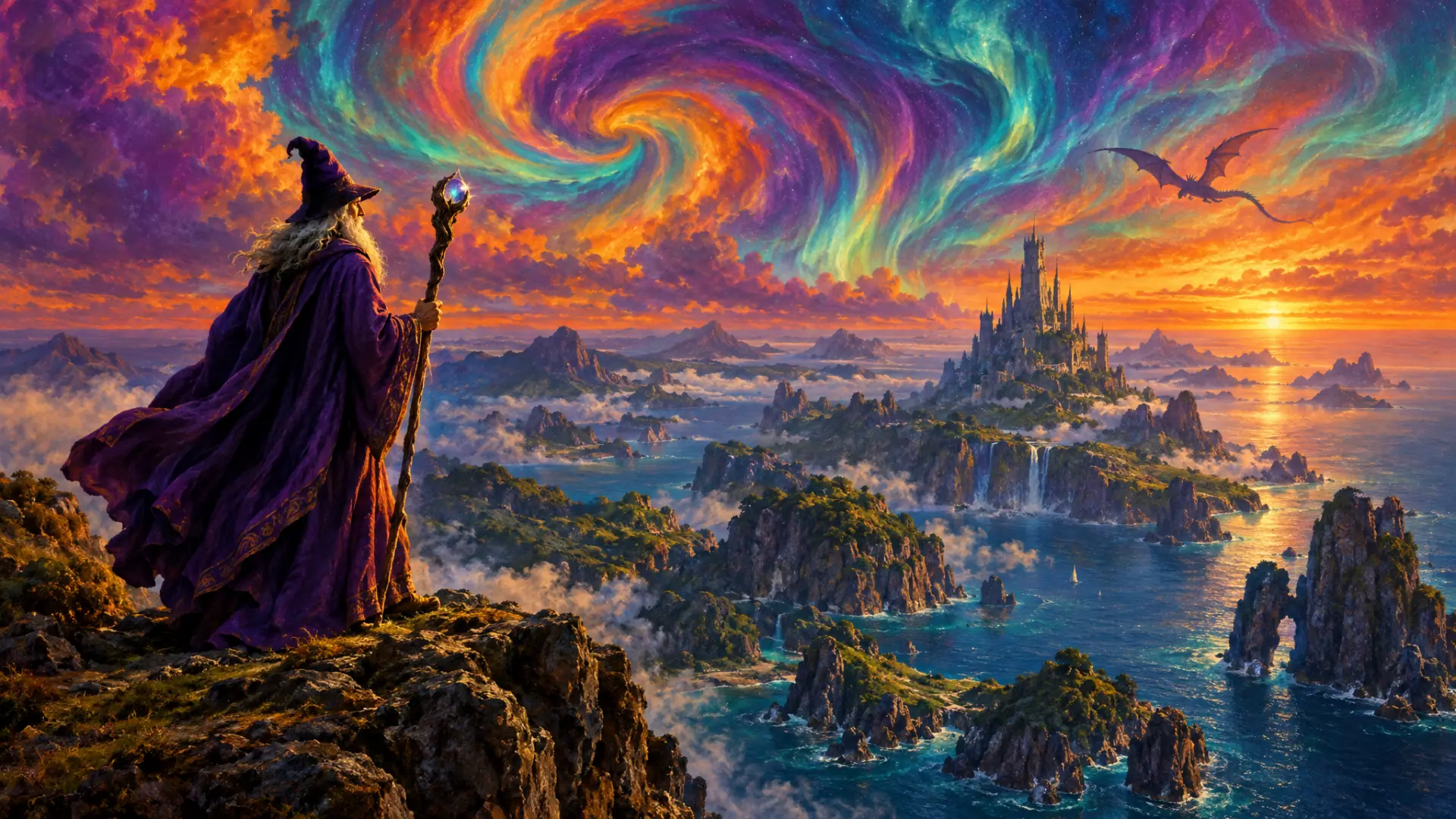
Historical fantasy brings the research and period texture of the historical novel into fantasy, and it gave tabletop gaming some of its most distinctive settings, from Pendragon's Britain to Ars Magica's Mythic Europe.
Hallmarks
- A real historical period reproduced with care — dates, politics, texture
- Magic as a "secret history" running beneath or beside the recorded past
- Or a thinly veiled secondary world mirroring a specific place and era
- Period voice and research as pleasures in themselves
- Real historical figures meeting the fantastic
- Explanations of why the magic faded, so that history can become ours
What it is
Historical fantasy sets fantastic events in a real historical period, rendered with the care of a historical novel. The past is recognizably the past — the Napoleonic Wars, Viking England, Renaissance Venice, Tang China — except that magic is real. The critic Brian Stableford's definition is precise: fiction in which the actual history of our world is "conscientiously reproduced, save for limited infusions of working magic" located within a secret history.
It works in three common ways. Magic may coexist invisibly with ordinary history, known only to initiates. The story may be an alternate history, in which magic changed events we know. Or the book may take place in a secondary world that closely and deliberately mirrors one specific time and place, as in Guy Gavriel Kay's novels. Many such books also explain why the magic faded, so that the timeline can arrive at the ordinary present.
Origins
The historical novel, invented in its modern form by Walter Scott, rarely allowed real magic; Scott mostly explained his marvels away. Earlier "Arabian" fantasies inspired by One Thousand and One Nights, such as William Beckford's Vathek (1786), set sorcery in an exoticized historical East. The modern form took shape in the 20th century. Lord Dunsany's The Charwoman's Shadow (1926), set in Golden Age Spain, closes with its magician withdrawing all the creatures of romance from the world. Poul Anderson's The Broken Sword (1954) played out a war between elves and trolls against the backdrop of Viking-age England.
Arthurian novels formed a major early branch. T. H. White's The Once and Future King and later Mary Stewart's Merlin books placed legend in a researched Britain, and Celtic fantasy — Evangeline Walton, Katharine Kerr's Deverry — blended history and myth.
Evolution
The 1980s made historical fantasy a recognized category. Tim Powers's The Anubis Gates (1983) threw a time traveler into a Regency London of Egyptian sorcerers and body-swapping werewolves. Ellen Kushner's Swordspoint (1987) helped define "fantasy of manners," social comedy with duels. Guy Gavriel Kay built novels such as The Lions of Al-Rassan (1995), a mirror of medieval Spain, and The Sarantine Mosaic, a mirror of Justinian's Byzantium. Susanna Clarke's Jonathan Strange & Mr Norrell (2004), a Regency novel of rival magicians complete with footnotes, won the Hugo Award, and Naomi Novik's Temeraire series (from 2006) put dragons in the Napoleonic Wars. Subgenres multiplied: gaslamp fantasy (Victorian magic), gunpowder or "flintlock" fantasy, and prehistoric fantasy.
Tabletop designers found it irresistible. Greg Stafford's King Arthur Pendragon (1985) runs knights through a researched, anachronistic Arthurian Britain. Ars Magica (1987), designed by Jonathan Tweet and Mark Rein·Hagen, sets its covenants of wizards in "Mythic Europe," a version of Europe around AD 1200 where medieval belief is literally true — the Church's miracles, faerie, demons and Hermetic magic all work. Mythic's Dark Age of Camelot (2001) built an MMORPG on Arthurian, Norse and Irish legend.
Arthurian and Celtic material remained a rich vein. Marion Zimmer Bradley's The Mists of Avalon (1983) retold the fall of Camelot as a struggle between Christianity and the old religion of Avalon, and Evangeline Walton's Mabinogion novels found new readers after 1970. At the Victorian end of the timeline, gaslamp fantasy and fantasy steampunk — Philip Pullman's Northern Lights has been placed in the latter — mix magic with brass, steam and empire.
How to tell it apart
- Historical vs. High / Epic Fantasy: high fantasy mixes and matches history freely in an invented world; historical fantasy commits to a particular time and place. Kay's mirror-worlds sit on the border, but their fidelity to one real era puts them here.
- vs. Arthurian Fantasy: Arthurian fantasy is defined by its legend; it becomes historical fantasy when it is anchored in a researched 5th- or 6th-century Britain.
- vs. Urban Fantasy: both use secret histories. Urban fantasy is set in the present; historical fantasy in the past.
- vs. Mythic Fantasy: mythic fantasy is driven by the myth; historical fantasy by the period. A Viking novel about Odin's schemes is mythic; one about a real raid touched by magic is historical.
Where to start
- Jonathan Strange & Mr Norrell — the modern masterpiece of the form.
- The Broken Sword — Viking-age tragedy with elves.
- The Anubis Gates (Tim Powers, 1983) — a clockwork puzzle-box of 1810s London.
- The Lions of Al-Rassan (Guy Gavriel Kay, 1995) — medieval Iberia in a mirror.
- Ars Magica — the best argument for historical fantasy at the gaming table.
Marginalia
- Brian Stableford defined historical fantasy as fiction in which real history is "conscientiously reproduced, save for limited infusions of working magic" hidden in a secret history.
- Susanna Clarke's Jonathan Strange & Mr Norrell (2004) revives English magic during the Napoleonic Wars and won the 2005 Hugo Award.
- Ars Magica (1987) sets its wizard covenants in "Mythic Europe," a medieval Europe where medieval beliefs about magic and faith are literally true.
- Tim Powers's The Anubis Gates (1983), with time-travel, Egyptian sorcery and Regency London, won the 1984 Philip K. Dick Award.
- Naomi Novik's Temeraire series (from 2006) fights the Napoleonic Wars with an aerial corps of dragons.
- Lord Dunsany's The Charwoman's Shadow (1926) ends with its magician removing the creatures of romance from Spain, explaining why history lost its magic.
Quick answers
- What is Historical Fantasy?
- The past with magic in it: Napoleonic wizards, dragons in the Royal Navy, sorcery in Moorish Spain and Mythic Europe — history reproduced faithfully, save for one impossible thread.
- What are the hallmarks of Historical Fantasy?
- A real historical period reproduced with care — dates, politics, texture; Magic as a "secret history" running beneath or beside the recorded past; Or a thinly veiled secondary world mirroring a specific place and era; Period voice and research as pleasures in themselves; Real historical figures meeting the fantastic; Explanations of why the magic faded, so that history can become ours.
- When did Historical Fantasy emerge?
- Early 20th century (Dunsany, Anderson); a major category from the 1980s.
- What are the key works of Historical Fantasy?
- Jonathan Strange & Mr Norrell, The Broken Sword, Ars Magica, King Arthur Pendragon, The Once and Future King and Dark Age of Camelot.