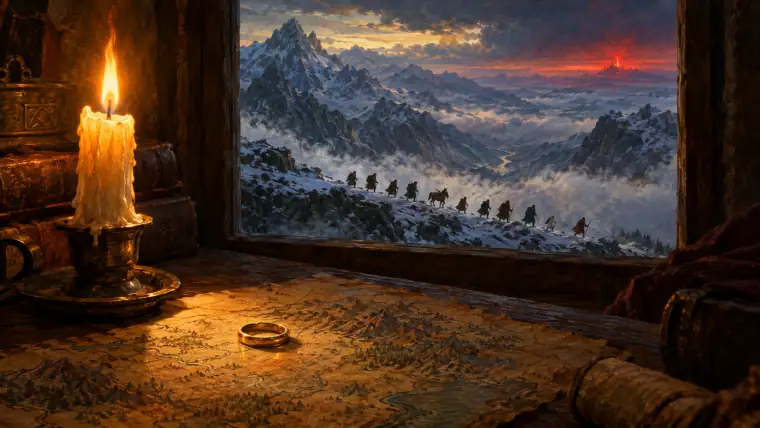
Clarke showed that fantasy could be written in the voice of Austen and Dickens and treated as literary fiction, and her alternate England of fairy roads and scholarly magicians became a touchstone of modern historical fantasy.
Life
Susanna Mary Clarke was born in Nottingham on November 1, 1959, the eldest daughter of a Methodist minister whose postings moved the family through towns across northern England and Scotland. She grew up reading Arthur Conan Doyle, Dickens and Jane Austen, and studied philosophy, politics and economics at St Hilda's College, Oxford, graduating in 1981. She spent eight years in nonfiction publishing, then taught English as a foreign language in Turin and Bilbao.
In 1993 she took a job editing cookbooks for Simon & Schuster in Cambridge, which she kept for a decade while writing in the early mornings. She shares her life with the science fiction novelist and critic Colin Greenland, whom she met at a writing workshop, and later moved to Derbyshire. From the mid-2000s she has lived with chronic fatigue syndrome, which made the planned sequel to her first novel too complex to pursue and steered her toward a smaller, stranger book.
Work
The seed of her first novel came in Bilbao as a "waking dream" of a man in eighteenth-century clothes, somewhere like Venice, whose magic had gone badly wrong. A reread of The Lord of the Rings pushed her to try "writing a novel of magic and fantasy." At a 1993 workshop taught by Colin Greenland and Geoff Ryman she extracted a story from her bundles of material, "The Ladies of Grace Adieu"; Greenland passed it to Neil Gaiman, who passed it to editor Patrick Nielsen Hayden, and it appeared in Starlight 1 (1996). Gaiman later likened reading it to watching someone sit down at a piano for the first time and play a sonata.
The novel took ten years, written in fragments and stitched together. Bloomsbury bought it unfinished in 2003, after two other publishers had passed, and backed it with an enormous simultaneous print run. Jonathan Strange & Mr Norrell appeared in September 2004. It imagines an England in which magic was once real and ruled from the North by the Raven King, then faded into mere theory, until two practical magicians appear during the Napoleonic Wars: the fussy, book-hoarding Gilbert Norrell and his brilliant, impetuous pupil Jonathan Strange. Written in pastiche of Austen, Dickens and George Meredith, with 185 footnotes citing an invented literature of magic, it is at once a comedy of manners, a Gothic tale and a serious meditation on Englishness, reason and madness, with the sinister fairy "gentleman with the thistle-down hair" at its dark center. It reached number three on the New York Times bestseller list and won the Hugo Award.
The Ladies of Grace Adieu and Other Stories (2006) gathered eight tales from the same world, many centered on women's quiet mastery of magic. Piranesi (2020), set in an endless house of statues and tides and narrated by a gentle man who believes it is the whole world, won the 2021 Women's Prize for Fiction. She has since published the short book The Wood at Midwinter and in January 2024 said she was working on a novel set in Bradford.
Legacy
Clarke gave Historical Fantasy a new literary prestige. Her magic is scholarly, political and costly, closer to the antiquarian folklore of Fairy-Tale Fantasy than to the codified spells of game rulebooks, and its Faerie is menacing rather than whimsical. The novel's footnoted apparatus of invented sources became a much-admired model of Worldbuilding through implied history.
On screen, the BBC's seven-part Jonathan Strange & Mr Norrell, adapted by Peter Harness and directed by Toby Haynes, with Bertie Carvel as Strange and Eddie Marsan as Norrell, began on BBC One on May 17, 2015, and brought her alternate England to Fantasy Television & Animation a decade after the book. Her approach, magic as a discipline with a history, rivalries and a price, echoes through fantasy that treats the rules of sorcery as a subject in itself, and her refusal to hurry has made her one of the genre's most admired and least prolific masters.
Marginalia
- The idea came to her in Bilbao as a "waking dream" of a man in 18th-century clothes, in a place like Venice, whose dabbling in magic had gone wrong.
- Colin Greenland sent her first story to Neil Gaiman without her knowledge; it appeared in Patrick Nielsen Hayden's anthology Starlight 1 (1996).
- Bloomsbury bought the unfinished novel in 2003 and printed 250,000 hardcovers simultaneously in the US, Britain and Germany.
- Jonathan Strange & Mr Norrell carries 185 footnotes documenting an invented corpus of magical scholarship.
- The BBC's seven-part adaptation, written by Peter Harness and directed by Toby Haynes, began on BBC One on May 17, 2015.
- Piranesi (2020), written while she lived with chronic fatigue syndrome, won the 2021 Women's Prize for Fiction.
Quick answers
- Who is Susanna Clarke?
- The cookbook editor who spent ten years of early mornings writing Jonathan Strange & Mr Norrell, a footnoted Regency epic of English magic that won the Hugo, and later Piranesi, a haunting novel of an infinite house.
- When was Susanna Clarke born?
- Susanna Clarke was born in 1959 in Nottingham, England.
- What is Susanna Clarke known for?
- Susanna Clarke is best known for Jonathan Strange & Mr Norrell.
- Why does Susanna Clarke matter to fantasy and games?
- Clarke showed that fantasy could be written in the voice of Austen and Dickens and treated as literary fiction, and her alternate England of fairy roads and scholarly magicians became a touchstone of modern historical fantasy.