The Chronicle
The whole history, told in fourteen chapters and about 33,000 words. Read it straight through, or open any chapter; each one links out to every work, maker and event it mentions.
- Chapter I · c. 2100 BCE – 1500 CE
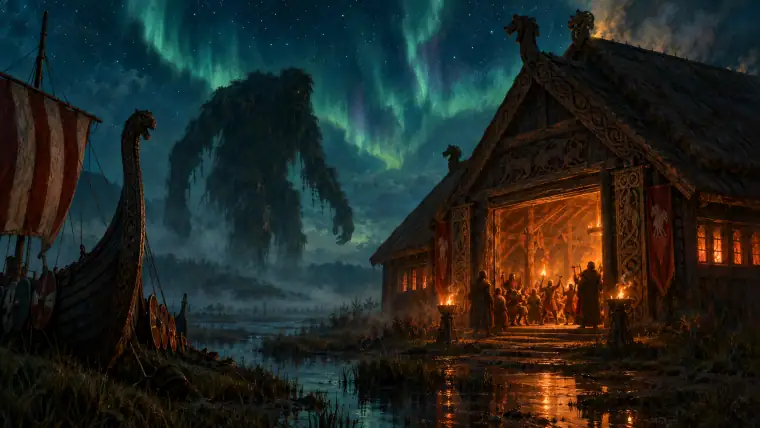
Myth, Epic & Saga
The oldest stories, and the monsters that never left
From clay tablets in Uruk to a Welsh manuscript and Caxton's press, the epics and sagas that gave fantasy its heroes, dragons, dwarves and descents into the dark.
Epic of Gilgamesh, The Odyssey, Beowulf, The Eddas, The Mabinogion, One Thousand and One Nights
- Chapter II · 1500 – 1850
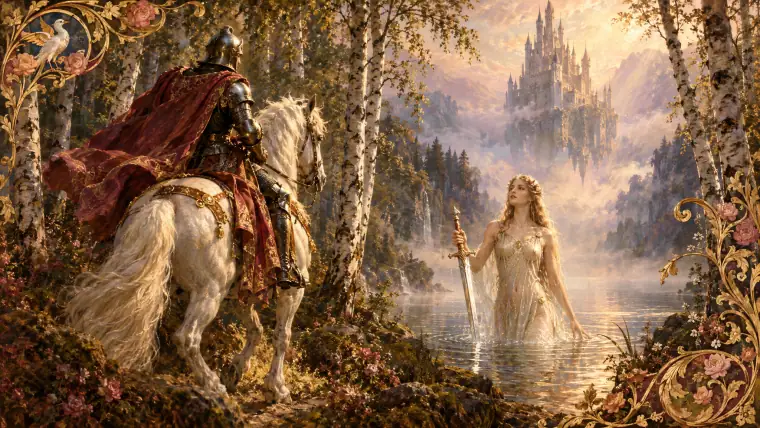
Romance, Fairy Tale & the Gothic
Paladins, fairy queens and the collectors of shadows
Hippogriffs over Ferrara, a fairy queen for Elizabeth, Mother Goose in Paris, haunted castles and the Brothers Grimm: three centuries in which Europe reinvented the marvelous.
Orlando Furioso, The Faerie Queene, Grimms' Fairy Tales, One Thousand and One Nights, The Mabinogion, Beowulf
- Chapter III · 1850 – 1920
The Invention of Modern Fantasy
Rabbit holes, goblin mines and the Well at the World's End
A Scottish minister's dream-romance, an Oxford don's rabbit hole and William Morris's invented kingdoms: how the Victorians and Edwardians created the fantasy novel.
Phantastes, Alice's Adventures in Wonderland, The Well at the World's End, Little Wars, The Worm Ouroboros, The King of Elfland's Daughter
- Chapter IV · 1920 – 1960
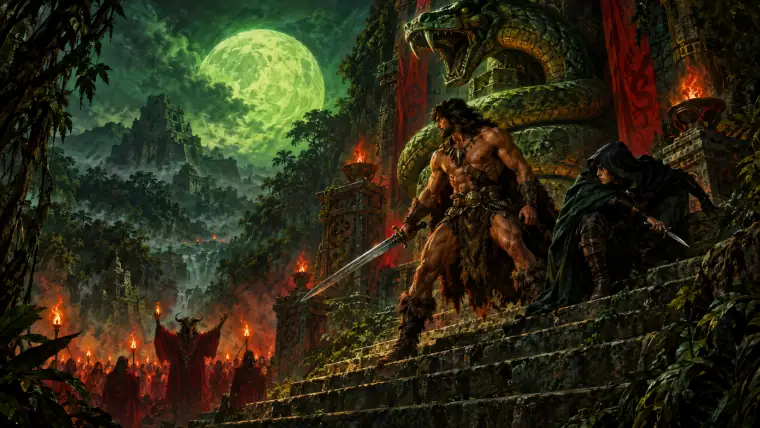
Pulps, Weird Tales & Sword-and-Sorcery
Barbarians, elder gods and the cheapest paper in America
On rough wood-pulp paper, Lovecraft summoned Cthulhu, Howard unleashed Conan, and Leiber, Moore, Smith and Vance built the dark, thrilling fantasy that D&D would play.
Conan the Cimmerian, Fafhrd and the Gray Mouser, The Dying Earth, Three Hearts and Three Lions, The Broken Sword, Call of Cthulhu
- Chapter V · 1930 – 1960
Tolkien, Lewis & the Inklings
Oxford dons build other worlds
In Oxford college rooms and a pub called the Bird and Baby, Tolkien and Lewis read aloud the books that would define fantasy: The Hobbit, The Lord of the Rings and Narnia.
The Hobbit, The Lord of the Rings, The Chronicles of Narnia, The Once and Future King, Gormenghast, The Broken Sword
- Chapter VI · 1965 – 1980
The Paperback Boom & the Counterculture
Frodo lives, and fantasy becomes a genre
A pirated Tolkien paperback, a campus craze and a shelf of unicorn-stamped reprints turned fantasy into a mass-market genre, and gave a generation of gamers its reading list.
The Lord of the Rings, The Elric Saga, Earthsea, The Last Unicorn, The Chronicles of Prydain, Dragonriders of Pern
- Chapter VII · 1812 – 1977
From Kriegsspiel to Dungeons & Dragons
How the war table learned to tell stories
A Prussian officer's sand table, a novelist's toy cannon and a Minnesota basement dungeon: the 165-year road by which the wargame became the roleplaying game.
Kriegsspiel, Little Wars, Braunstein, Chainmail, Blackmoor, Dungeons & Dragons
- Chapter VIII · 1977 – 1990
The Tabletop Golden Age & the Satanic Panic
Hardcover rules, red boxes, and a nation's moral fright
From the first AD&D hardcover in 1977 to Second Edition in 1989, roleplaying games became a mass hobby, a publishing empire, a Saturday-morning cartoon, and the target of a moral panic.
Advanced Dungeons & Dragons, Dungeons & Dragons Basic Set, Tomb of Horrors, The Keep on the Borderlands, World of Greyhawk, Ravenloft
- Chapter IX · 1975 – 1992
Mainframes to Microcomputers: the First Computer RPGs
From plasma terminals to the Stygian Abyss
How D&D leapt into software: university dungeons on PLATO, text caves, Lord British's Apple II empire, Wizardry's mazes, Rogue's random depths, the Gold Box, and 1992's first texture-mapped 3D dungeon.
pedit5, dnd, Colossal Cave Adventure, Zork, Akalabeth: World of Doom, Ultima
- Chapter X · 1983 – 2000
The Japanese Line: Console RPGs
Slimes, crystals, and the long road to Midgar
Japanese designers took Wizardry and Ultima, redesigned them for a game controller and a mass audience, and within fifteen years made the console RPG a worldwide form, from Dragon Quest's slimes to Final Fantasy VII.
The Black Onyx, Dragon Slayer, Hydlide, The Legend of Zelda, Dragon Quest, Final Fantasy
- Chapter XI · 1990 – 2000
Collapse & Renaissance: Cards, Vampires & Baldur's Gate
The empire falls, the card sharks rise
In the 1990s a Seattle card game made millions, a vampire game drew new players to the tabletop, TSR went bankrupt in all but name, and Diablo and Baldur's Gate brought the computer RPG back.
Magic: The Gathering, Vampire: The Masquerade, Dark Sun, Planescape, Legend of the Five Rings, The Elder Scrolls II: Daggerfall
- Chapter XII · 1978 – 2010
Online Worlds: From MUD1 to World of Warcraft
Thirty years of shared fantasy on the wire
From a text game on an Essex University mainframe to twelve million World of Warcraft subscribers, fantasy became a place millions shared, with economies, feuds, funerals, and a runaway plague.
MUD1, Avatar, Neverwinter Nights, Legend of the Red Dragon, Meridian 59, Ultima Online
- Chapter XIII · 2000 – 2014
Screens, Sandboxes & the Open Game
Middle-earth at the multiplex, Skyrim on every screen
Between the d20 System and Skyrim, fantasy reached the mainstream: Peter Jackson's Oscars, HBO's Westeros, open worlds, Dark Souls, a split in D&D, the old-school revival, and the first Kickstarter fortunes.
Dungeons & Dragons 3rd Edition, Dungeons & Dragons 4th Edition, Pathfinder Roleplaying Game, The Lord of the Rings film trilogy, Game of Thrones, Neverwinter Nights
- Chapter XIV · 2014 – present
The New Golden Age
Streams, romantasy, and the triumph of Baldur's Gate 3
Since 2014 D&D has reached its greatest popularity. Critical Role made play into entertainment, Elden Ring and Baldur's Gate 3 swept awards, and romantasy topped bestseller lists.
Dungeons & Dragons 5th Edition, The Witcher 3: Wild Hunt, Stranger Things, The Legend of Vox Machina, Gloomhaven, Blades in the Dark