About the hall
How the museum was researched and built, where its facts come from, and how its search works.
What is here
The Lantern Hall holds 638 exhibits: 204 works, 144 makers, 51 publishers and studios, 49 genres, 35 events, 30 creatures, 101 terms, 14 chronicle chapters and 10 guided tours. Together they come to about 405,000 words and 583 moments on the timeline.
How the facts were checked
Each exhibit was researched against published sources: Wikipedia and its citations, publisher and developer pages, and the standard histories of the field. For the tabletop hobby that means Jon Peterson’s Playing at the World and Shannon Appelcline’s Designers & Dragons. For computer games it means Matt Barton’s Dungeons & Desktops, Jimmy Maher’s The Digital Antiquarian and the CRPG Addict. Where sources disagree, the exhibit says so rather than picking one. Sales and player figures always carry a date. A claim that could not be verified was cut rather than guessed.
Every exhibit lists its sources and further reading on its catalog card. A cross-reference inside the archive only exists if the exhibit it points to exists.
How the search works
“Ask the Archive” blends two methods. Keyword search (MiniSearch) matches names and phrases, forgiving small typos. Semantic search compares meanings. Every passage in the museum was converted into a 384-number vector by the open all-MiniLM-L6-v2 sentence-embedding model when the site was built. When you ask a question, the same model runs in your own browser (through transformers.js and WebAssembly) and finds the passages closest in meaning. Nothing you type leaves your computer. There is no server and no API behind the search.
The Archivist also looks for dates, decades, mediums and question types in your query (“JRPGs of the 1990s”, “who designed…”) and weighs results accordingly. To produce its answer it picks the sentences from the best passages that most directly address your question.
The artwork
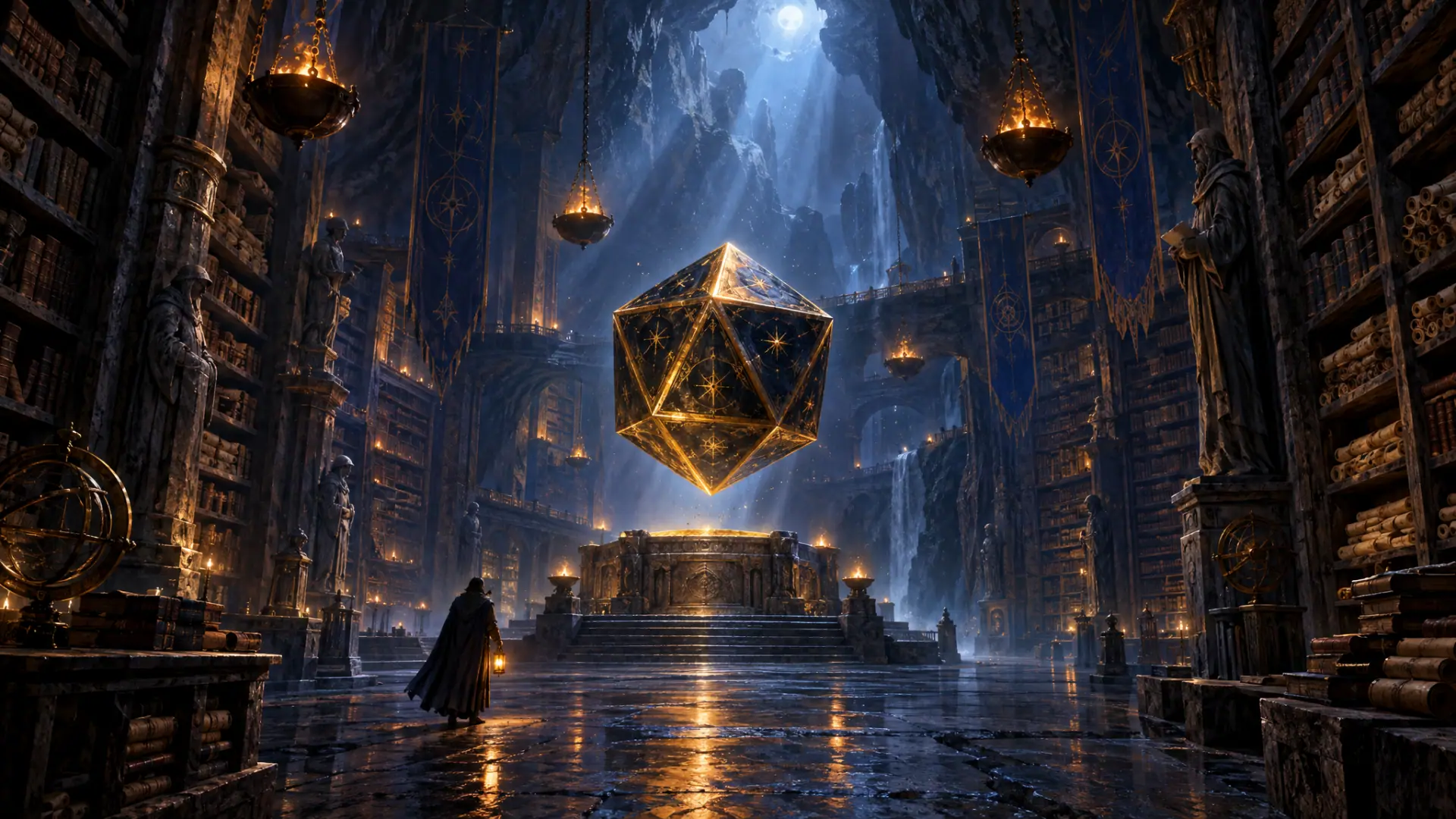
All the paintings in the museum are original and were made for this archive with an image model. They depict no real people, and they do not reproduce any real product’s characters or trademarks. The title and trademarks of every book, game and film discussed belong to their owners. The seals on each exhibit are generated from its name, so every one is unique.
Corrections
The archive is meant to keep growing. If you spot an error, the exhibit’s source links are the place to start. The content lives as plain Markdown files, one per exhibit, and the site is rebuilt from them.