Ravenloft proved a D&D adventure could run on Gothic mood and a single memorable villain rather than room-by-room loot, and its success spawned one of TSR's most enduring campaign settings.
Overview
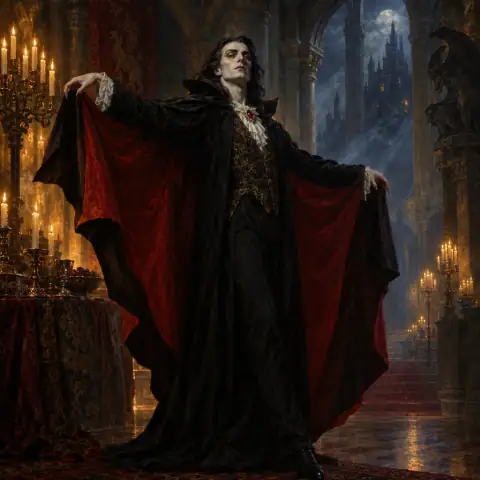
Ravenloft is two things at once, and the second grew out of the first. In 1983 TSR, Inc. published module I6, Ravenloft, a 32-page Adventure module for Advanced Dungeons & Dragons characters of levels 5 to 7. Its players arrive in the fog-bound valley of Barovia, beneath the castle of Count Strahd von Zarovich, a Vampire who has ruled the land for centuries and who wants a village girl, Ireena Kolyana, because she resembles his lost love Tatyana. Seven years later TSR expanded that valley into an entire Campaign setting: the Demiplane of Dread, a patchwork of cursed realms, each ruled and imprisoned by its own monster.
The module is one of the most admired adventures ever printed for D&D; the setting became the home of the game's Gothic horror for three decades.
Origins
Tracy Hickman and his wife Laura wrote the adventure in the late 1970s while living in Provo, Utah, before either worked for TSR. They were dissatisfied with how vampires were usually portrayed in D&D and wanted one with a history, a motive and a home. Inspired by Bram Stoker's Dracula, they ran the castle for friends every Halloween for five years. After Tracy joined TSR in 1982, the company published the adventure in 1983, advertising it as "a classic gothic story." Clyde Caldwell painted the cover; David Sutherland III drew the maps.
The Hickmans followed it with Ravenloft II: The House on Gryphon Hill in 1986. The larger idea came in the second-edition era. In June 1990 TSR released Ravenloft: Realm of Terror, designed by Bruce Nesmith with Andria Hayday, with art by Caldwell and Stephen Fabian. It described 34 domains in a pocket dimension, each built by mysterious Dark Powers to torment a "darklord." The set was designed partly to let AD&D compete with horror games such as Call of Cthulhu.
How it plays
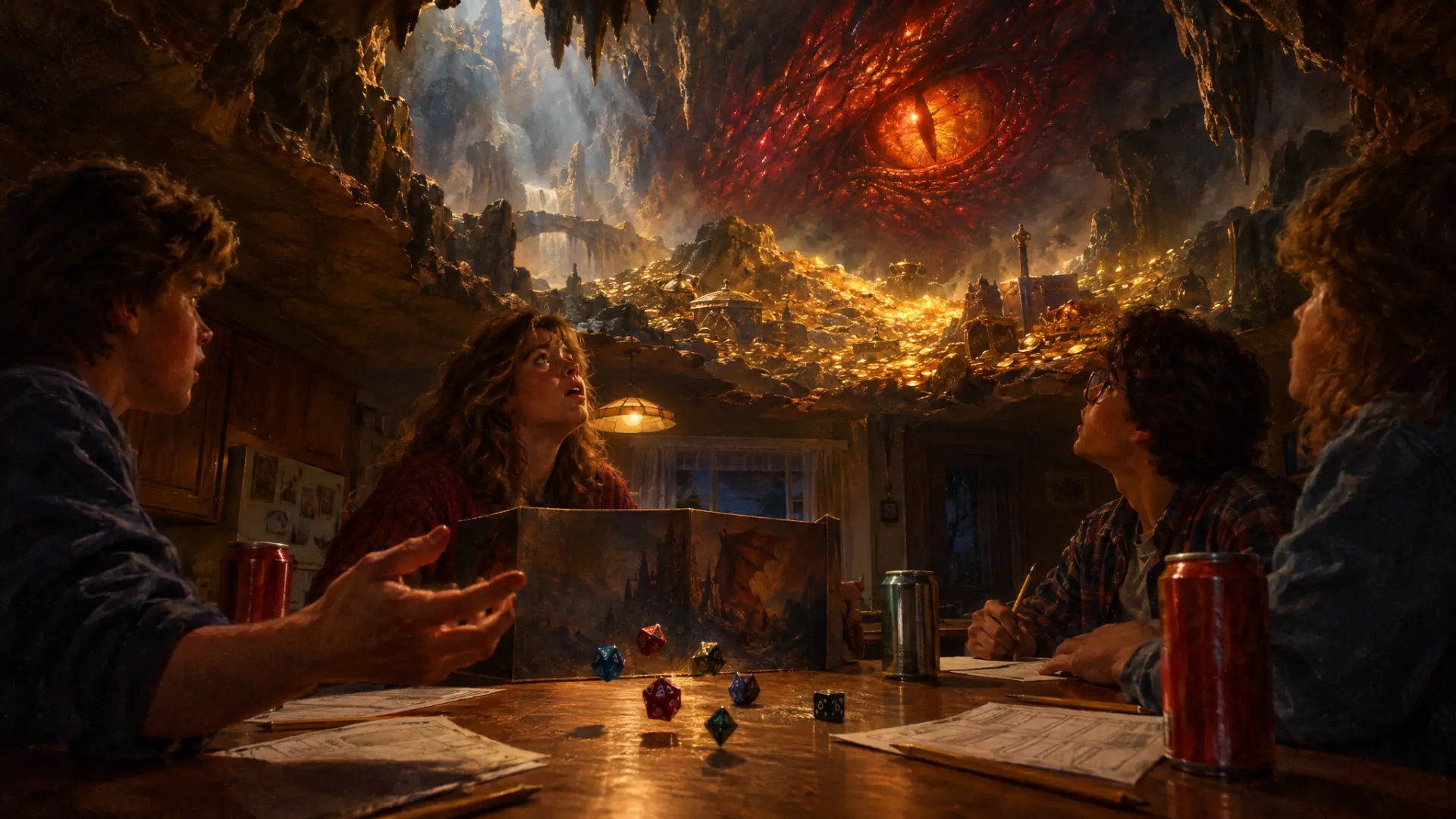
A tabletop roleplaying game is a conversation: one player, the Dungeon Master, describes the world and plays every other character, while the others each speak and act for a single hero and roll dice when the outcome is uncertain. A module is a prepared scenario the Dungeon Master reads in advance: maps, room descriptions, monsters and a plot for one to several sessions. A campaign setting is a whole world to host many adventures.
What made I6 unusual was how much of it happened before anyone rolled a die. The Dungeon Master draws cards to fix where the three items that can defeat Strahd are hidden, where the Count waits for the final confrontation and what he wants. In play, the party can visit a fortune-teller, Madam Eva, whose reading reveals those same cards. So each group gets a different castle, and the adventure feels like a story being told to them rather than a dungeon to clear.
The castle itself is drawn in isometric perspective, stacked towers and crypts rendered as cutaway 3D diagrams that let the Dungeon Master see how stairwells connect across a dozen levels. Strahd is not a boss waiting in the last room: he stalks the party, appears, taunts and withdraws. Victory means destroying a master vampire in his own house, a hard task for fifth-level characters.
The 1990 setting added rules to build dread. Characters could be forced to make fear and horror checks after terrible sights, and anyone committing evil acts risked a "powers check," in which the Dark Powers might reward and slowly corrupt them. Mists could swallow a party anywhere in the multiverse and deliver them to a new domain.
Reception & impact
White Dwarf gave the module 8 out of 10, and it won the 1984 Strategists' Club Award for Outstanding Play Aid. Reviewers praised the concise plot, the atmosphere and above all the maps. When Dungeon magazine ranked the greatest D&D adventures of all time in 2004, Ravenloft placed second, ahead of such landmarks as Tomb of Horrors.
The setting's first boxed set won the 1991 Origins Award for best graphic presentation of a roleplaying product of 1990, and Ravenloft became one of the signature lines of the second-edition era, alongside Dark Sun and Planescape. It was revised as the "Red Box" in 1994 and again as the hardback Domains of Dread in 1997. Novels followed, beginning with Christie Golden's Vampire of the Mists (1991), and SSI published the computer games Ravenloft: Strahd's Possession (1994) and Ravenloft: Stone Prophet (1995).
Legacy
After Wizards of the Coast bought TSR, it licensed Ravenloft to White Wolf Publishing's Sword & Sorcery Studios and Arthaus imprints, which supported it for third edition from 2001 to 2005. The original castle came home repeatedly: House of Strahd (1993), Expedition to Castle Ravenloft (2006) and, most successfully, Curse of Strahd (2016) for fifth edition, developed with input from the Hickmans. Van Richten's Guide to Ravenloft (2021) rebuilt the Domains of Dread for a new generation and revised the portrayal of the Vistani, the setting's wandering people, which had long been criticized as a Romani stereotype.
Strahd himself became the model for the recurring, personal villain in RPGs, and the Hickmans' belief that an adventure should have a story carried directly into their next project, Dragonlance.
Marginalia
- Tracy and Laura Hickman playtested the adventure with friends every Halloween for five years before TSR published it in 1983.
- Before play, the Dungeon Master draws cards to decide where key treasures lie and what Strahd wants, so no two runs of the castle are the same.
- David Sutherland III's isometric, three-dimensional maps of Castle Ravenloft remain some of the most celebrated cartography in the hobby.
- In 2004 Dungeon magazine ranked Ravenloft the second-greatest D&D adventure of all time.
- The 1990 boxed set Ravenloft: Realm of Terror won the Origins Award for best graphic presentation of an RPG product of that year.
- Strahd has been revived for nearly every edition, most recently in the 2016 fifth-edition campaign Curse of Strahd.
Quick answers
- When was Ravenloft first released?
- Ravenloft was first released in 1983 (module); 1990 (campaign setting).
- Who created Ravenloft?
- Ravenloft was made by Tracy Hickman (co-designer, I6 Ravenloft (with Laura Hickman)).
- Who published or developed Ravenloft?
- TSR, Inc. and Wizards of the Coast.
- What kind of work is Ravenloft?
- Ravenloft is an adventure module in the Tabletop Roleplaying Games and Dark Fantasy tradition, released for 32-page module (1983) and Boxed campaign setting (1990).
- Why is Ravenloft important?
- Ravenloft proved a D&D adventure could run on Gothic mood and a single memorable villain rather than room-by-room loot, and its success spawned one of TSR's most enduring campaign settings.