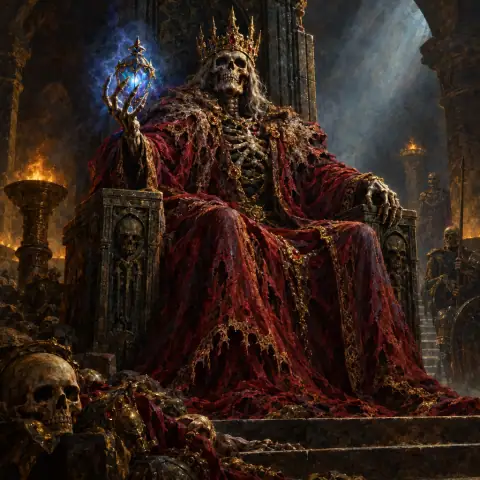
The vampire is the undead aristocrat of the museum: the monster that moved furthest from folklore into literature, and then, through Ravenloft and Vampire: The Masquerade, from something to fight into something to play.
Origins
Blood-drinking revenants haunt the folklore of many peoples, but the vampire proper — the name and the panic — came out of the Balkans and eastern Europe. The word has cognates across the Slavic languages (upir, upyr, upiór), and it entered western Europe through bureaucracy. In 1725 Habsburg officials in Serbia reported on the exhumation of Petar Blagojević, a villager said to have returned from the grave, and in the following years the case of Arnold Paole and others spread through German, French and English newspapers. The corpses were described as plump, ruddy and undecayed, with fresh blood at the mouth — what modern scholars recognize as the ordinary processes of decomposition. Theologians and physicians wrote treatises; the Enlightenment argued about the undead for a generation.
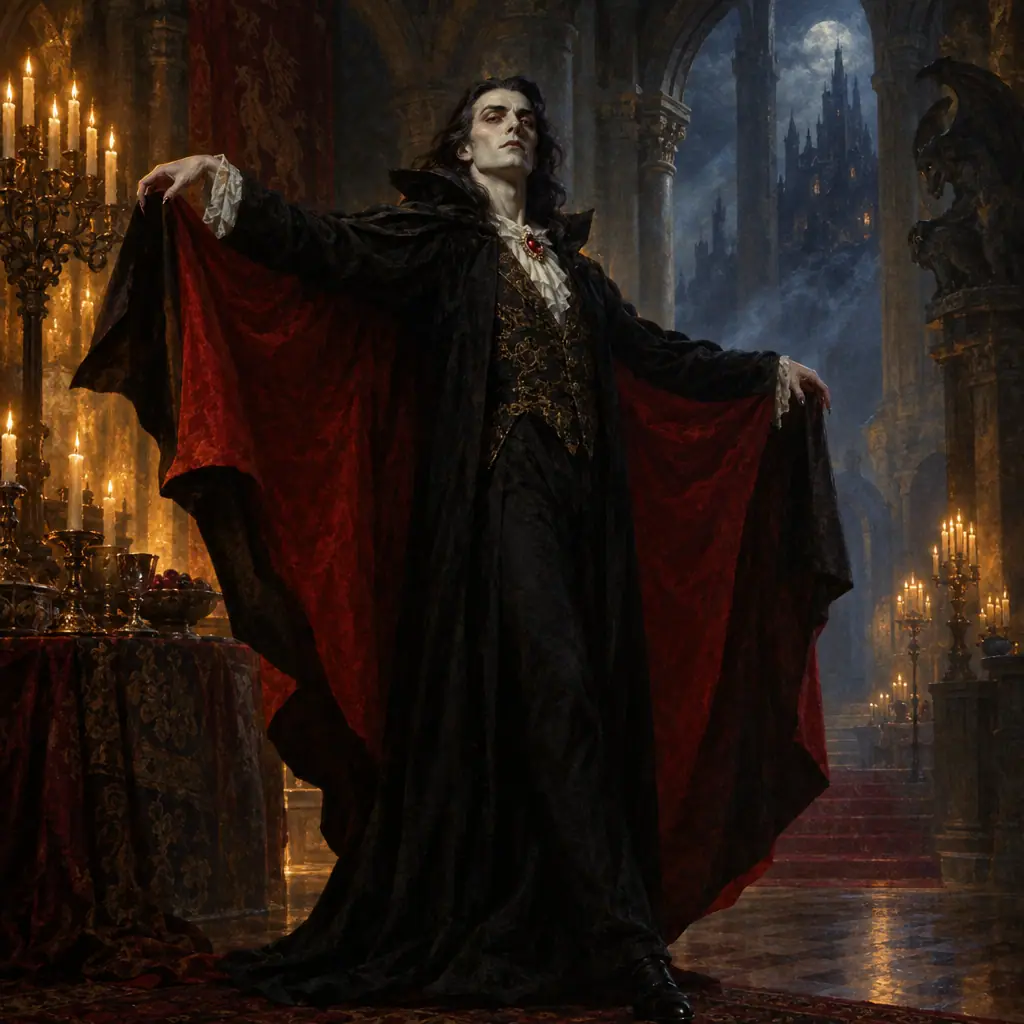
Literature then remade the peasant revenant into an aristocrat. At the Villa Diodati in 1816, Lord Byron sketched a vampire tale during the ghost-story contest that also produced Frankenstein; his physician John Polidori developed it into "The Vampyre", published on 1 April 1819 and falsely attributed to Byron. Its Lord Ruthven — pale, seductive, predatory — was the first vampire gentleman. The penny serial Varney the Vampire (1845–47) added protruding teeth, Joseph Sheridan Le Fanu's Carmilla (1872) a lesbian predator, and Bram Stoker's Dracula (May 1897) the Transylvanian castle, the coffins of earth, the crucifix and the stake. Film supplied the rest: F. W. Murnau's Nosferatu (1922) made sunlight fatal, and Bela Lugosi's Dracula (1931) fixed the evening dress and accent.
Into the dungeon
Vampires were among the first monsters in the 1974 Dungeons & Dragons box, and the Greyhawk supplement (1975) detailed them further. D&D's contribution was a mechanic, not a mood: the vampire's touch drained life-energy levels, stripping a character of hard-won experience — a loss players feared more than death itself. The first-edition Monster Manual (1977) of Advanced Dungeons & Dragons kept the folklore kit of garlic, mirrors, running water and stakes.
It took a designer's frustration to give the monster back its drama. Tracy Hickman, irritated to find a vampire idling in a random dungeon room, created with his wife Laura a vampire villain with a past and a purpose. Their module Ravenloft (1983) put Count Strahd von Zarovich in his own castle above the valley of Barovia, pursuing a woman who resembles his lost love; it became one of the best-loved adventures in D&D and grew into a whole gothic Campaign setting in 1990, returning for fifth edition as Curse of Strahd (2016).
In 1991 White Wolf went further. Mark Rein·Hagen's Vampire: The Masquerade made the players vampires, struggling with the Beast within in the modern night; it defined the 1990s "storytelling" game and the goth-inflected Urban Fantasy of the decade.
Variations
Video games have run through every version. Konami's Castlevania (1986) turned Dracula's castle into a platformer dungeon; Skyrim (2011) lets the player contract vampirism as a disease and its Dawnguard expansion (2012) pits vampire lords against hunters. Larian's Baldur's Gate 3 (2023) made Astarion, a vampire spawn freed from his master, one of the most talked-about companions in RPG history, closing a circle back to Polidori's charming predator.
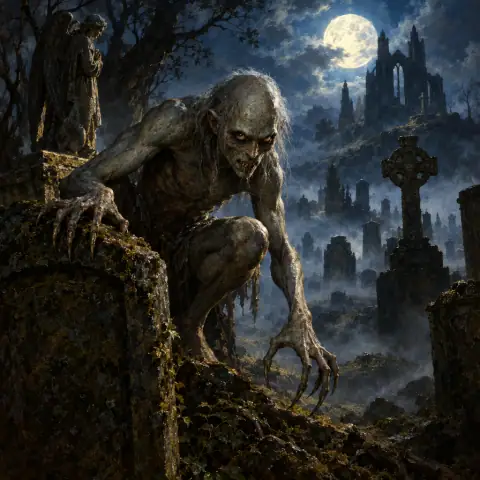
Across these works three vampires coexist: the revenant of folklore, a bloated village corpse; the aristocrat of Polidori and Stoker, seductive and ancient; and the sympathetic vampire of Anne Rice, White Wolf and Astarion, a monster who is also a person. Their undead neighbors in the menagerie are the Lich, who seeks immortality through sorcery rather than blood, and the Ghoul, who eats rather than drinks the dead.
Migration
How the creature traveled from story to story.
- 1725Habsburg SerbiaOfficial reports on the exhumation of Petar Blagojević spread the 'vampyre' across Europe's newspapers during a wave of panics (1725–34).
- 1819John Polidori, "The Vampyre"Lord Ruthven, modeled on Byron, invents the aristocratic, seductive vampire of fiction.
- 1897Bram Stoker, DraculaThe Transylvanian count fixes the modern template: castle, fangs, coffin, crosses and stakes.
- 1974Original D&D boxed setVampires appear among the first undead, draining life-energy levels with each hit.
- 1983I6 RavenloftTracy and Laura Hickman's Count Strahd von Zarovich gives the dungeon vampire a tragic history and a castle of his own.
- 1991Vampire: The MasqueradeWhite Wolf lets players be the monsters, launching the World of Darkness.
- 2023Baldur's Gate 3Astarion, a vampire spawn, becomes one of the most discussed companions in the genre.
Marginalia
- English first met the word in reports of the Habsburg vampire panics of 1725–34; the Oxford English Dictionary dates folkloric use to 1734, before vampire bats (1774).
- "The Vampyre" was published on 1 April 1819 in The New Monthly Magazine, falsely billed as "A Tale by Lord Byron"; John Polidori wrote it.
- Bram Stoker's Dracula was published by Archibald Constable in May 1897, bound in yellow cloth with red lettering.
- Vulnerability to sunlight is largely a film invention; Count Orlok of Nosferatu (1922) popularized it.
- Before TSR published Ravenloft in 1983, the Hickmans played it with friends every Halloween for five years.
- Kas the Bloody-Handed, a vampire, was Vecna's lieutenant and betrayer in D&D lore; both names date to Eldritch Wizardry (1976).
Quick answers
- Where does the Vampire come from?
- Slavic and Balkan folklore; 18th-century vampire panics; Gothic fiction (Polidori 1819, Stoker 1897)
- When did the Vampire first appear?
- 1725, in Habsburg Serbia.
- How did the Vampire get into games?
- Key appearances: Original D&D boxed set (1974), I6 Ravenloft (1983), Vampire: The Masquerade (1991) and Baldur's Gate 3 (2023).
- Why is the Vampire significant?
- The vampire is the undead aristocrat of the museum: the monster that moved furthest from folklore into literature, and then, through Ravenloft and Vampire: The Masquerade, from something to fight into something to play.