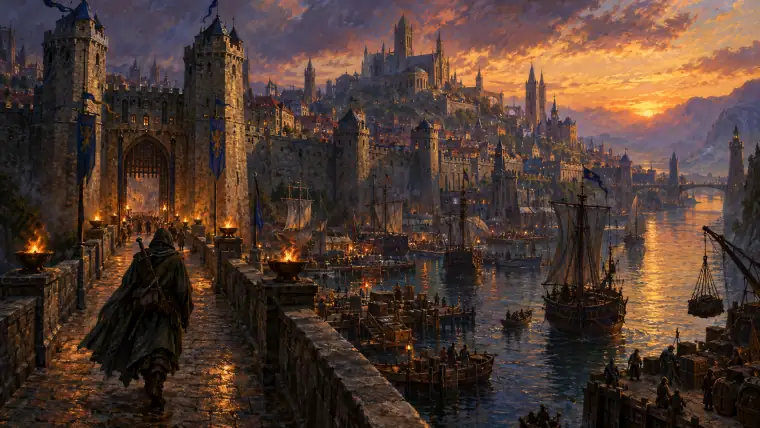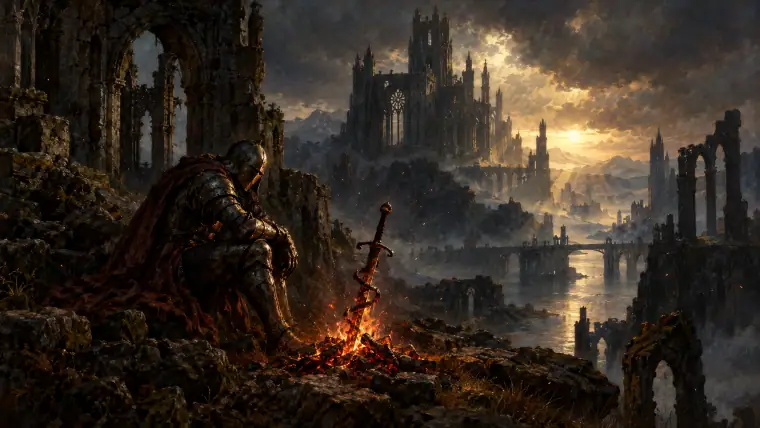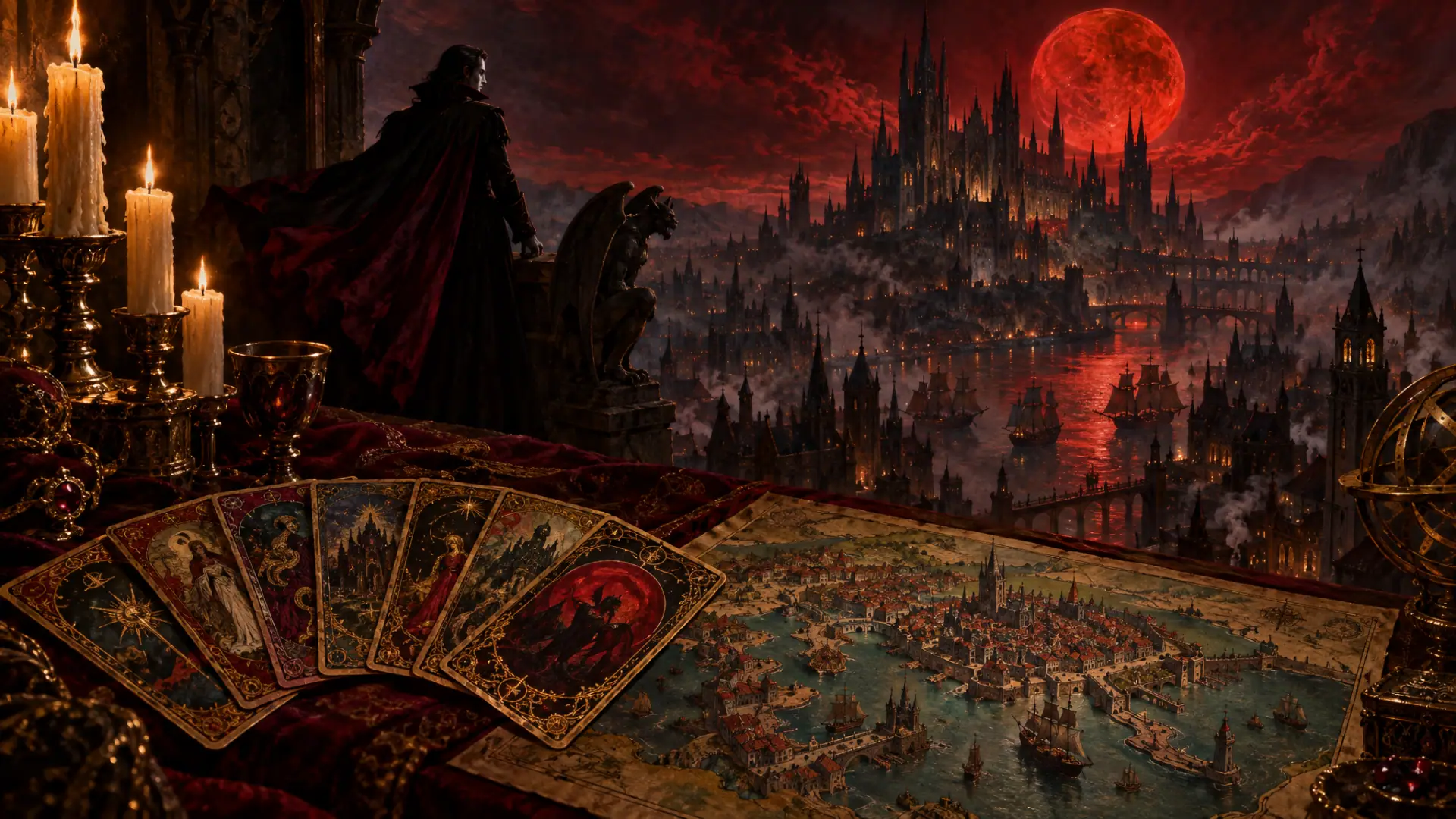
Planescape: Torment proved that a computer RPG could be driven by dialogue, philosophy and character rather than combat, and its writing is still the benchmark critics reach for when they ask how literary a game can be.
Overview
Most role-playing games begin by giving the hero a sword. Planescape: Torment begins with a corpse. The Nameless One wakes on a slab in the Mortuary of Sigil, covered in scars, unable to remember who he is, with a talking skull named Morte hovering beside him and a set of instructions tattooed across his back. Released for Windows on December 10, 1999, developed by Black Isle Studios and published by Interplay, the game uses the same engine as Baldur's Gate to tell a completely different kind of story: an inquiry into memory, regret and identity, built around a single question, "What can change the nature of a man?"
Origins
The game drew on TSR's Planescape setting, the most philosophical corner of AD&D 2nd Edition: a multiverse in which belief reshapes reality, and whose hub, the ring-shaped city of Sigil, is ruled by the silent Lady of Pain and argued over by philosophical factions. The line had been created by David "Zeb" Cook and carried on by designers including Monte Cook and Colin McComb, who went on to play a significant part in designing the computer game.
The project was conceived in 1997 under the title Last Rites. A 47-page vision document pitched it to Interplay's management as avant-garde fantasy, deliberately free of the usual elves, dwarves and dragons. Chris Avellone, in his first lead role, designed and wrote much of it, under Black Isle's founder Feargus Urquhart. The team licensed BioWare's Infinity Engine and modified it, lowering the camera to show larger, more detailed characters and backgrounds and dedicating four designers solely to spells, whose animations became famously extravagant. The music changed hands late: Interplay had hired the dark-ambient artist Lustmord, then replaced him six weeks before release with Mark Morgan, who had scored Fallout; Richard Band contributed two themes.
How it plays
Torment plays like an Infinity Engine game, with a party, an isometric map and pausable real-time combat, but it spends its effort elsewhere. The script runs to roughly 800,000 words, and most problems can be solved by talking, lying, remembering or dying. Death costs the Nameless One almost nothing: he wakes again, often back in the Mortuary, and some quests depend on it. Instead of armor he wears magical tattoos, and he gains power by recalling the skills of his past incarnations, among them a paranoid who laid traps for his successors and the ruthlessly Practical Incarnation, whose choices still hurt people.
His alignment shifts with what he says and does, and his experience comes as much from conversation as from killing. Seven companions can join him, five at a time: the lecherous skull Morte, the tiefling thief Annah-of-the-Shadows, the githzerai Dak'kon, the burning pyromaniac Ignus, the modron Nordom, the succubus Fall-From-Grace, who runs a brothel for slaking intellectual lusts, and the relentless armor-spirit Vhailor. Almost all are bound to the Nameless One's past, and learning why is the plot.
The trail leads through Sigil's slums, the Lower Ward and the planes beyond, to the night hag Ravel Puzzlewell, who made him immortal, and the ghost of Deionarra, a woman he loved and used. At the Fortress of Regrets he confronts the Transcendent One, his separated mortality, and the ending turns on persuasion, combat or sacrifice.
Reception & impact
Critics understood at once. GameSpot called it "clearly the best traditional computer role-playing game of the year," and both GameSpot and Computer Gaming World named it their role-playing game of 1999; Metacritic lists it at 91. Buyers were slower. It sold about 73,000 copies in the United States by March 2000, a disappointing figure at the time, although strong reviews kept it selling through 2000. Avellone has said it made a profit, and Brian Fargo estimated lifetime retail sales at about 400,000 copies in 2017.
Legacy
Torment became the archetypal cult classic: a game praised in every "greatest" list and quoted by writers who never played its contemporaries. Its proof that choice-rich dialogue could carry a whole RPG shaped Avellone's later work at Obsidian Entertainment, and Obsidian's Pillars of Eternity (2015) was pitched as a homage to it and its Infinity Engine siblings. inXile Entertainment's crowdfunded spiritual successor, Torment: Tides of Numenera, followed in February 2017 with McComb as creative lead, set in Monte Cook's Numenera world. Two months later, on April 11, 2017, Beamdog released Planescape: Torment: Enhanced Edition, bringing the Nameless One to modern computers, phones and, in 2019, consoles.
Marginalia
- Its script runs to about 800,000 words, several times the length of a long novel.
- Death is rarely a failure: the Nameless One simply wakes again, often back in the Mortuary, and some puzzles require dying.
- Interplay's first composer was the ambient musician Lustmord, replaced six weeks before release by Mark Morgan of Fallout.
- It sold only about 73,000 copies in the U.S. by March 2000, though Chris Avellone has said it turned a profit.
- GameSpot and Computer Gaming World both named it their role-playing game of 1999.
- Its spiritual successor, Torment: Tides of Numenera (2017), was led by Colin McComb, who helped design the original.
Quick answers
- When was Planescape: Torment first released?
- Planescape: Torment was first released in 1999 (Windows).
- Who created Planescape: Torment?
- Planescape: Torment was made by Chris Avellone (lead designer & writer) and Feargus Urquhart (head of Black Isle Studios).
- Who published or developed Planescape: Torment?
- Black Isle Studios, Interplay Productions and TSR, Inc..
- What kind of work is Planescape: Torment?
- Planescape: Torment is a computer RPG in the Western Computer RPGs (CRPG) tradition, released for Windows and Enhanced Edition: Windows, macOS, Linux, iOS, Android (2017), PS4, Xbox One, Switch (2019).
- Why is Planescape: Torment important?
- Planescape: Torment proved that a computer RPG could be driven by dialogue, philosophy and character rather than combat, and its writing is still the benchmark critics reach for when they ask how literary a game can be.