EverQuest was the first commercially successful MMORPG built on a 3D engine and the dominant Western online world until World of Warcraft. Its group roles, raids and loot culture became the template the genre still follows.
Overview
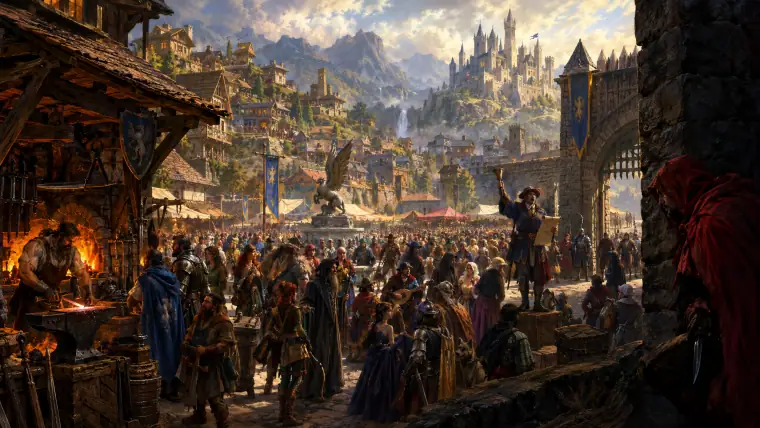
If Ultima Online was a frontier town, EverQuest was a dungeon the size of a continent. Released in North America on March 16, 1999, by Sony's 989 Studios and its spin-off Verant Interactive, it put players inside a fully 3D fantasy world, Norrath, seen through their own eyes, and asked them to band together to survive it. It was slow, punishing, and social by necessity, and it became the defining Western MMORPG of its era: the first commercially successful one built on a 3D engine, with about half a million subscribers at its height. Its nickname, "EverCrack," was a joke that people only half meant.
Origins
EverQuest began in 1996, when John Smedley, an executive at Sony Interactive Studios America, secured funding for a 3D game in the spirit of the text MUDs, following the successful launch of Meridian 59 the year before. Looking for developers, he found Brad McQuaid and Steve Clover, who had co-founded a small company called MicroGenesis in 1989 and made a shareware role-playing game, WarWizard (1993). McQuaid, initially lead programmer, became producer and one of the lead designers alongside Clover and Bill Trost, who created Norrath's history, lore and major characters. McQuaid became a fan celebrity through his in-game avatar, Aradune. Geoffrey Zatkin implemented the spell system, and the fantasy illustrator Keith Parkinson painted the early box covers.
The team came from the text-MUD world, and it showed. The designers credited games built on the DikuMUD codebase, such as Sojourn and its successor TorilMUD, as major inspirations, and the game is widely considered a 3D evolution of the text MUD, with the lineage of MUD1 and its descendants running through its combat, its zones and its classes. Dungeons & Dragons supplied the vocabulary: fighters, clerics, wizards, rogues, druids, necromancers and more, each with a clear job. Development took place first at 989 Studios and then at Verant; in June 2000, Verant was absorbed into Sony Online Entertainment.
How it plays
Players chose from 12 races at launch, among them humans, barbarians, the scholarly Erudites, several kinds of elf, dwarves, gnomes, halflings, ogres and trolls, and from 14 classes, then set out across more than 500 zones spread over several continents and otherworldly planes. Combat was simple to execute and hard to survive. Monsters came in groups, fled for help, and chased players to zone lines; a careless puller could drag a "train" of angry creatures through everyone else's camp.
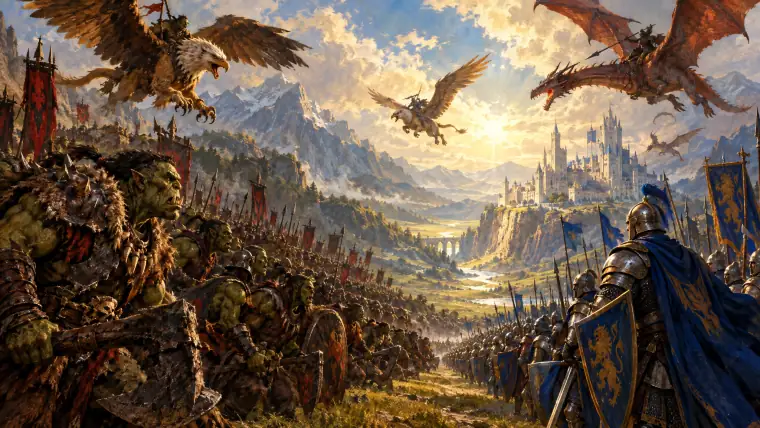
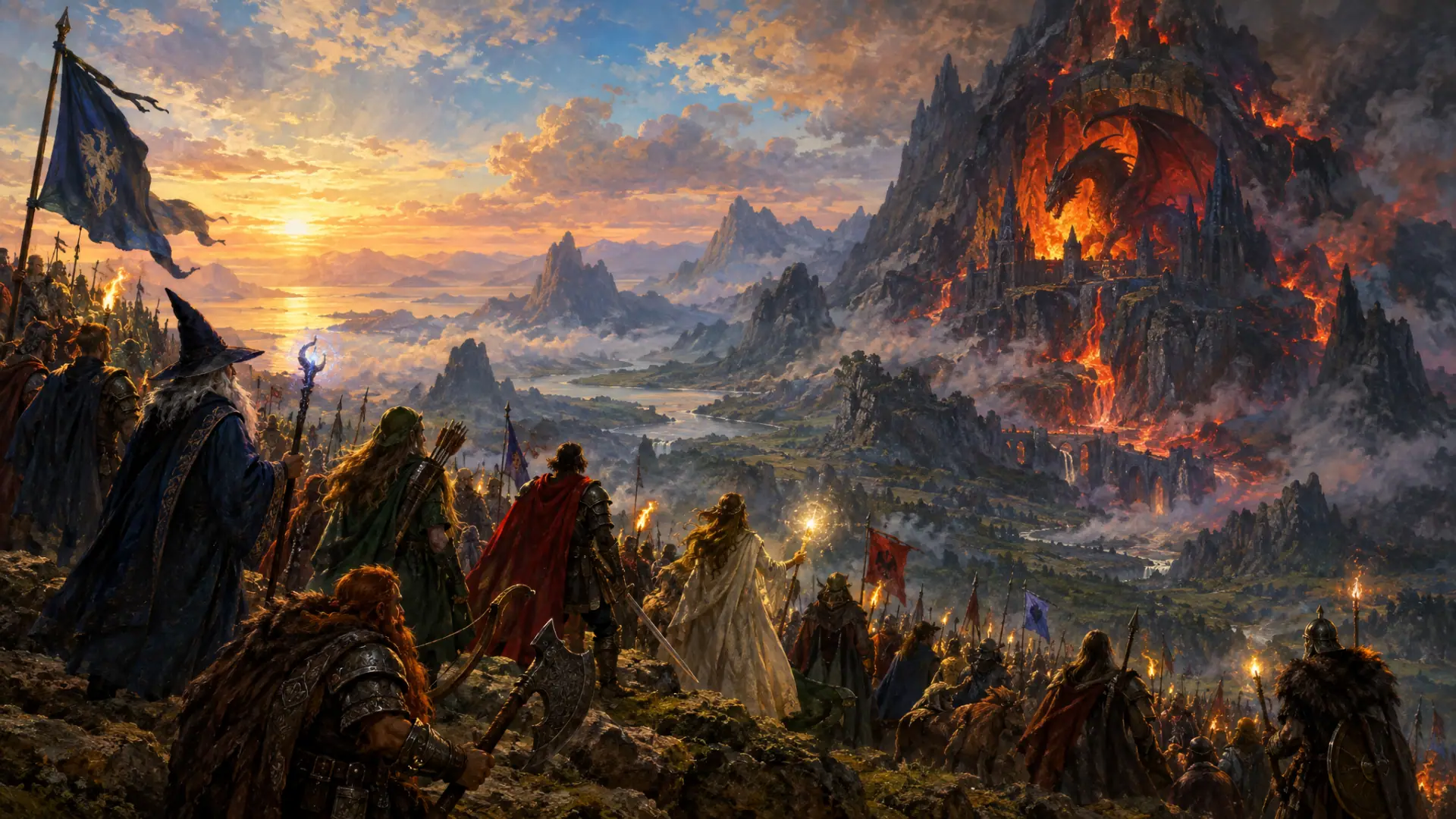
Small groups formed around the roles that would define the genre: a warrior to hold Aggro, a cleric to heal, damage dealers, and crowd-control specialists, the arrangement later called the holy trinity. Leveling was a long grind, often spent "camping" a spot and waiting for a monster or a rare item to reappear. Death was harsh: characters lost experience, could lose a level, and dropped everything they carried on their corpse, which had to be recovered, sometimes deep in hostile territory, on a "corpse run." At the top end, dozens of players organized into guilds took on dragons and gods in the outer planes, making the Raid the genre's endgame. Most servers barred player-versus-player combat except by choice, an answer to Ultima Online's player-killing wars.
Reception & impact
EverQuest signed up 10,000 subscribers within 24 hours and 60,000 by April 1999. About six months later it had sold some 225,000 copies and had 150,000 active subscribers; by September 2000 it had 259,000, and it passed 500,000 active accounts by 2003 and peaked at about 550,000 by the end of 2004. Critics called it the best game in its class while grumbling about its tedious early levels and cryptic manual; it averaged 85 on Metacritic. GameSpot named it game of the year for 1999, and the Academy of Interactive Arts & Sciences its online game of the year, though the role-playing prizes of Computer Gaming World, GameSpot and CNET Gamecenter went to Planescape: Torment and Asheron's Call. Its first expansion, The Ruins of Kunark (April 2000), which raised the level cap from 50 to 60 and added the lizard-like Iksar, won an Academy of Interactive Arts & Sciences award. The Scars of Velious followed on December 5, 2000 and The Shadows of Luclin on December 4, 2001.
Its hold on players became a public story. The "EverCrack" jokes turned serious after the death by suicide of a player, Shawn Woolley, in November 2001; his mother, Liz Woolley, went on to found Online Gamers Anonymous, and the case became a touchstone in debates over gaming addiction. In January 2008 a federal judge in Brazil banned sales of the game in the state of Minas Gerais. Its economy drew another kind of attention: players sold items, platinum and characters for real money, eBay banned such EverQuest auctions in 2001, and the same year the economist Edward Castronova published "Virtual Worlds: A First-Hand Account of Market and Society on the Cyberian Frontier," which calculated that Norrath's GNP per capita fell between Russia's and Bulgaria's and that its currency was worth more than the yen or the lira. It founded the study of virtual economies.
Legacy
EverQuest was the standard its successors were measured against, and they borrowed freely. Its group-based design echoes through Dark Age of Camelot, Final Fantasy XI and their peers, and its most direct heir was World of Warcraft, launched in November 2004, the same month as EverQuest II. Blizzard's Rob Pardo drew on his own EverQuest experience to guide World of Warcraft's design, and he had met Jeff Kaplan, whom he hired as a quest designer, through their raiding guild, Legacy of Steel. World of Warcraft kept the classes, the raids and the loot while stripping out much of the punishment. Its subscriber numbers fell as players moved on, to about 66,000 in September 2020, but the game never closed. Sony sold its online studio in February 2015 to Columbus Nova, which renamed it Daybreak Game Company, and EverQuest has continued to receive expansions, 32 in all, alongside "progression" servers that replay its history era by era. McQuaid left Sony in 2002 to found Sigil Games and make Vanguard: Saga of Heroes (2007), and was working on Pantheon: Rise of the Fallen when he died in 2019. EverQuest received a Technology & Engineering Emmy in 2007 and entered the Game Developers Choice Online Hall of Fame in 2011.
Marginalia
- EverQuest began in 1996 as a concept by John Smedley at Sony; he hired Brad McQuaid and Steve Clover after seeing their shareware RPG WarWizard.
- It signed up 10,000 subscribers within 24 hours of launch and reached about 550,000 by the end of 2004.
- Economist Edward Castronova's 2001 study put Norrath's GNP per capita between Russia's and Bulgaria's.
- In 2001 eBay banned auctions of EverQuest items for real money.
- The Ruins of Kunark (2000) raised the level cap from 50 to 60 and added the lizard-folk Iksar, hated by every other race.
- It won a Technology & Engineering Emmy in 2007.
- A Brazilian judge banned sales of the game in the state of Minas Gerais in 2008.
Quick answers
- When was EverQuest first released?
- EverQuest was first released in 1999 (Windows).
- Who created EverQuest?
- EverQuest was made by Brad McQuaid (producer, co-lead designer & programmer).
- Who published or developed EverQuest?
- Sony Online Entertainment.
- What kind of work is EverQuest?
- EverQuest is a MMORPG in the MMORPGs and Western Computer RPGs (CRPG) tradition, released for Microsoft Windows and Mac OS X (separate server, 2003–2013).
- Why is EverQuest important?
- EverQuest was the first commercially successful MMORPG built on a 3D engine and the dominant Western online world until World of Warcraft. Its group roles, raids and loot culture became the template the genre still follows.