Guild Wars proved that a large online role-playing game could thrive without a subscription, and its instanced, build-driven design offered the clearest alternative to the World of Warcraft model at the height of that game's dominance.
Overview
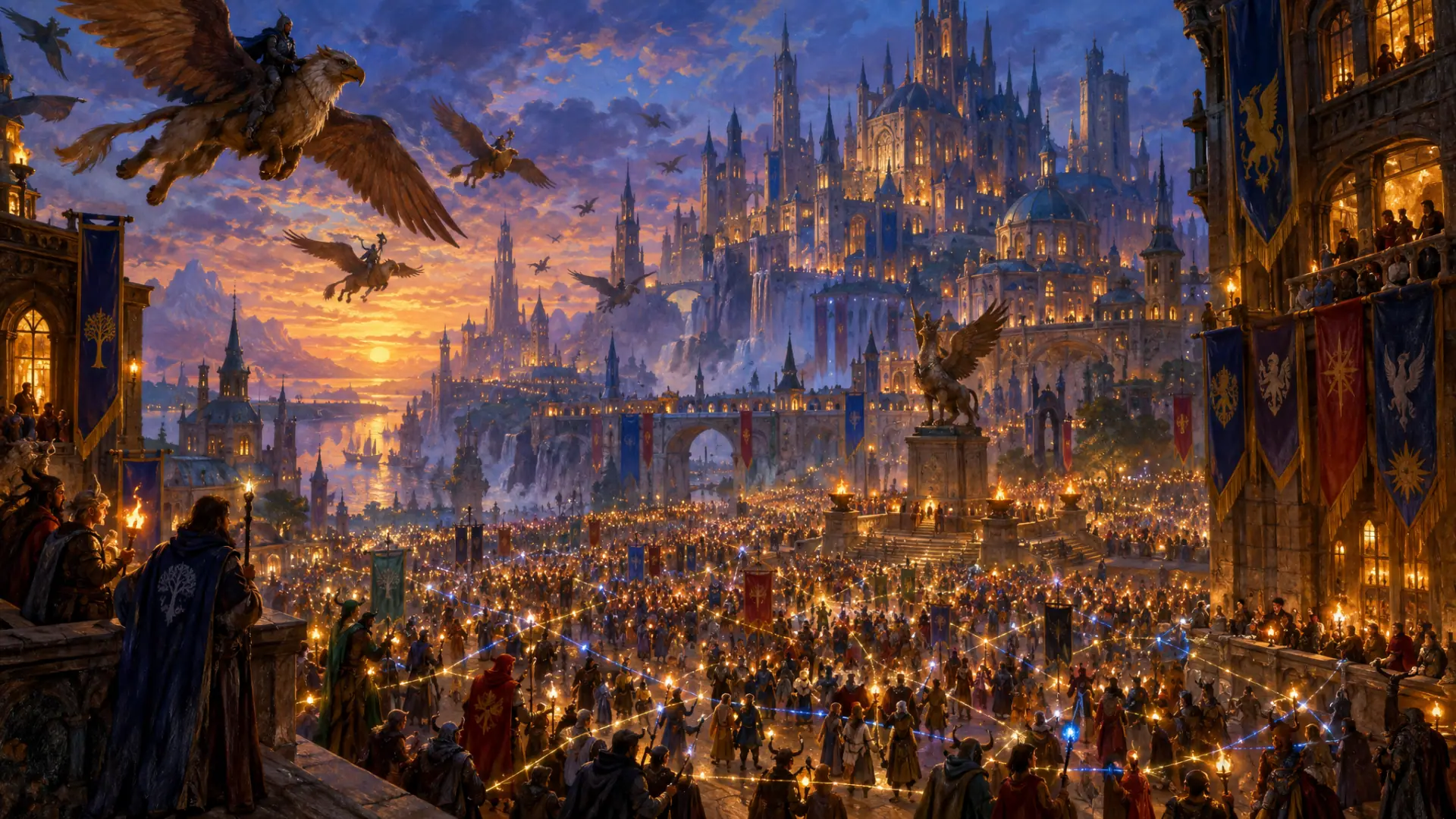
In 2005, the year World of Warcraft conquered the online world with a monthly fee, Guild Wars offered a different deal: buy the box, and play forever for free. Developed by ArenaNet, a Seattle-area studio founded by Blizzard veterans, and published by NCSoft, it launched in North America and Europe on April 28, 2005. It was an online role-playing game, but not quite a massively multiplayer one. Towns and outposts were shared by hundreds of players; everything beyond the gates was instanced, private to the player's The party. Combat revolved around a bar of eight skills chosen from a library of hundreds, and the competitive heart of the game was organized team battle between guilds. It sold a million copies in five months and, with its sequels, 6.5 million by 2010.
Origins
Mike O'Brien, Jeff Strain and Patrick Wyatt had worked at Blizzard Entertainment, where they helped build the Battle.net online service, and some of ArenaNet's early staff had been involved in the first stages of World of Warcraft. They left in 2000 to take risks with both design and business model. Their argument was simple: players would not pay a subscription for every online game they played, and a monthly fee turned a game into a "lifestyle commitment" that locked people in. ArenaNet would charge once, and fund the service with new campaigns sold as standalone games.
That only worked if servers were cheap to run, so the technology came first. The game streamed updates in the background, downloading core files before play and the rest during it, and could be patched on demand. The studio announced Guild Wars in April 2003 and tested it in public unusually early: during E3 in May 2004 anyone could download the client and play a demo, followed by a series of open beta weekends.
How it plays
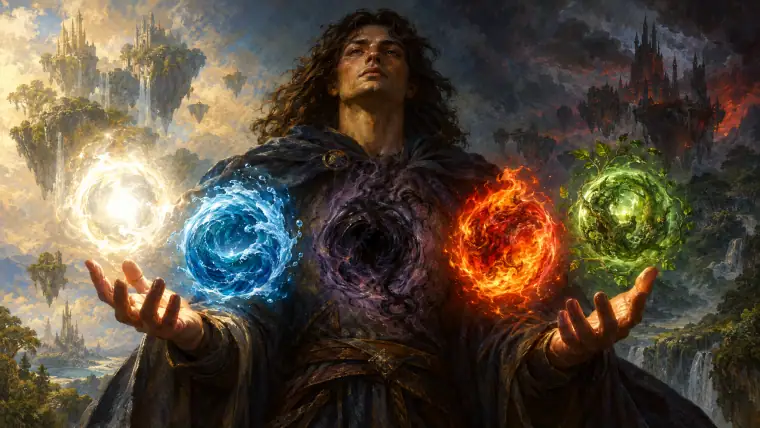
A character chooses a primary and secondary profession from warrior, ranger, monk, necromancer, mesmer and elementalist, so a warrior might carry a few elementalist spells. The level cap is only 20 and is reached quickly. Power comes instead from the skills a character has captured, often from bosses, and from how well the eight on the bar work together. Outside combat the build can be rearranged freely; once in the field it is fixed. Critics compared the process to constructing a deck in Magic: The Gathering, and the best builds were combinations, a hex that makes an enemy attack faster paired with one that punishes every attack.
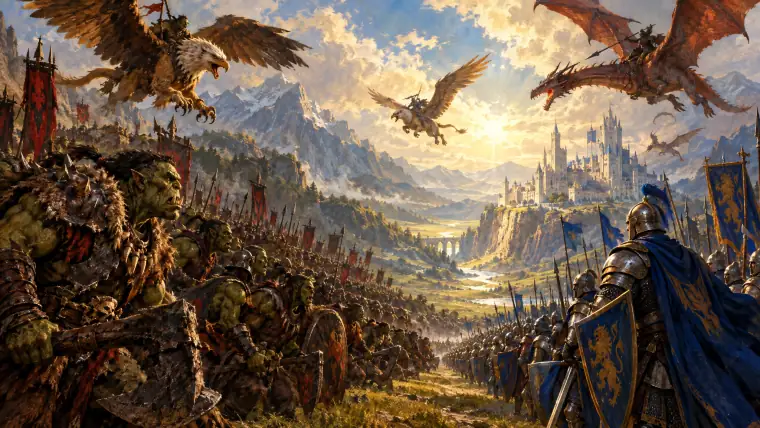
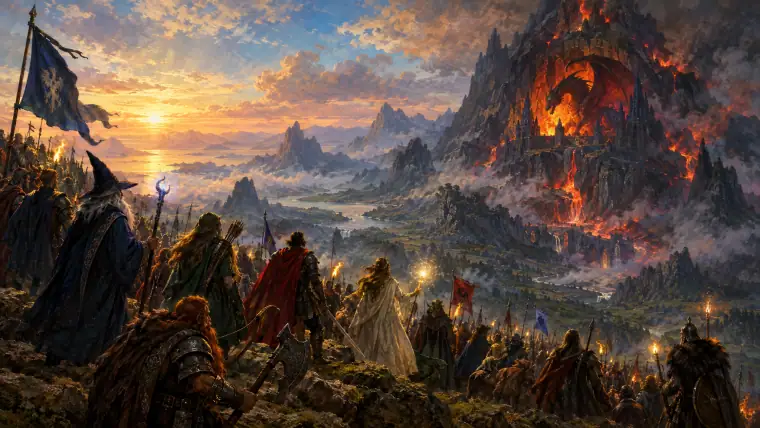
The cooperative campaign follows the refugees of Ascalon. The opening is a peaceful tutorial kingdom, until the feline Charr call down the Searing, a rain of fire that ruins the land. Because the world is instanced, the change is permanent for each character: pre-Searing Ascalon can never be visited again. Players, with human companions or hired henchmen, then follow the exiled Prince Rurik toward Kryta, uncover the murderous White Mantle and their masters the Mursaat, and are guided by a dragon named Glint toward the Flameseeker Prophecies. Story missions are group events with cutscenes, mission objectives and bonus goals.
Player-versus-player combat is consensual and confined to arenas. Players could make characters at maximum level purely for competition. Four-player random arenas led to the Heroes' Ascent tournament, and the showpiece was guild-versus-guild: two guilds meeting in their guild halls, each trying to kill the other's heavily guarded Guild Lord. ArenaNet held a Guild Wars World Championship with cash prizes in 2005.
Reception & impact
Guild Wars debuted at number one on NPD's U.S. computer game chart for April 2005 and was the fourth-best-selling computer game of the year. Critics admired its art direction, its lack of fees and the depth of its skill system; Computer Games Magazine wrote that "with almost every element of the design, ArenaNet carefully thumbs its nose" at the model of Ultima Online, EverQuest and World of Warcraft. It won PC Gamer's best massively multiplayer game of 2005 and GameSpy's MMORPG of the year, and tied with City of Villains for the Academy of Interactive Arts & Sciences' massively multiplayer game of the year. Some reviewers, measuring it against World of Warcraft, found the crowded, low-reward monster fights repetitive, and the original requirement that competitive players unlock skills through the campaign drew complaints until ArenaNet let players unlock them through PvP.
Legacy
ArenaNet delivered its promised stream of content: the free Sorrow's Furnace update (September 2005), the standalone campaigns Factions (2006), set in the Asian-inspired continent of Cantha, and Nightfall (2006), and the expansion Eye of the North (2007). The retroactive subtitle Prophecies was applied to the original. Rather than a fourth campaign, the studio moved on to Guild Wars 2, released in 2012, which also kept the buy-once model. The original never closed; in December 2025 it was rereleased as Guild Wars Reforged, with updated visuals, a redesigned interface and controller support, developed with a team of former ArenaNet staff. The game's legacy is its business model. Guild Wars showed in the mid-2000s that the subscription was not the only way to sustain an online world, a lesson much of the industry learned later as MMORPGs moved to free-to-play and buy-to-play models, among them The Elder Scrolls Online.
Marginalia
- ArenaNet's founders had helped build Blizzard's Battle.net service, and the fee-free model rested on server technology designed to keep bandwidth costs low.
- Players carry just eight of more than a thousand skills into any fight, which critics compared to building a deck in Magic: The Gathering.
- The tutorial kingdom of pre-Searing Ascalon is destroyed by a rain of fire; players can never go back, a trick made possible by instancing.
- Its first public test ran during E3 in May 2004, when anyone could download the client and play.
- It debuted at number one on NPD's U.S. PC sales chart for April 2005 and sold a million copies by September.
- A remastered edition, Guild Wars Reforged, was released in December 2025, more than twenty years after launch.
Quick answers
- When was Guild Wars first released?
- Guild Wars was first released in 2005 (Windows).
- Who published or developed Guild Wars?
- NCSoft.
- What kind of work is Guild Wars?
- Guild Wars is a MMORPG in the MMORPGs and Western Computer RPGs (CRPG) tradition, released for Microsoft Windows.
- Why is Guild Wars important?
- Guild Wars proved that a large online role-playing game could thrive without a subscription, and its instanced, build-driven design offered the clearest alternative to the World of Warcraft model at the height of that game's dominance.