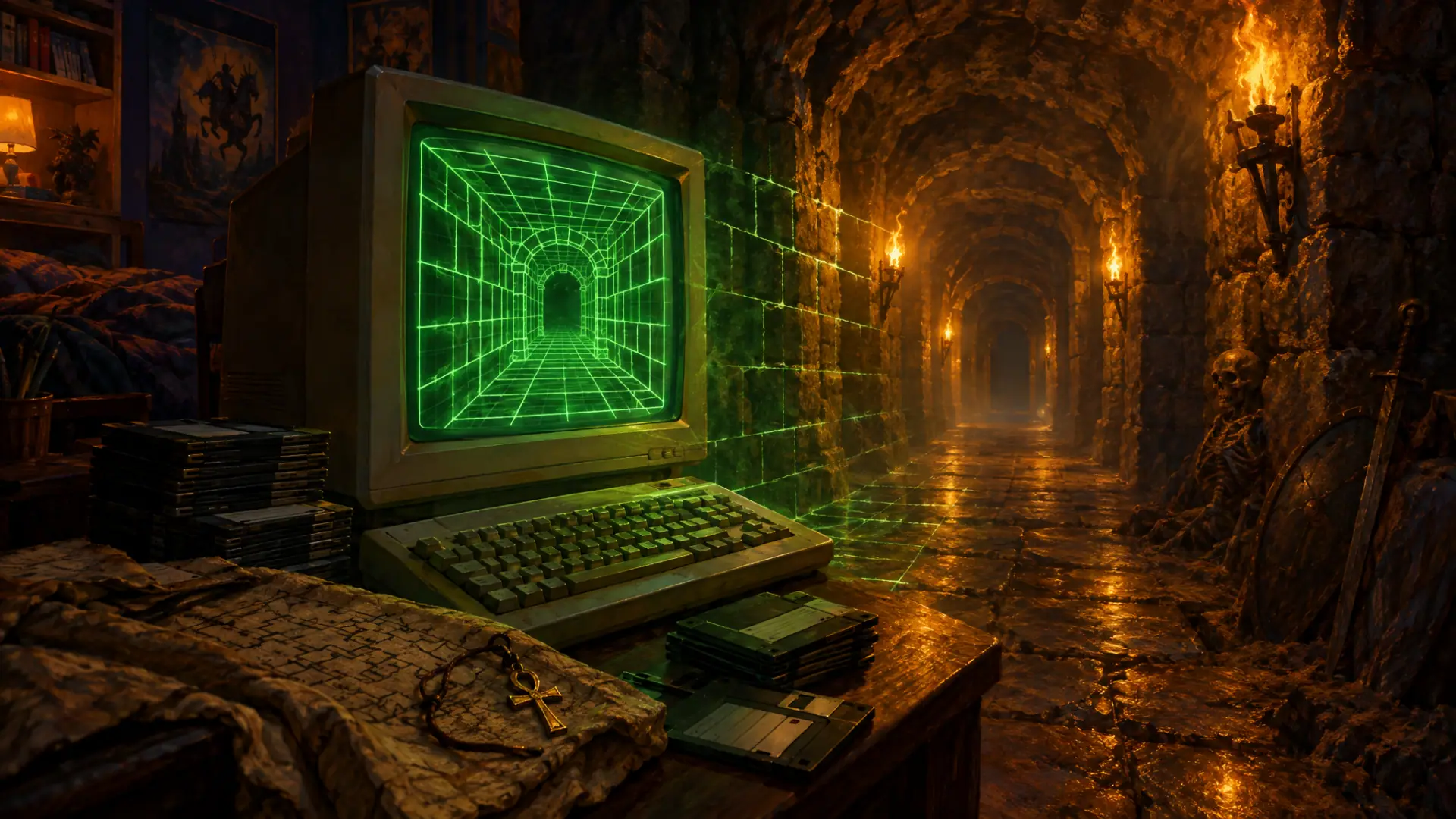
The CRPG is where tabletop roleplaying first became software, and nearly every later strand of the video game RPG, including the Japanese console tradition, descends from its first decade.
Hallmarks
- Rules and statistics borrowed openly from tabletop Dungeons & Dragons
- A player-made character or party rather than a fixed protagonist
- Exploration of dungeons, towns and wilderness at the player's own pace
- Tactical combat, traditionally turn-based or real-time with pause
- Branching dialogue, moral choice and consequences that alter the story
- A home on personal computers, played with keyboard and mouse
What it is
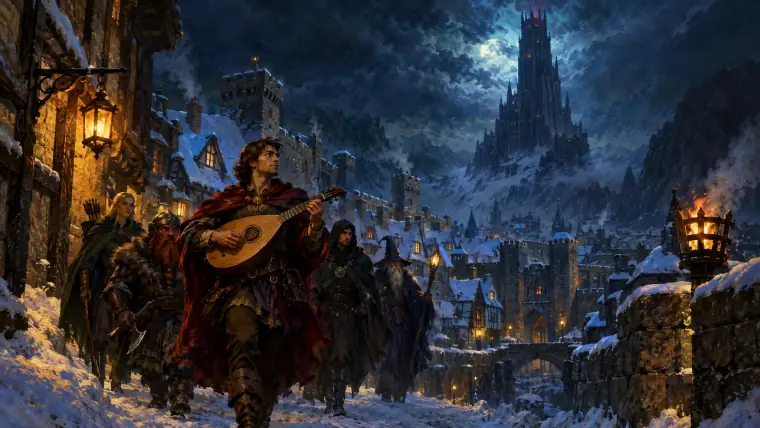
A computer role-playing game puts a Player character, or a whole The party, into a simulated world governed by numbers: Hit points, Armor Class, Experience points, a Character class, and a bag of Loot & loot tables. The player explores, fights, talks, levels up and makes choices, and the machine plays the part of the Game Master, rolling every die and remembering every rule. The abbreviation CRPG once simply meant "computer RPG," as opposed to the tabletop kind. In modern usage it has narrowed: it most often means the Western, PC-rooted tradition of party-based, tactically deep, choice-heavy games, the line from Ultima IV through Baldur's Gate to Baldur's Gate 3.
Origins
The genre began on university mainframes. Within about a year of Dungeons & Dragons appearing in 1974, students on the PLATO network at the University of Illinois and Southern Illinois University had written pedit5 and dnd (both 1975), translating hit points, spells and descending dungeon levels into code. PLATO's first-person games and the multiplayer Avatar (1979) followed, while on Unix machines Rogue (1980) seeded the separate Roguelikes line.
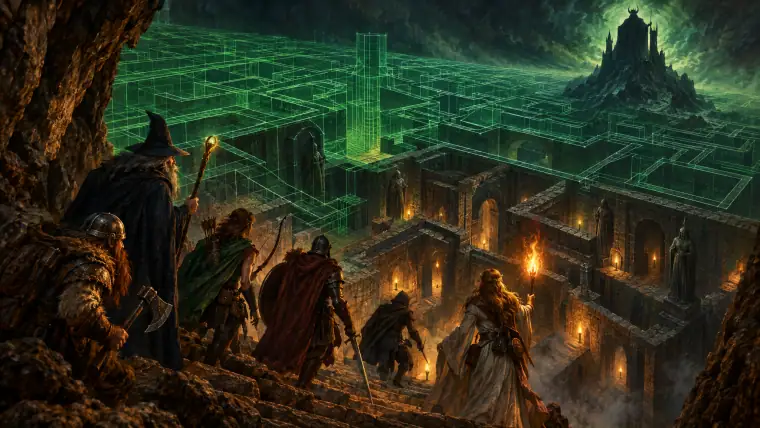
Home computers carried the idea out of the labs. Richard Garriott's Akalabeth (1979–80), sold in plastic bags in a Texas computer store, led to Ultima (1981), with its tile-based overworld. The same year Andrew Greenberg and Robert Woodhead published Wizardry through Sir-Tech, a six-character first-person maze crawl. Those two games became the genre's poles: the open world and the deep dungeon.
Evolution
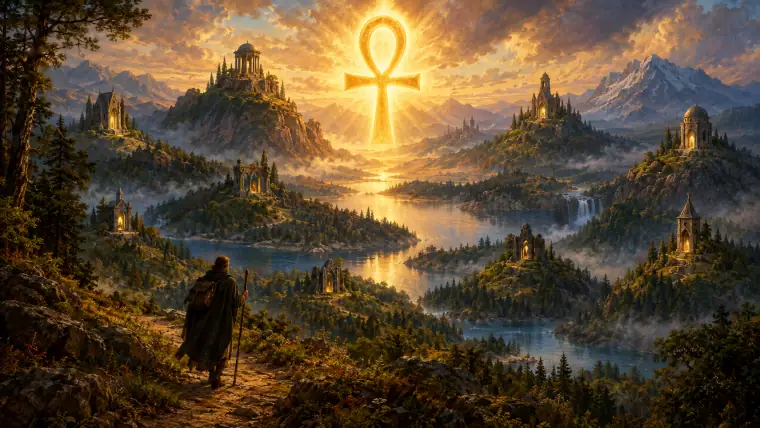
The mid-1980s refined everything. Ultima IV (1985) replaced the dark lord with eight virtues the player had to live by. Interplay's The Bard's Tale (1985) and Jon Van Caneghem's Might and Magic (1986) polished the first-person Blobber. In 1988 SSI won the official AD&D license and released Pool of Radiance, the first of the "Gold Box" games. Historian Matt Barton calls this the genre's "Golden Age."
By the mid-1990s the CRPG looked exhausted. Console RPGs from Japan were outselling it, and SSI's licensed games had grown stale. Revival came from two directions. Blizzard's Diablo (1996) boiled the form down into the real-time Action RPGs & Hack-and-Slash. BioWare's Baldur's Gate (1998) put the full AD&D rules into an isometric, Real-time with pause engine. Its Infinity Engine siblings, Black Isle's Planescape: Torment (1999) and Icewind Dale (2000), and Baldur's Gate II (2000), made the late 1990s a second golden age. In the 2000s, 3D worlds took over. Neverwinter Nights (2002), Morrowind (2002) and Dragon Age: Origins (2009) pulled the tradition toward the Open-World RPGs and the cinematic console RPG.
The isometric party game returned through crowdfunding. In 2012 Brian Fargo's inXile funded Wasteland 2 on Kickstarter. Obsidian, led by Feargus Urquhart with Josh Sawyer and Chris Avellone among its designers, then raised $3,986,929 for what became Pillars of Eternity (2015). Larian's Divinity: Original Sin II (2017) made Turn-based combat and systemic mischief fashionable again. The line culminated in Larian's Baldur's Gate 3 (2023), built on fifth-edition D&D. It was the first game to sweep Game of the Year at all five major awards ceremonies.
How to tell it apart
CRPG vs. JRPG. The split is historical before it is cultural. Dragon Quest (1986) was built directly from Wizardry's menu battles and Ultima's overhead map. It was simplified for the Famicom and its controller: one hero, a fixed story, a gentle difficulty curve. The typical JRPG kept that shape, with authored protagonists, a linear, character-driven plot and anime-influenced art. The typical CRPG gives you a character you build yourself, a world that reacts to your choices, and rules you are expected to master. Both descriptions are tendencies, not laws. Planescape: Torment has a fixed protagonist, and many Japanese RPGs branch.
The "Western RPG" label problem. "WRPG" was coined as the mirror image of "JRPG," and it is a loose fit. It groups a Canadian studio (BioWare), a Belgian one (Larian) and a Polish one (CD Projekt Red) by the fact that they are not Japanese. Meanwhile Japanese games such as Dark Souls are built on Western-style character building. Many critics and developers now prefer to describe what a game does rather than where it was made.
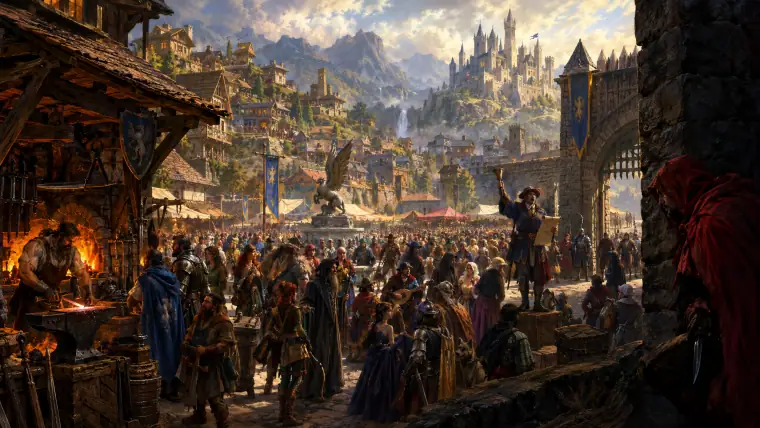
CRPG vs. its sub-genres. A First-Person Dungeon Crawlers ('Blobbers') or blobber is a CRPG confined to a first-person, grid-based party crawl. An Action RPGs & Hack-and-Slash trades tactical rounds for reflexes. An Open-World RPGs trades the party and the tactical map for a single hero loose in a simulated landscape. The core CRPG keeps the tabletop at its center: a party, a map, the dice, and consequences.
Where to start
- Ultima IV (1985): the moment the genre discovered it could be about ethics.
- Wizardry (1981): the template for the party crawl, best played in the 2024 remake.
- Baldur's Gate II (2000): the Infinity Engine at its richest.
- Planescape: Torment (1999): the genre as literature.
- Divinity: Original Sin II (2017): turn-based systems that reward creative play.
- Baldur's Gate 3 (2023): the tabletop on screen, at blockbuster scale.
Marginalia
- The first computer RPGs, pedit5 and dnd, appeared on the PLATO network in 1975, within about a year of D&D's publication.
- Wizardry and Ultima, both released in 1981, became the twin templates for the genre, and later for Dragon Quest in Japan.
- Historian Matt Barton calls the late-1980s era of Pool of Radiance, The Bard's Tale and Wasteland the 'Golden Age' of computer RPGs.
- Pillars of Eternity's 2012 Kickstarter closed at $3,986,929, then the most-funded video game on the platform.
- PC Gamer called 2014 'the first year of the CRPG renaissance', after Wasteland 2 and Divinity: Original Sin.
- Baldur's Gate 3 became the first game to win Game of the Year at all five major video game awards ceremonies.
Quick answers
- What is Western Computer RPGs (CRPG)?
- Dungeons & Dragons translated into code: the computer role-playing game, born on university mainframes in 1975, that runs from Ultima and Wizardry to Baldur's Gate 3.
- What are the hallmarks of Western Computer RPGs (CRPG)?
- Rules and statistics borrowed openly from tabletop Dungeons & Dragons; A player-made character or party rather than a fixed protagonist; Exploration of dungeons, towns and wilderness at the player's own pace; Tactical combat, traditionally turn-based or real-time with pause; Branching dialogue, moral choice and consequences that alter the story; A home on personal computers, played with keyboard and mouse.
- When did Western Computer RPGs (CRPG) emerge?
- 1975 (PLATO mainframe dungeons); home computers from 1979.
- What are the key works of Western Computer RPGs (CRPG)?
- pedit5, dnd, Akalabeth: World of Doom, Ultima, Wizardry: Proving Grounds of the Mad Overlord, Ultima IV: Quest of the Avatar, The Bard's Tale and Pool of Radiance.