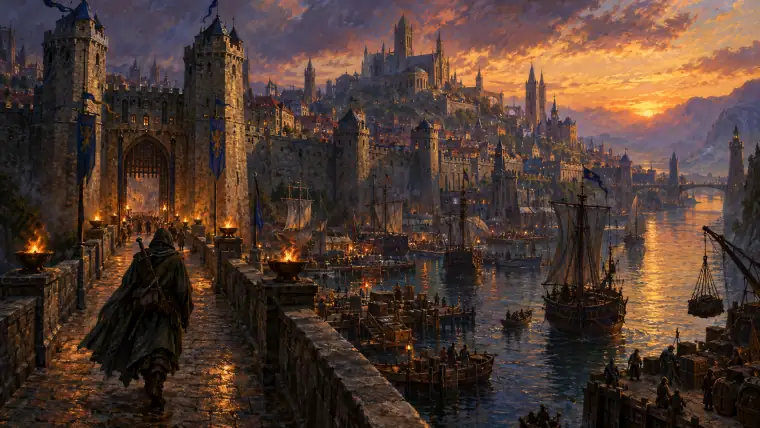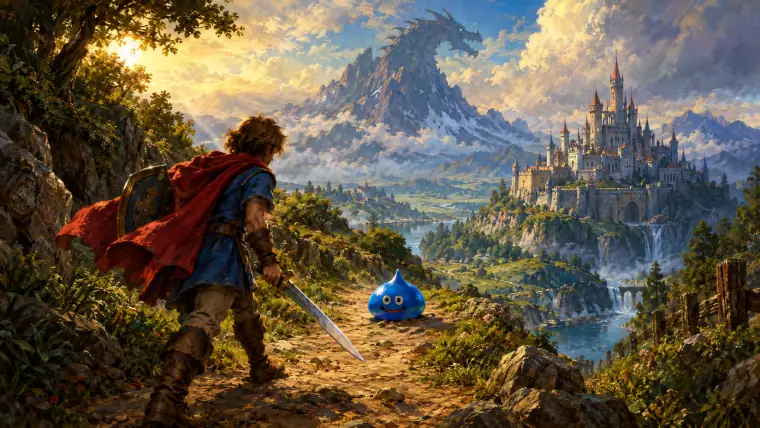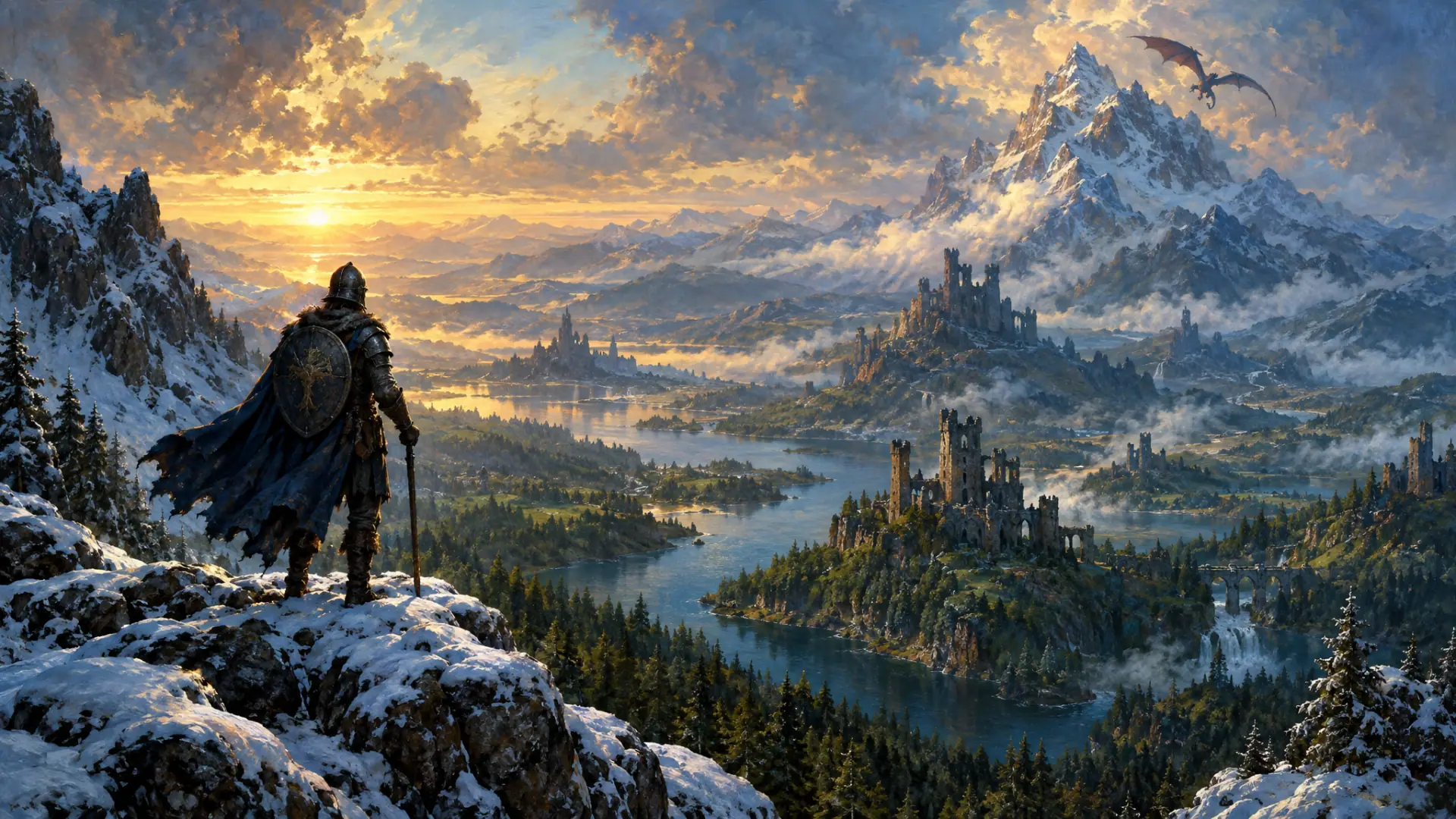
Dragon Age: Origins was BioWare's spiritual successor to Baldur's Gate, built on a world the studio owned outright. Its 'dark heroic fantasy,' reactive companions and morally ambiguous choices re-established the deep party-based computer RPG at the end of the 2000s.
Overview
The Blight has come to Ferelden. Darkspawn, a subterranean horde led by a corrupted dragon called the Archdemon, pour from the Deep Roads, and the kingdom's army gathers at the fortress of Ostagar with the last few Grey Wardens, an ancient order sworn to stop them. The player becomes one of those Wardens, and within hours the battle is lost, the young king is dead, and the general who withdrew his troops from the field has seized power as regent.
Dragon Age: Origins, developed by BioWare and published by Electronic Arts on November 3, 2009, was BioWare's return to the party-based fantasy computer role-playing game that had made its name with Baldur's Gate. The studio called it "dark heroic fantasy." Its world was its own, its companions argued, loved and betrayed, and its choices had no correct answers. It shipped 3.2 million copies in three months and won a string of Role-Playing Game of the Year awards.
Origins
BioWare's Edmonton studio began work on a demo in November 2002, soon after Neverwinter Nights. The aim, in part, was to make a spiritual successor to Baldur's Gate without the constraints of a Dungeons & Dragons license. The game was shown at E3 2004 simply as Dragon Age, then went quiet. It began on the Neverwinter Nights engine, switched to BioWare's new Eclipse engine midway, and paid for the change in time. More than 180 people worked on it.
Lead writer David Gaider built the world before the plot. Co-founder Greg Zeschuk described the target as somewhere between the high fantasy of Tolkien and the low fantasy of George R. R. Martin; co-founder Ray Muzyka hoped it could become the Lord of the Rings of game franchises. The familiar races were twisted: elves live in city slums as a despised underclass, dwarves are caught up in caste politics beneath the earth, mages are confined to a Circle watched by templars, and the horned Qunari are something new. Dragons came late: the team added them after a name generator produced the title. Early drafts had twelve playable origins, including a human commoner and a barbarian; six survived. The first character created was the general Loghain.
How it plays
The player chooses a race (human, elf or dwarf) and class (warrior, mage or rogue), which together determine one of six origin stories: a dwarf noble betrayed in Orzammar, a city elf in the alienage of Denerim, a mage in the Circle tower, and so on. Each origin ends with recruitment into the Grey Wardens, and characters from the origins return throughout the main story. After Ostagar the Warden must unite the dwarves, elves, mages and nobles of Ferelden under old treaties, while the regent Loghain fights a civil war.
Combat is real-time with pause, viewed from behind the characters or, on PC, from a tactical overhead camera. Players can issue orders to each member of the party or program their behavior with a "tactics" system of conditional rules. The difficulty, especially on PC, demanded careful use of the pause. The companions carry the game: the swamp witch Morrigan, voiced by Claudia Black; the self-deprecating Warden Alistair; the Chantry lay sister Leliana; the dwarf Oghren; the Qunari Sten; an elven assassin sent to kill the player; and a war dog. They comment on the Warden's decisions, approve or disapprove, banter among themselves as the party walks, and can be romanced. There is no morality meter; the game's decisions, about a werewolf curse, a possessed child or the dwarven throne, were designed to be ambiguous.
Reception & impact
Critics praised the story, companions, voice acting, music and tactical combat; Metacritic scores were 91 on PC and 86–87 on consoles, where the interface was simplified. Graphics and the sex scenes drew criticism, and some thought the six-year development showed in dated visuals. The Academy of Interactive Arts & Sciences named it Role-Playing/Massively Multiplayer Game of the Year, and it won Best PC Game and Best RPG at the 2009 Spike Video Game Awards, PC Gamer US's Game of the Year and the first Canadian Videogame Awards' Game of the Year. Eurogamer's Richard Cobbett later argued that it proved "a hardcore, older-fashioned game could still find a devoted audience," establishing a new baseline for the genre as Baldur's Gate had in 1998.
It was also an early showcase for Electronic Arts' downloadable content strategy, beginning on launch day with The Stone Prisoner, and more than a million DLC packs had been sold by the end of 2009. A PC toolset let players build their own campaigns.
Legacy
The expansion Dragon Age: Origins – Awakening followed on March 16, 2010, and the series continued with Dragon Age II (2011), Dragon Age: Inquisition (2014) and Dragon Age: The Veilguard (2024), with save imports carrying players' Ferelden decisions forward, plus novels and comics. Each sequel moved further from the tactical, party-based structure of Origins, which makes the first game the series' clearest link to the Baldur's Gate tradition. It stands between the Infinity Engine classics and the crowdfunded revival of the 2010s, led by games such as Pillars of Eternity, and eventually Baldur's Gate 3, which returned to the Forgotten Realms that Origins had been built to leave behind.
Marginalia
- Work on the first demo began in November 2002; the game was shown at E3 2004 as simply Dragon Age and re-revealed as Dragon Age: Origins in 2008.
- BioWare built it partly to make a Baldur's Gate–style game free of Dungeons & Dragons licensing restrictions.
- Early drafts had twelve origin stories, including a barbarian Avvar; six survived.
- Greg Zeschuk placed its tone between Tolkien's high fantasy and George R. R. Martin's grittier fiction.
- Its elves are an underclass living in city slums, an inversion of the usual noble fantasy elf.
- There is no karma meter: BioWare left players to judge whether their choices were good or bad.
- Players had bought more than a million downloadable content packs before the end of 2009.
Quick answers
- When was Dragon Age: Origins first released?
- Dragon Age: Origins was first released in 2009 (Windows, Xbox 360, PS3; Mac OS X in December).
- Who created Dragon Age: Origins?
- Dragon Age: Origins was made by James Ohlen (designer).
- Who published or developed Dragon Age: Origins?
- BioWare and Electronic Arts.
- What kind of work is Dragon Age: Origins?
- Dragon Age: Origins is a computer RPG in the Western Computer RPGs (CRPG) and Dark Fantasy tradition, released for Microsoft Windows, Xbox 360, PlayStation 3 and Mac OS X.
- Why is Dragon Age: Origins important?
- Dragon Age: Origins was BioWare's spiritual successor to Baldur's Gate, built on a world the studio owned outright. Its 'dark heroic fantasy,' reactive companions and morally ambiguous choices re-established the deep party-based computer RPG at the end of the 2000s.