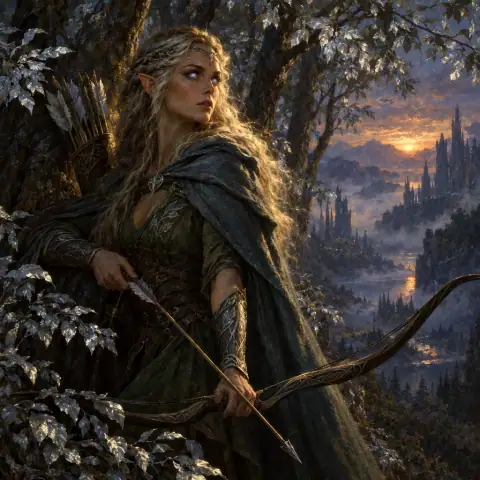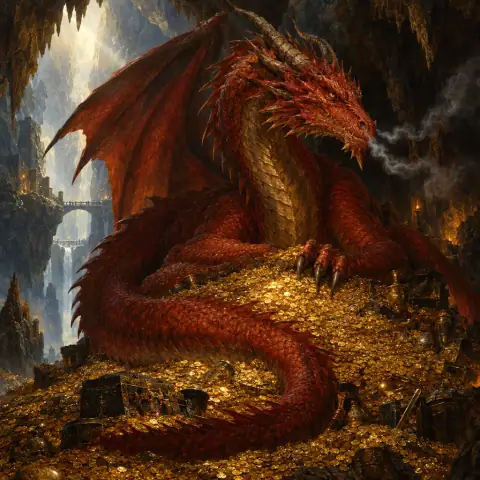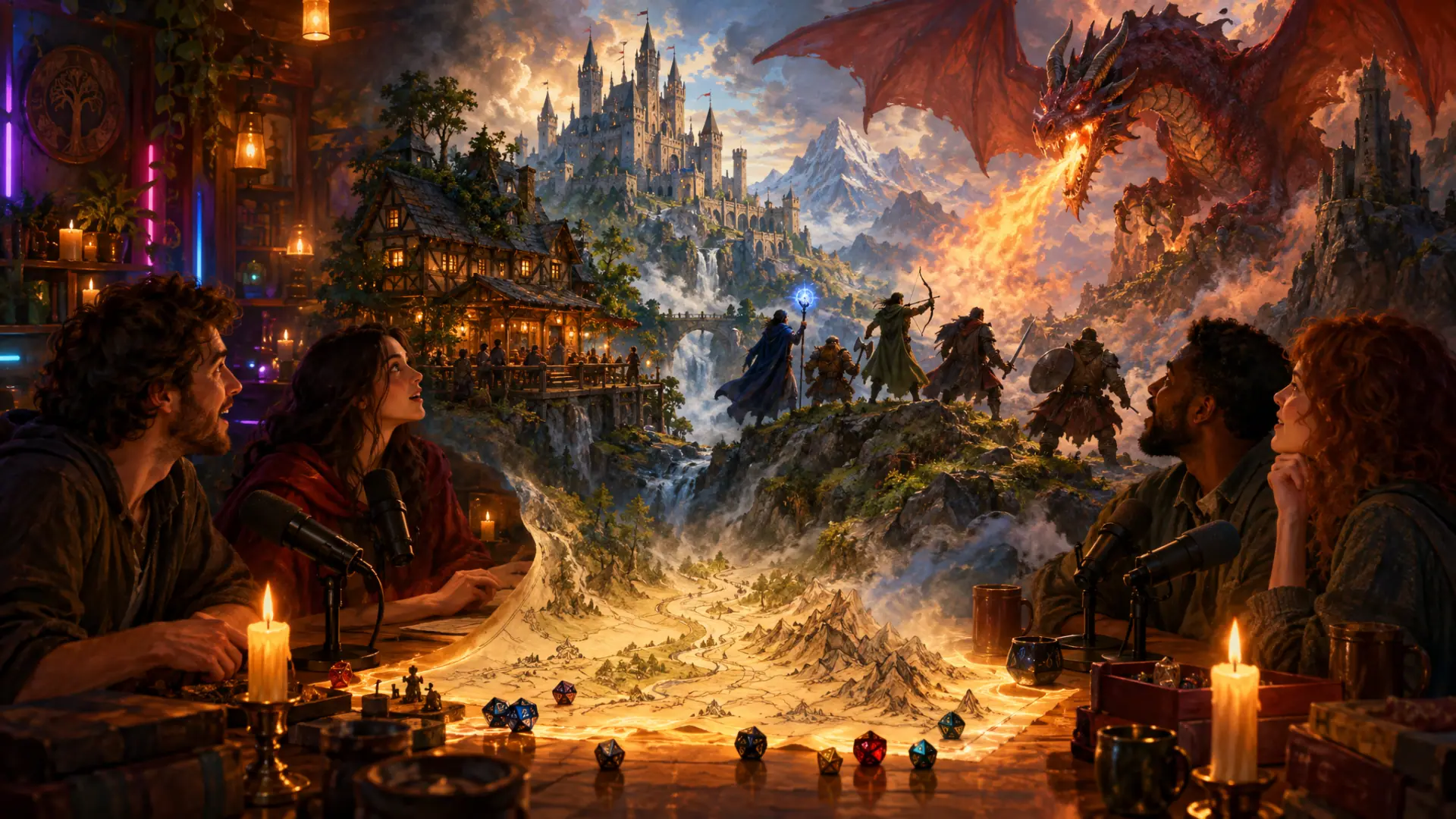
Romantasy is the biggest commercial shift in fantasy publishing since Harry Potter, reshaping imprints, bookshop tables and bestseller lists. It also reconnects the genre to one of its oldest ancestors, the medieval romance of knights, fairies and forbidden love.
Hallmarks
- The romance is load-bearing: remove it and the plot collapses
- Secondary worlds of fae courts, dragon riders, war colleges and cursed kingdoms
- Enemies-to-lovers, fated mates, forced proximity and other romance tropes
- Heroines who discover buried power as the stakes rise
- Explicit or high-heat romantic content, marketed to adult readers
- Long, cliffhanger-driven series with intense fan communities
What it is
Romantasy — a blend of "romance" and "fantasy" — is fantasy in which the love story is central to the plot, typically set in a secondary world. One working definition is simple: if you could remove the romance and still have the same story, it is not romantasy. Its settings borrow freely from high fantasy and fairy tale — fae courts, dragons, cursed kingdoms, magical academies and wars — but its narrative engine comes from the romance genre, with its tropes (enemies-to-lovers, fated mates, forced proximity), its emotional focus on the relationship, and, usually, its expectation that the couple will end up together.
Publishers sometimes separate "romantic fantasy," where the fantasy plot leads and romance matters, from "fantasy romance," where the love story is primary; others argue the two have merged. In practice "romantasy" is the name readers use, and much of it is written by women for a largely female audience.
Origins
Fantasy and romance share an ancestor: the medieval romance. Tales of knights, quests and courtly love were full of dragons and enchantments, and several put love between mortals and the fantastic at their center. Marie de France's 12th-century Lanval tells of a knight loved by a fairy lady; Tristan and Iseult made forbidden love and magic inseparable; Sir Thomas Malory's Le Morte d'Arthur turned on Lancelot and Guinevere. Renaissance works such as The Faerie Queene and Shakespeare's A Midsummer Night's Dream carried the mix forward, and Beauty-and-the-Beast stories supplied a template still in use.
In the modern era, romance lived in several fantasy niches. William Goldman's The Princess Bride (1973) made "true love" the heart of a fantasy adventure. Emma Bull's War for the Oaks (1987) centered a romance in a fairy war; paranormal romance and vampire romance — Anne Rice, Laurell K. Hamilton, and Stephenie Meyer's YA Twilight (2005) — built a huge readership, largely under the Urban Fantasy umbrella.
Evolution
The contemporary form took shape in the 2010s. Sarah J. Maas, after her Throne of Glass series (from 2012), published A Court of Thorns and Roses (2015), a Beauty and the Beast story that grew into a saga of fae politics and increasingly explicit romance. Readers who had grown up on Harry Potter and YA fantasy found in such books the same kind of world with adult relationships, a point The Economist made about the genre's appeal.
In 2023 and 2024 the term "romantasy" became a social-media trend and a marketing category. Rebecca Yarros's Fourth Wing (2023), set in a brutal war college where cadets bond with dragons, and its sequels broke sales records, with an adaptation announced for television. Sales were driven heavily by BookTok, and publishers launched and expanded imprints and special editions for the category.
Games have their own romantasy streak. BioWare's companion romances, from Baldur's Gate II to Dragon Age: Origins, made love stories a core pleasure of the CRPG, and Baldur's Gate 3 (2023) turned its romanceable companions into a fan phenomenon.
The genre's gender politics are argued as fiercely as its tropes. Some readers see romantasy as inherently feminist — books largely written by women, for women, with warrior heroines who claim their own desire. Others argue that it often ties a heroine's power to a dominant male love interest and repeats rigid gender roles. The debate has only grown with the genre's commercial weight, and publishers created dedicated imprints in response to the success of Maas and Yarros.
How to tell it apart
- Romantasy vs. fantasy with a romance: The Lord of the Rings has Aragorn and Arwen, but you could cut them without losing the plot. In romantasy the relationship is the plot, and the climax is emotional as well as martial.
- vs. Urban Fantasy and paranormal romance: paranormal romance is its modern-world cousin; romantasy usually lives in a secondary world.
- vs. Fairy-Tale Fantasy: many romantasies are fairy-tale retellings (Beauty and the Beast is the favorite), but fairy-tale fantasy can be about anything, while romantasy is always about the couple.
- vs. Cozy Fantasy: both prize relationships, but romantasy runs on danger, war and heat; cozy fantasy runs on comfort.
- vs. High / Epic Fantasy: romantasy often borrows high fantasy's maps, wars and dragons, but its central question is who the heroine will love and trust, not whether the Dark Lord falls.
Where to start
- The Princess Bride — the classic of "true love" in a fantasy frame.
- War for the Oaks (Emma Bull, 1987) — an early modern romantic fantasy.
- A Court of Thorns and Roses — the series that defined the modern category.
- Fourth Wing — dragon riders and the 2020s boom at full speed.
Marginalia
- Some publishers distinguish "romantic fantasy," where the fantasy leads, from "fantasy romance," where the love story does; others say the border has all but vanished.
- Marie de France's 12th-century lai Lanval, about a knight's love for a fairy lady at Arthur's court, is an early fantasy romance.
- Emma Bull's War for the Oaks (1987) is often cited among the origins of modern romantic fantasy.
- Sarah J. Maas's A Court of Thorns and Roses (2015) reworks Beauty and the Beast in a world of scheming fae courts.
- Rebecca Yarros's Fourth Wing (2023), set in a lethal war college for dragon riders, was published by Entangled's Red Tower Books imprint.
- Fourth Wing sold more than two million copies in its first six months and reached No. 1 on The New York Times bestseller list.
- Romantasy's sales have been driven heavily by TikTok's BookTok community, especially in 2023 and 2024.
Quick answers
- What is Romantasy?
- Fae princes, dragon riders and enemies who become lovers: the romance-first fantasy of Sarah J. Maas and Rebecca Yarros that turned BookTok into a bestseller machine in the 2020s.
- What are the hallmarks of Romantasy?
- The romance is load-bearing: remove it and the plot collapses; Secondary worlds of fae courts, dragon riders, war colleges and cursed kingdoms; Enemies-to-lovers, fated mates, forced proximity and other romance tropes; Heroines who discover buried power as the stakes rise; Explicit or high-heat romantic content, marketed to adult readers; Long, cliffhanger-driven series with intense fan communities.
- When did Romantasy emerge?
- Roots in medieval romance; the 'romantasy' boom of the 2010s–2020s.
- Where does the name “Romantasy” come from?
- A portmanteau of "romance" and "fantasy"; it became a social-media and marketing label in 2023–24, largely via BookTok.
- What are the key works of Romantasy?
- A Court of Thorns and Roses, Fourth Wing and The Princess Bride.