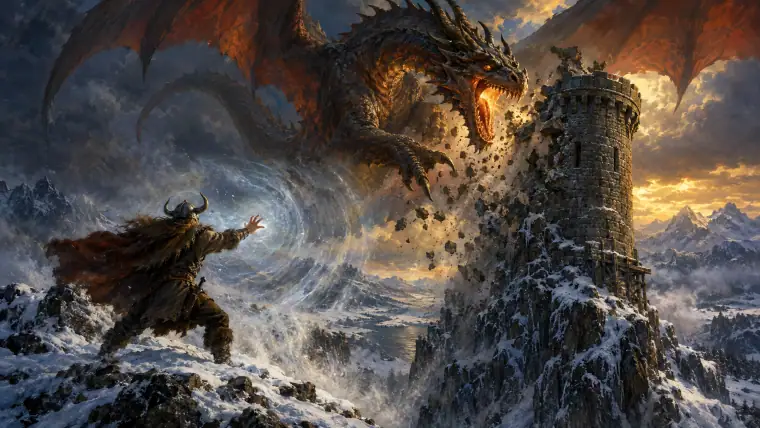
No creature has traveled further. The dragon defined the final encounter of heroic literature, gave Dungeons & Dragons half its title and its color-coded ecology, and remains the boss that video games save for last.
Origins
The dragon is older than writing about it. In Mesopotamia, composite beasts with serpent bodies, lion forelegs and bird hind legs appear in art from the Akkadian period (c. 2334–2154 BCE); the Akkadians called one of them the mušḫuššu, "furious serpent." The Babylonian creation epic Enūma Eliš tells of the god Marduk splitting the chaos goddess Tiamat to make heaven and earth — scholars now doubt she was imagined as a serpent at all, but the name would have a long second life. The Greek drakōn was simply "a snake and something more," a great serpent guarding a spring, a fleece or an apple tree. In China and East Asia, dragons were benevolent lords of rain and later emblems of the emperor, a separate lineage that would reach games through Japan.
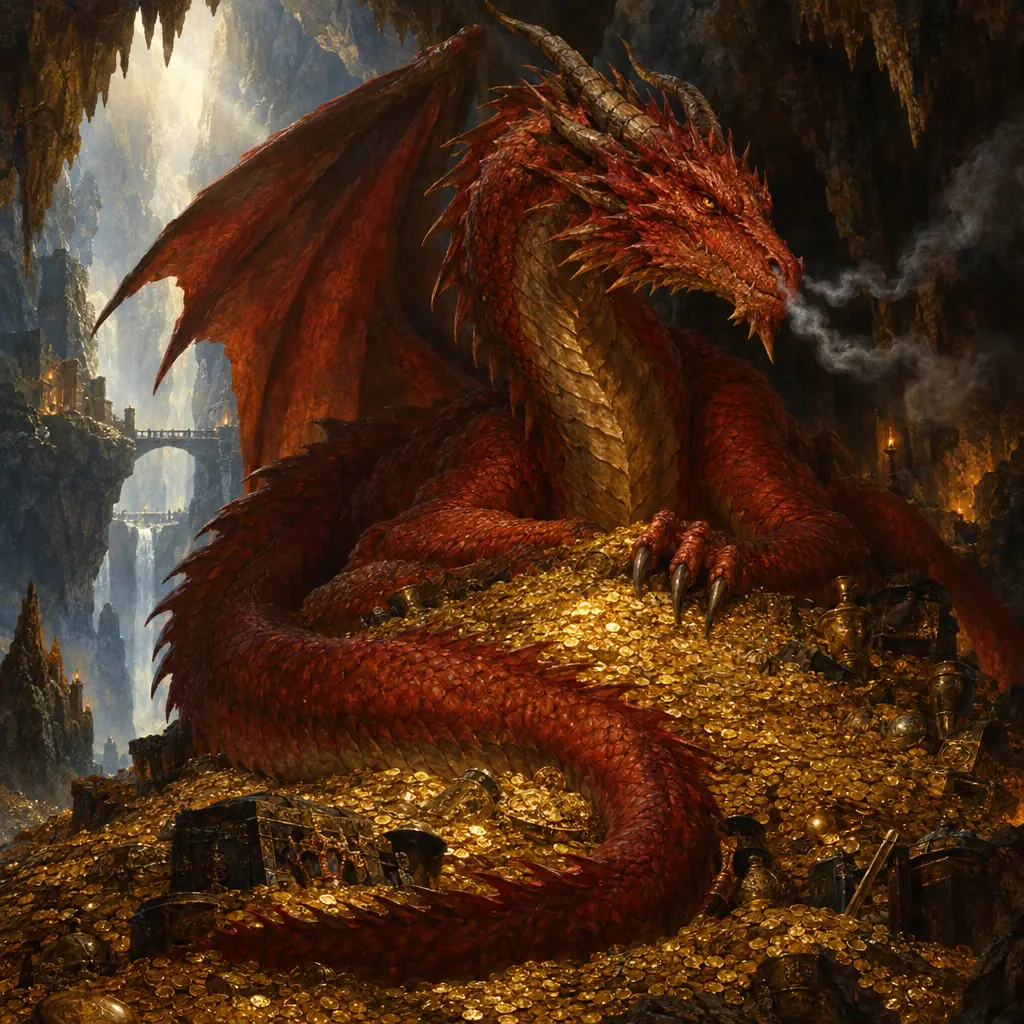
The Western dragon of fantasy was forged in the north. At the end of Beowulf a slave steals a jeweled cup from a barrow where a dragon has slept for centuries on a dead people's treasure; the beast burns the land, and the old king dies killing it. In the Norse Völsung legend preserved alongside The Eddas, Sigurd digs a pit on the path of the dragon Fáfnir, stabs him from below, tastes his heart's blood and understands the speech of birds — and takes a hoard cursed by a ring. Medieval Christianity supplied the rest, casting the dragon as Satan and giving it to saints to slay, above all Saint George in the thirteenth-century Golden Legend.
Into the dungeon
J. R. R. Tolkien, who taught Beowulf at Oxford, put the two northern dragons together in Smaug, the wyrm of The Hobbit (1937). Smaug is greedy and dangerous like his ancestors, but also vain, sardonic and talkative — the first modern dragon with a personality, and one a burglar can trick into revealing the weak spot in his armor. Tolkien's essay "On Fairy-Stories" explained his lifelong attraction in one line: "I desired dragons with a profound desire."
Dragons were already on the tabletop in Chainmail's Fantasy Supplement (1971), and three years later they were in the title of Dungeons & Dragons. The 1974 box gave Gygax and Arneson's game six species keyed to color and breath — white (cold), black (acid), green (gas), blue (lightning), red (fire) and a lawful gold dragon — that aged through size categories, sometimes slept, could talk and cast spells, and could even be beaten into submission and sold. The Greyhawk supplement (1975) added four more metallic dragons and two monarchs, the Platinum Dragon and the five-headed Chromatic Dragon, who became Tiamat in the 1977 Monster Manual. The logic of the hoard was built into the treasure tables: the deadliest monster guarded the best Loot & loot tables. Dragonlance (1984) went further, making the return of dragons the engine of a whole world, and its queen Takhisis a five-headed echo of Tiamat.
Computer games inherited both lines. Don Woods added a dragon to Colossal Cave Adventure in 1977, killable with bare hands by a player bold enough to type "yes." Dragon Quest (1986) — its very title a sign of the monster's pull — ended with the Dragonlord, and Nihon Falcom's Dragon Slayer was named for the job. A quarter century later, The Elder Scrolls V: Skyrim (2011) made dragons the world's returning apocalypse and the player the Dragonborn, devouring their souls to learn words of power.
Variations
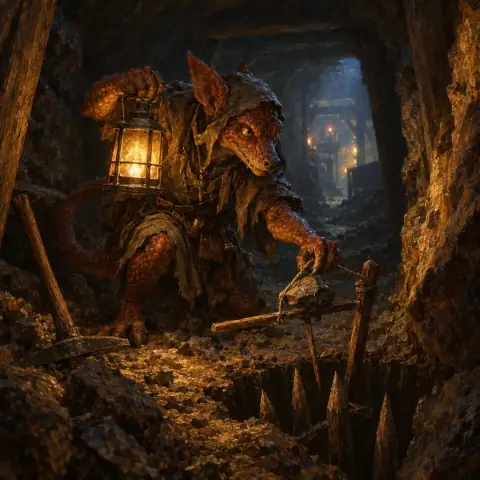
Fantasy literature kept splitting the dragon into new species. Le Guin's dragons in Earthsea are ancient, wise and dangerous, speaking the true language of making; Anne McCaffrey's in Dragonriders of Pern are telepathic partners bred to fight Thread; George R. R. Martin's in A Song of Ice and Fire are weapons of dynastic war. D&D's own family tree kept branching into gem dragons, dragon turtles, dracoliches and the small, dragon-worshipping kobolds, and Dungeons & Dragons 4th Edition (2008) made the dragon-blooded dragonborn a player race, one that Dungeons & Dragons 5th Edition kept. Across every version, the dragon stays what Beowulf made it: the last and greatest guardian, sitting on the thing the heroes came for.
Migration
How the creature traveled from story to story.
- 2300 BCEMesopotamian artSerpent-bodied, lion-footed composite beasts such as the mušḫuššu appear from the Akkadian period (c. 2334–2154 BCE).
- 1000BeowulfA dragon sleeps on a barrow hoard until a thief steals a cup; the old king dies killing it. The template of the hoard-guardian.
- 1220The Eddas and Völsung legendSigurd kills the dragon Fáfnir from a pit and wins a cursed hoard with a ring at its heart.
- 1937The HobbitTolkien's Smaug: vain, clever, talkative, and asleep on a mountain of gold. The modern dragon is born.
- 1974Dungeons & DragonsSix color-coded dragons — white, black, green, blue, red and gold — with breath weapons and growing age categories.
- 1975Greyhawk supplementAdds brass, copper, bronze and silver dragons, the Platinum Dragon and the five-headed Chromatic Dragon, later named Tiamat.
- 1986Dragon QuestJapan's first blockbuster RPG ends with the Dragonlord, a villain who reveals his true dragon form.
- 2011The Elder Scrolls V: SkyrimDragons return to Tamriel and the player, the Dragonborn, absorbs their souls to learn shouts in their language.
Marginalia
- Tolkien named Smaug from the past tense of a Germanic verb meaning 'to squeeze through a hole' — what he called 'a low philological jest.'
- In his essay 'On Fairy-Stories' Tolkien wrote, 'I desired dragons with a profound desire.'
- The 1974 D&D box made only the gold dragon lawful; red, green and black were chaotic, blue and white neutral.
- Tiamat began as the nameless 'Chromatic Dragon' in the Greyhawk supplement (1975) and was named in the 1977 Monster Manual, after the Babylonian chaos goddess.
- Don Woods added the dragon to Colossal Cave Adventure in 1977; asked what to kill it with, a player can answer 'yes' to 'With what? Your bare hands?' and win.
- In Dragon Quest, the Dragonlord offers the hero half the world; accepting ends the game badly.
Quick answers
- Where does the Dragon come from?
- Ancient Near Eastern myth and art (Akkadian period, c. 2300 BCE); the hoard-guarding Western dragon via Beowulf and the Eddas.
- When did the Dragon first appear?
- c. 2300 BCE, in Mesopotamian art.
- How did the Dragon get into games?
- Key appearances: Dungeons & Dragons (1974), Dragon Quest (1986) and The Elder Scrolls V: Skyrim (2011).
- Why is the Dragon significant?
- No creature has traveled further. The dragon defined the final encounter of heroic literature, gave Dungeons & Dragons half its title and its color-coded ecology, and remains the boss that video games save for last.