Earthsea gave fantasy its wizard school, its most influential magic of true names, and a dark-skinned hero at a time when the genre had almost none. Le Guin's essays and example raised the literary ambitions of fantasy and science fiction alike.
Hard times are coming, when we'll be wanting the voices of writers who can see alternatives to how we live now.
Life
Ursula Kroeber was born in Berkeley, California, on 21 October 1929, the youngest child of the anthropologist Alfred Kroeber and the writer Theodora Kroeber. She grew up in a house full of books, visiting scholars and Native Californian storytellers, and spent summers at the family's ranch in the Napa Valley. As a girl she read Norse myth, the fairy tales of Lord Dunsany and the science fiction pulps; she submitted her first story to Astounding at eleven and was rejected.
She studied Renaissance French and Italian literature at Radcliffe College (graduating in 1951) and took a master's degree at Columbia. On a Fulbright scholarship to France she met the historian Charles Le Guin, whom she married in Paris in 1953. From 1958 they lived in Portland, Oregon, where they raised three children and where she lived for the rest of her life. She began publishing science fiction in the early 1960s and became one of the most honored writers in the field: eight Hugos, six Nebulas, the SFWA Grand Master award in 2003, recognition as a Library of Congress Living Legend, and in 2014 the National Book Foundation Medal for Distinguished Contribution to American Letters, whose acceptance speech, a call for writers "who can see alternatives to how we live now," went viral. She died at home in Portland on 22 January 2018.
Work
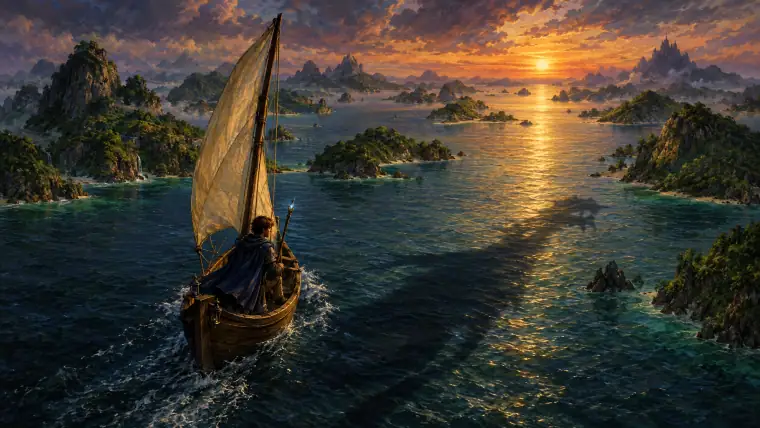
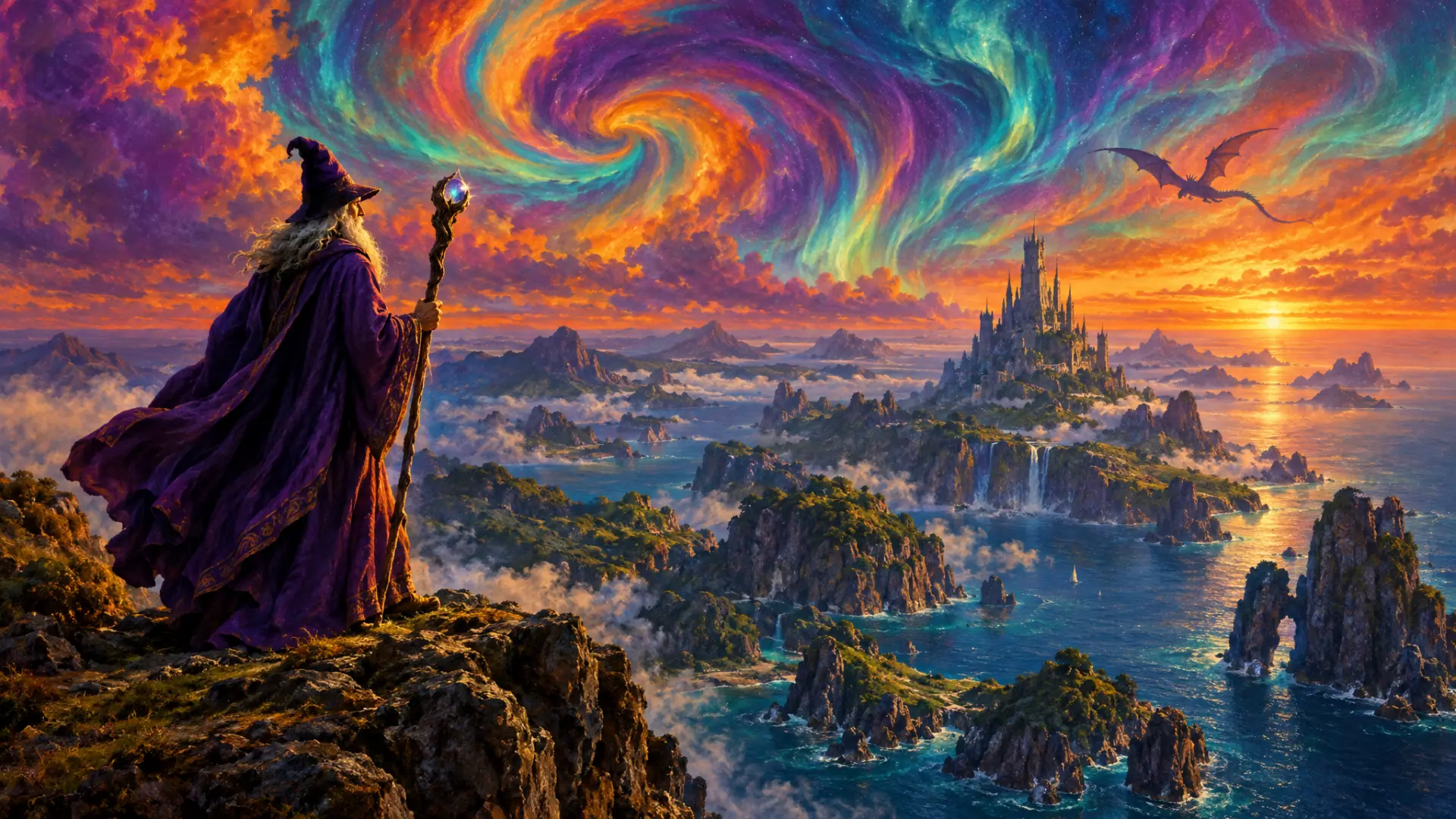
In 1967 the Berkeley publisher Parnassus Press asked Le Guin to write a book for older children. The result, A Wizard of Earthsea (1968), follows Sparrowhawk — whose true name is Ged — from a goatherd's childhood on the island of Gont to the school for wizards on Roke, where, in pride, he summons a shadow from the world of the dead and must spend the book fleeing, then hunting it across the islands of the Archipelago. In Earthsea, magic is language: to know a thing's true name is to have power over it, and every act of magic disturbs the Equilibrium of the world. Ged's victory comes not from defeating the shadow but from naming it with his own name.
The Tombs of Atuan (1971), a Newbery Honor book, and The Farthest Shore (1972), winner of the National Book Award for Children's Books, completed the original trilogy. Eighteen years later Tehanu (1990), which won the Nebula, returned to Earthsea from the perspective of the aging Tenar and critiqued the male-centered magic of the earlier books; Tales from Earthsea and The Other Wind (both 2001) followed, the latter winning the World Fantasy Award. Together they form Earthsea. Her adult science fiction — The Left Hand of Darkness (1969), a study of a world without fixed gender, and The Dispossessed (1974), an "ambiguous utopia" — each won both the Hugo and the Nebula.
Legacy
Earthsea is one of the pillars of modern High / Epic Fantasy and Children's & YA Fantasy. Its school of wizards on Roke preceded Hogwarts in Harry Potter by three decades, and its dark-skinned hero quietly overturned the genre's defaults. Its disciplined, rule-bound magic — power with a cost, grounded in language and balance — made Le Guin a founder of what later critics call the coherent Hard & soft magic systems.
Le Guin is not on Gygax's Appendix N, and her books did not supply D&D with any monsters or rules; D&D's wizards took their magic from Jack Vance instead. But true names became a lasting idea in games: the notion that knowing a demon's or a dragon's secret name grants power over it appears in D&D lore about fiends and in many later fantasy games and settings. Earthsea's own screen history was troubled. A 2004 television miniseries, Legend of Earthsea, whitewashed her characters, and she publicly objected; Studio Ghibli's Tales from Earthsea (2006), directed by Gorō Miyazaki, drew a more measured but still critical response from her. Her essays — "From Elfland to Poughkeepsie" (1973) among them — remain essential reading for anyone who writes fantasy worlds, on the page or for play.
Marginalia
- Her father was the anthropologist Alfred Kroeber and her mother the writer Theodora Kroeber, author of Ishi in Two Worlds.
- A Wizard of Earthsea (1968) was commissioned by the small Berkeley publisher Parnassus Press as a book for older children.
- Ged and most of the people of the Archipelago are brown- or dark-skinned — a choice Le Guin said television adaptations repeatedly ignored.
- The Farthest Shore won the National Book Award for Children's Books in 1973, and Tehanu won the 1990 Nebula Award for Best Novel.
- The Left Hand of Darkness (1969) won both the Hugo and the Nebula for best novel, as did The Dispossessed (1974).
- She is not on Gygax's Appendix N, which lists few women, though Earthsea shaped later ideas of how fantasy magic should work.
Quick answers
- Who was Ursula K. Le Guin?
- An anthropologist's daughter who sent a boy named Ged to a school for wizards in 1968 and made true names, balance and the shadow within into the deepest magic in fantasy.
- When was Ursula K. Le Guin born?
- Ursula K. Le Guin was born in 1929 in Berkeley, California and died in 2018.
- What is Ursula K. Le Guin known for?
- Ursula K. Le Guin is best known for Earthsea.
- Why does Ursula K. Le Guin matter to fantasy and games?
- Earthsea gave fantasy its wizard school, its most influential magic of true names, and a dark-skinned hero at a time when the genre had almost none. Le Guin's essays and example raised the literary ambitions of fantasy and science fiction alike.