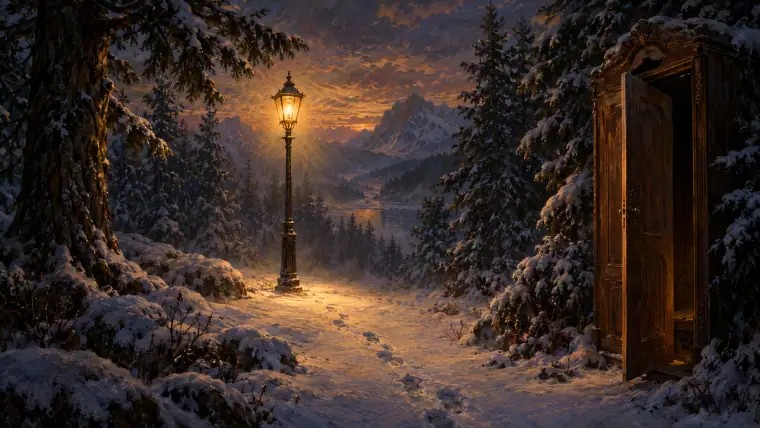
Harry Potter made fantasy the default reading of a generation, reshaped children's publishing, and grew into films, stage plays, theme parks and one of the best-selling games of the 2020s.
Overview
On 26 June 1997 Bloomsbury published a modest first novel about a boy who lives in a cupboard under the stairs. Ten years later, on 21 July 2007, the seventh and final volume sold 11 million copies in its first 24 hours. J. K. Rowling's Harry Potter novels are the best-selling book series in history, with more than 600 million copies sold in more than 80 languages, and they changed who reads fantasy. A generation that grew up waiting at midnight for each new book became adults who took dragons, wands and houses for granted — and who made fantasy the dominant genre of 21st-century popular culture.
Origins
Rowling has said the idea came to her in 1990 on a delayed train from Manchester to London. She wrote the first book over several years, partly as a single mother in Edinburgh, and it was rejected by a number of publishers before Bloomsbury accepted it. Scholastic bought the American rights and published it as Harry Potter and the Sorcerer's Stone in 1998.
The books draw on a long British tradition: the boarding-school story, the orphan's discovery of a secret heritage, and the hidden magical world alongside our own. They sit within the lineage of Children's & YA Fantasy from Narnia onward, while their concealed wizarding society beneath modern Britain gives them the bones of Urban Fantasy.
The story
Harry, orphaned as a baby when the dark wizard Voldemort killed his parents, learns on his eleventh birthday that he is famous in a world he never knew: the curse that killed his parents rebounded and destroyed Voldemort's body, leaving a lightning-shaped scar. At Hogwarts School of Witchcraft and Wizardry he befriends Ron Weasley and Hermione Granger, is sorted into Gryffindor house, and year by year — Philosopher's Stone (1997), Chamber of Secrets (1998), Prisoner of Azkaban (1999), Goblet of Fire (2000), Order of the Phoenix (2003), Half-Blood Prince (2005), Deathly Hallows (2007) — confronts Voldemort's return. The books darken and lengthen as their readers age, moving from puzzle-box school mysteries to a war story about prejudice, sacrifice and death.
Harry is a textbook Chosen One, and Voldemort a The Dark Lord in the Tolkien tradition, but Rowling's real talent was domestic: the texture of school life, the jokes, the sweets and the rules.
Reception & impact
Early reviews compared Rowling to Roald Dahl; by the fourth book the New York Times had created a separate children's bestseller list, partly because the Potter books were dominating the main one. Critics debated the prose and the originality, but the series' impact on reading, on children's publishing and on the adult market for young-adult fiction was undeniable. Warner Bros.' eight films (2001–11) became one of the highest-grossing film series ever.
Games followed at once, and one of the first came from the heart of the hobby-game world. In August 2001 Wizards of the Coast, riding the success of Magic: The Gathering and Pokémon cards, launched the Harry Potter Trading Card Game; it released four expansions before being discontinued. Electronic Arts published the first video games in 2001, and LEGO and many other tie-ins followed. In 2023 Avalanche Software's open-world RPG Hogwarts Legacy sold 12 million copies in its first two weeks and 40 million by December 2025, despite calls for a boycott over Rowling's public statements on transgender people.
Legacy
Those statements, beginning in 2019–20, divided readers, fans and the stars of the films, and they complicate any account of the series today; many fans have separated their love of the books from the author's views, while others have walked away. The franchise, meanwhile, continues: the stage play Harry Potter and the Cursed Child (2016), the Fantastic Beasts films, theme parks and games.
HBO's television adaptation, planned as a book-per-season retelling, is set to premiere at Christmas 2026 with Harry Potter and the Philosopher's Stone. Nearly three decades after that first print run, the story is being introduced to its third generation of readers and viewers.
Marginalia
- Harry Potter and the Philosopher's Stone was published by Bloomsbury on 26 June 1997.
- Deathly Hallows sold 11 million copies in its first 24 hours (2.7 million UK, 8.3 million US), the fastest-selling book on record at the time.
- Wizards of the Coast launched a Harry Potter Trading Card Game in August 2001; it was discontinued after its last expansion in 2002–03.
- EA published the first Harry Potter video games in 2001, alongside the first film.
- Hogwarts Legacy (2023) sold 12 million copies in its first two weeks and 40 million by December 2025.
- HBO's television adaptation, beginning with Harry Potter and the Philosopher's Stone, is set to premiere at Christmas 2026.
Quick answers
- When was Harry Potter first published?
- Harry Potter was first published in 1997–2007.
- Who created Harry Potter?
- Harry Potter was made by J. K. Rowling (author).
- What kind of work is Harry Potter?
- Harry Potter is a book series in the Children's & YA Fantasy and Urban Fantasy tradition, released for Novels, Films (2001–11), Trading card game (2001) and Video games (2001– ).
- Why is Harry Potter important?
- Harry Potter made fantasy the default reading of a generation, reshaped children's publishing, and grew into films, stage plays, theme parks and one of the best-selling games of the 2020s.