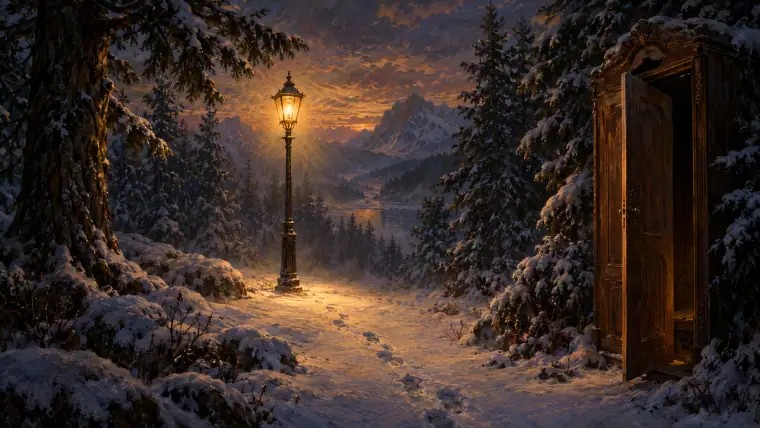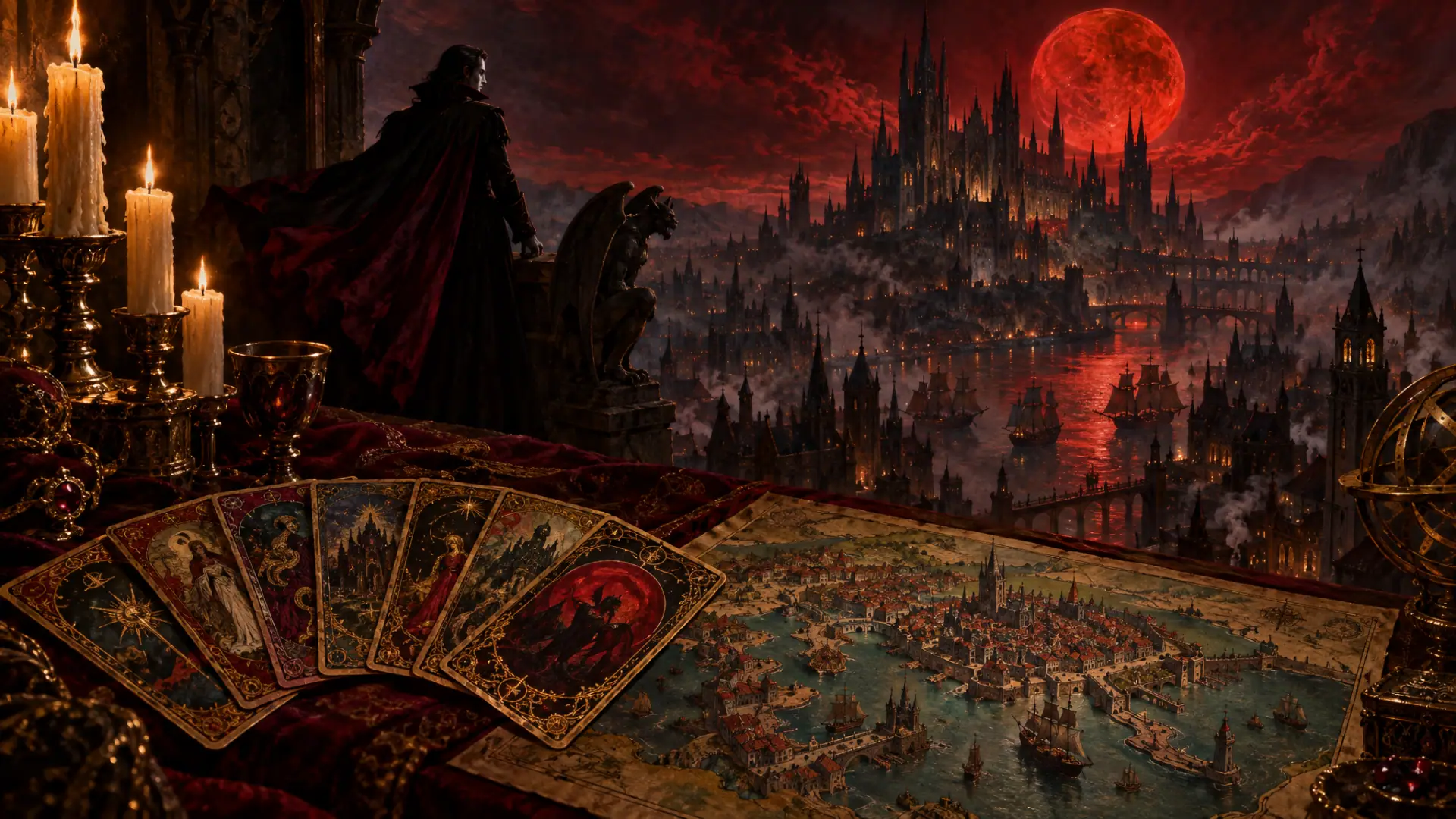
His Dark Materials proved children's fantasy could carry theology, physics and philosophy, won the first Whitbread Book of the Year for a children's novel, and answered Narnia with a story on the side of the rebels.
Overview
In Lyra Belacqua's Oxford, every human being has a daemon, an animal-shaped companion that is also their soul, and children's daemons change shape until they settle at adolescence. That single image is enough to make Philip Pullman's His Dark Materials unforgettable. But the trilogy — Northern Lights (1995; The Golden Compass in North America), The Subtle Knife (1997) and The Amber Spyglass (2000) — goes much further, building from a Victorian-flavored adventure among armored bears and witches into a war against God, fought across many worlds, for the right of conscious beings to grow up.
Origins
Pullman, a former teacher who had taught at Westminster College, Oxford, took his title and his great theme from John Milton's Paradise Lost, where Chaos is made of "his dark materials." He has described the trilogy as Paradise Lost retold with the Fall as something to be celebrated: the moment of knowledge, experience and adulthood. He was also openly arguing with C. S. Lewis, whose Narnia books he criticized for their treatment of growing up and their religious vision. Scholastic published Northern Lights in the UK in July 1995; Knopf issued it in the United States in 1996 as The Golden Compass.
The story
Lyra, a half-wild girl raised among the scholars of Jordan College, and her daemon Pantalaimon set out to rescue her friend Roger from the "Gobblers," agents of the church's Magisterium who are kidnapping children and severing them from their daemons in an Arctic station. She carries an alethiometer, a truth-telling instrument, and gains allies in the armored bear Iorek Byrnison, the Texan aeronaut Lee Scoresby and the witch Serafina Pekkala. At the heart of the conflict is Dust, a mysterious particle that gathers around adults and that the Church regards as the physical trace of Original Sin.
In The Subtle Knife Lyra meets Will Parry, a boy from our own Oxford, who becomes bearer of a knife that can cut windows between worlds. The Amber Spyglass sends them into the land of the dead and toward a final revolt, led by Lyra's father Lord Asriel, against the Authority — an ancient angel who has claimed to be the Creator. The ending, in which Lyra and Will must choose to live apart in their separate worlds, is one of the most famous heartbreaks in Children's & YA Fantasy.
Reception & impact
Northern Lights won the 1995 Carnegie Medal and the Guardian Children's Fiction Prize; in 2007 it was voted the "Carnegie of Carnegies." The Amber Spyglass became, in 2001, the first children's book to win the overall Whitbread Book of the Year. In the BBC's 2003 Big Read, the trilogy placed third among the UK's best-loved novels. Religious critics attacked the books as anti-Christian, which only increased their visibility.
The trilogy arrived at the same moment as Harry Potter, and together the two series transformed the market, persuading publishers that long, complex fantasy for young readers could sell to adults too. Stage and screen adaptations followed: a two-part National Theatre production in 2003, New Line Cinema's film The Golden Compass (2007), and a BBC One/HBO television series that ran for three seasons from 2019. Alongside the film, Sega published The Golden Compass video game (2007), developed by Shiny Entertainment — a modest licensed action-adventure that let players control Lyra and Iorek, and an example of how film tie-ins, rather than RPG designers, usually carried literary fantasy into games in that decade.
Legacy
Pullman returned to Lyra's world with The Book of Dust, a second trilogy: La Belle Sauvage (October 19, 2017), set when Lyra is a baby; The Secret Commonwealth (October 3, 2019), with Lyra at twenty; and The Rose Field (October 23, 2025), which concluded the sequence. With the publication of The Rose Field, the full cycle of six novels, begun in 1995, is complete.
The daemon remains Pullman's most portable invention. Readers still ask each other what form their own daemon would take — a parlor game that has migrated into online quizzes, fan art and roleplaying communities, and a small proof that a novel's central idea can become something people play.
Marginalia
- The title comes from Book II of John Milton's Paradise Lost.
- Northern Lights won the 1995 Carnegie Medal and in 2007 was voted the 'Carnegie of Carnegies,' the best winner in the medal's first 70 years.
- The Amber Spyglass was the first children's book to win the overall Whitbread Book of the Year, in 2001.
- The trilogy placed third in the BBC's 2003 Big Read poll of the UK's best-loved novels.
- Sega published a video game of The Golden Compass alongside the 2007 film.
- The Book of Dust trilogy concluded with The Rose Field on October 23, 2025.
Quick answers
- When was His Dark Materials first published?
- His Dark Materials was first published in 1995–2000.
- Who created His Dark Materials?
- His Dark Materials was made by Philip Pullman (author).
- What kind of work is His Dark Materials?
- His Dark Materials is a book series in the Children's & YA Fantasy, Portal Fantasy and Science Fantasy tradition.
- Why is His Dark Materials important?
- His Dark Materials proved children's fantasy could carry theology, physics and philosophy, won the first Whitbread Book of the Year for a children's novel, and answered Narnia with a story on the side of the rebels.