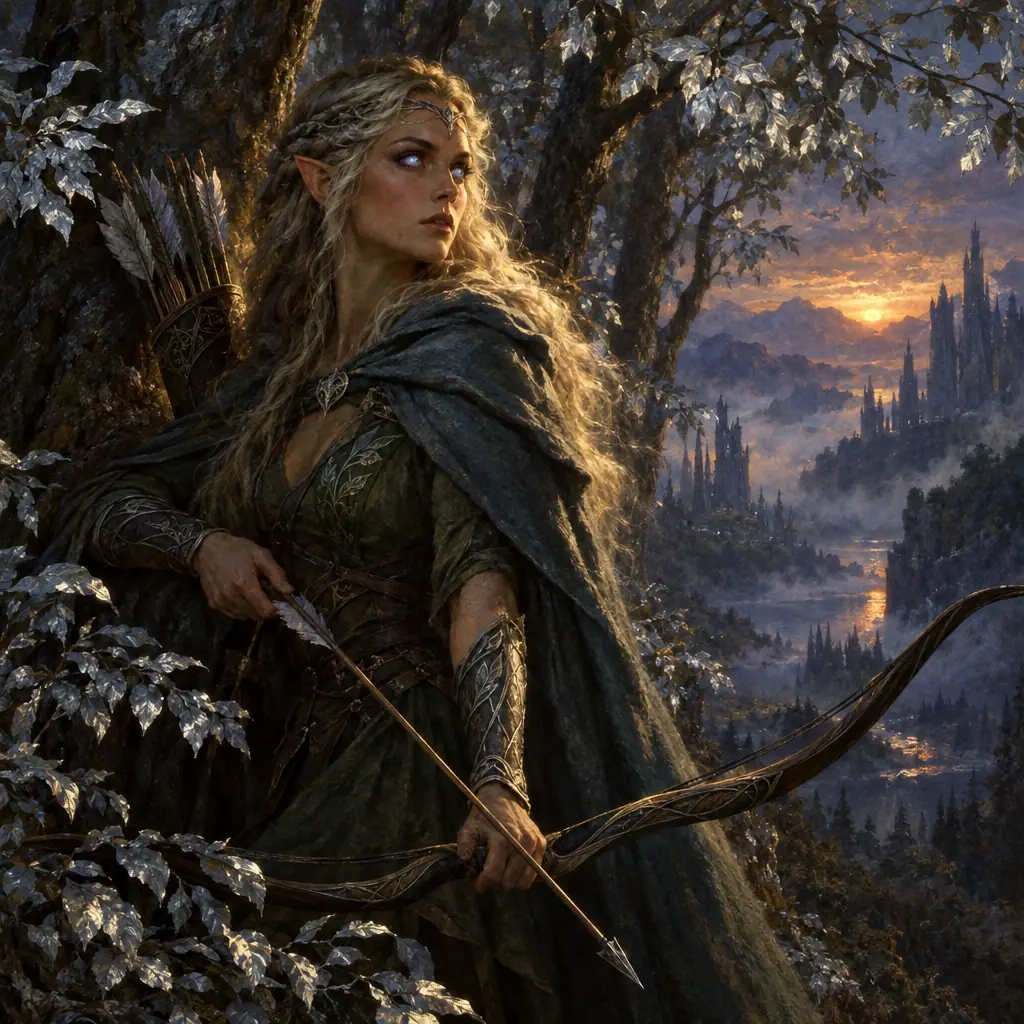
The elf is fantasy's great 'other people': immortal, beautiful, often aloof. Tolkien's version became the default in games, and D&D's drow and Warcraft's night elves show how far designers have pushed it since.
Origins
The word is ancient and Germanic — Old English ælf, Old Norse álfr — probably meaning something like "white one." Early English elves were powerful and ambivalent: medical charms blamed them for "elf-shot" illnesses, while the adjective ælfscȳne, "elf-beautiful," described seductive biblical heroines, and parents named sons Ælfred and Ælfwine. Beowulf lists ylfe among the monstrous descendants of Cain. In Iceland, Eddic poetry pairs "Æsir and elves" as if they were nearly gods, and Snorri Sturluson's Prose Edda (c. 1220) divides them into light-elves above and dark-elves below the earth — a scheme modern scholars think Snorri borrowed from Christian angels and demons, and one that games would later seize on.
Then the elf shrank. Scottish ballads kept dangerous elf-knights and elf-queens, but in England Shakespeare's A Midsummer Night's Dream made fairies tiny and whimsical, and the Victorians gave them butterfly wings, stocking caps and a cobbler to help. The young Tolkien wrote in that key in "Goblin Feet" (1915) and came to loathe it. The adult Tolkien, with Lord Dunsany's perilous Elfland in The King of Elfland's Daughter (1924) before him, reversed the shrinkage: his Eldar in The Hobbit, The Lord of the Rings and The Silmarillion are tall, immortal, grave and luminous, with languages of their own. In the same year as The Fellowship of the Ring, Poul Anderson's The Broken Sword (1954) went back to the sagas for elves who were beautiful, soulless and cruel.
Into the dungeon
Chainmail's Fantasy Supplement (1971) put elves on the wargaming table, and Dungeons & Dragons (1974) made the elf a Player character choice. Designers immediately found Tolkien's elves too good at everything; the rules let an elf fight or cast spells but capped them at 4th and 8th level, limits that lasted until the third edition. AD&D's 1977 Monster Manual sorted elves into high, gray, wood, aquatic and dark kin — the last only a rumor, "the 'Black Elves,' or drow." Gygax made them real in Hall of the Fire Giant King (1978) and the Descent into the Depths of the Earth and Vault of the Drow modules that followed: a matriarchal, spider-worshipping civilization beneath the world. A decade later R. A. Salvatore gave the drow their most famous renegade, Drizzt Do'Urden, in The Icewind Dale Trilogy.
Computer games inherited the lot. Wizardry: Proving Grounds of the Mad Overlord (1981) and Ultima offered elves at character creation; the Elf in Gauntlet (1985) was the fast archer of the four heroes; HeroQuest (1989) paired an Elf with a Dwarf, a Barbarian and a Wizard. Bethesda split its elves into high, wood and dark peoples, making the Dunmer the hosts of The Elder Scrolls III: Morrowind (2002). Blizzard's night elves, introduced in Warcraft III (2002) and playable in World of Warcraft (2004), were purple, seven-foot druids; BioWare's elves in Dragon Age: Origins (2009) were a dispossessed underclass.
Variations
The modern elf branches in every direction: the cold, alien sidhe of Urban Fantasy, the house-elves of Harry Potter, the eco-warrior elves of Dragonlance's Silvanesti and Qualinesti, the High Elves and Dark Elves of Warhammer. The drow's Underdark society and its identification of dark skin with evil drew growing criticism, and in 2021 Wizards of the Coast revised its lore to separate the drow from the cult of Lolth. Yet the basic bargain Tolkien struck still holds across nearly every game in this museum: the elf is what humans might be if they lived forever, and the pointed ears are how players say "I want to be that."
Migration
How the creature traveled from story to story.
- 1000BeowulfElves (ylfe) are listed with giants and orcneas among the monstrous kin of Cain.
- 1220Snorri's Prose EddaSnorri divides the álfar into light-elves in the heavens and dark-elves under the earth.
- 1595A Midsummer Night's DreamShakespeare's tiny, playful fairies shrink the elf for three centuries of Romantic and Victorian art.
- 1924The King of Elfland's DaughterLord Dunsany restores Elfland as a perilous realm of beauty where time runs strangely.
- 1954The Lord of the Rings / The Broken SwordTolkien's tall, wise, immortal Eldar and Poul Anderson's cold, cruel Norse elves appear the same year.
- 1974Dungeons & DragonsThe elf becomes a player character, able to fight or cast spells but capped in level.
- 1978Hall of the Fire Giant King and the D-seriesThe drow, Gygax's evil dark elves, step out of legend and into the Underdark.
- 2002Warcraft IIIBlizzard's purple-skinned night elves, later a playable World of Warcraft race, break the blond-archer mold.
Marginalia
- Old English names such as Ælfred ('elf-counsel') and Ælfwine ('elf-friend') suggest early Germanic peoples regarded elves well.
- Tolkien's 1915 poem 'Goblin Feet' celebrated tiny elves; he later wished it could be 'buried for ever.'
- In original D&D an elf could switch between fighting-man and magic-user, but could reach only 4th and 8th level in them.
- Gygax said he took the word 'drow' — a Shetland and Orkney variant of 'trow' — from a dictionary entry for dark elves.
- Warcraft artist Samwise Didier said the night elves fused D&D-style dark elves with Tolkien's woodland elves.
- In 2024 D&D's new Player's Handbook replaced 'race' with 'species'; the elf offers drow, high elf and wood elf lineages.
Quick answers
- Where does the Elf come from?
- Germanic folklore (Old English ælf, Old Norse álfr); remade as tall immortals by Tolkien.
- When did the Elf first appear?
- c. 1000, in Beowulf.
- How did the Elf get into games?
- Key appearances: Dungeons & Dragons (1974).
- Why is the Elf significant?
- The elf is fantasy's great 'other people': immortal, beautiful, often aloof. Tolkien's version became the default in games, and D&D's drow and Warcraft's night elves show how far designers have pushed it since.