Earthdawn gave the dungeon crawl a reason to exist, wrapped magic items in legend-based rules, and quietly served as the deep past of Shadowrun's cyberpunk future.
Overview
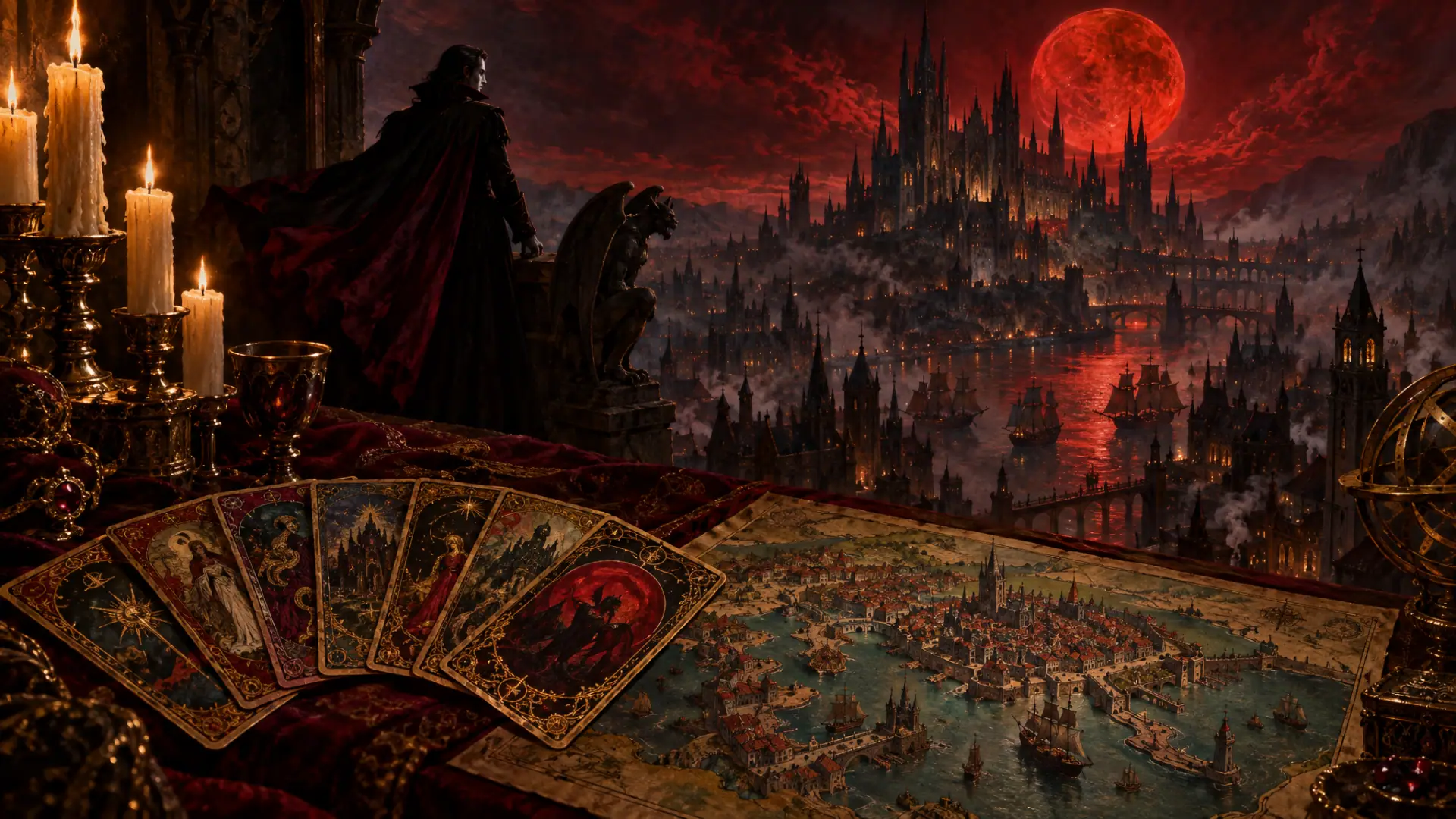
Earthdawn begins where most fantasy ends — with the apocalypse already survived. Published by FASA Corporation in 1993, the game is set in Barsaive, a province of a world that has just emerged from the Scourge, a centuries-long age in which the Horrors, alien entities that feed on pain and fear, crossed into reality. Civilization survived only by retreating into kaers: sealed underground cities warded with magic. Now the doors are opening, and the player characters are the ones who walk out first.
That premise answers a question fantasy roleplaying had long ignored. Why are there so many ruined, trap-filled underground complexes full of treasure and monsters? In Earthdawn, every Dungeon crawl is a kaer that failed.
Origins
FASA had defined the late 1980s with BattleTech and, in 1989, Shadowrun, a cyberpunk game in which magic returns to the Earth of the 2050s. Earthdawn, designed by Greg Gorden with FASA's staff, looked backward along the same timeline. Barsaive is the ancient past of Shadowrun's world, an earlier age when magic was at its height; the connection was built into the setting's cosmology and rewarded players who knew both games, though each stood on its own.
The game arrived in a crowded market. Vampire: The Masquerade had made mood and story the fashion, and Magic: The Gathering was about to pull players toward cards. Earthdawn staked out a middle position: heroic high fantasy, but framed by a history of trauma and a strong sense of rebuilding.
How it plays
Earthdawn's mechanical identity is the step system. Every ability, attribute or talent resolves to a step number, which a table converts into dice: low steps use a single die (a Step 5, for instance, is a d8), and higher steps combine several dice of different sizes. Any die that rolls its maximum is rolled again and added — "exploding" dice that allow long-shot triumphs. The table is designed so the average result roughly tracks the step number, which gives the system a smooth, predictable curve with room for surprise.
Characters follow Disciplines rather than conventional classes: magical paths such as Warrior, Swordmaster, Archer, Scout, Thief, Troubadour, Beastmaster, Elementalist, Illusionist, Nethermancer and Wizard. Each Discipline grants Talents — magical skills, even for fighters — that advance through Circles of mastery. Everything in Earthdawn is at least a little magical, and Karma, a spendable pool of luck, lets heroes add extra dice at crucial moments.
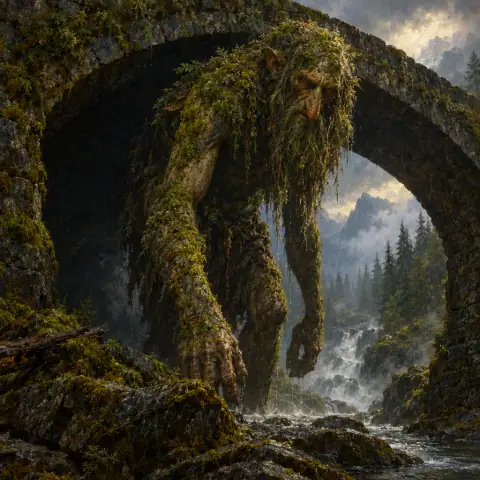
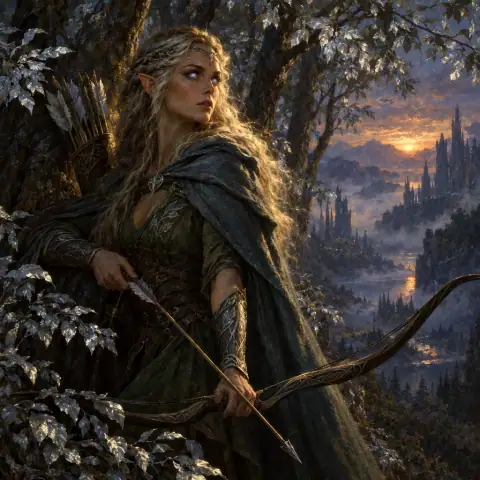
The playable peoples mixed the familiar with the new: humans, dwarfs, elves, orks and trolls sat beside obsidimen made of living stone, reptilian t'skrang and tiny winged windlings. Thread magic tied it together. Legendary items have hidden histories; a hero who learns each "key knowledge" can weave a magical thread to the item and unlock more of its power. Treasure became a mystery to investigate rather than a line on a loot list.
The setting supplied a political frame too. The Theran Empire, which had supplied the protective magic that saved the kaers, wants its former provinces back, and the Horrors are not all gone.
Reception & impact
Earthdawn earned praise for its inventive magic system and dense worldbuilding, and in 1996 Arcane magazine's reader poll ranked it 24th among the fifty most popular roleplaying games. It never approached Shadowrun's commercial success, but it built a loyal audience that kept the game alive through repeated changes of ownership.
After FASA's tenure, Living Room Games published a second edition (1999–2005), RedBrick released Classic and Third editions (2005–2012), FASA Games funded a Fourth Edition on Kickstarter in 2014, and Vagrant Workshop produced the lighter Age of Legend in 2016.
Legacy
Earthdawn's most durable contribution is its logic. By explaining dungeons, magic items and adventuring itself through the history of its world, it modeled a kind of design in which setting and rules justify each other — an approach later echoed by many campaign settings that ask why their genre conventions exist. Its shared timeline with Shadowrun also remains one of the most ambitious cross-game continuities in tabletop history: a single imagined world whose fantasy past and cyberpunk future were sold on the same shelves.
Marginalia
- Earthdawn is set in the same world as FASA's Shadowrun, millennia before that game's cyberpunk era.
- Its dungeons are kaers, sealed shelters where whole communities hid while the Horrors ravaged the surface.
- Every roll is a 'step': a number looked up on a table of dice, from single dice to combinations, with maximum results rerolled and added.
- Thread magic lets heroes bind themselves to legendary items, unlocking new powers as they learn each item's history.
- After FASA, the game passed through at least four more publishers, including a Kickstarter-funded Fourth Edition in 2014.
Quick answers
- When was Earthdawn first released?
- Earthdawn was first released in 1993.
- Who published or developed Earthdawn?
- FASA Corporation.
- What kind of work is Earthdawn?
- Earthdawn is a tabletop RPG in the Tabletop Roleplaying Games, High / Epic Fantasy and Dark Fantasy tradition, released for Hardcover rulebook.
- Why is Earthdawn important?
- Earthdawn gave the dungeon crawl a reason to exist, wrapped magic items in legend-based rules, and quietly served as the deep past of Shadowrun's cyberpunk future.