The Forgotten Realms became one of the most extensively published fantasy settings in roleplaying history, the backdrop for hundreds of novels and many of the most important computer RPGs, from Pool of Radiance to Baldur's Gate 3.
Overview
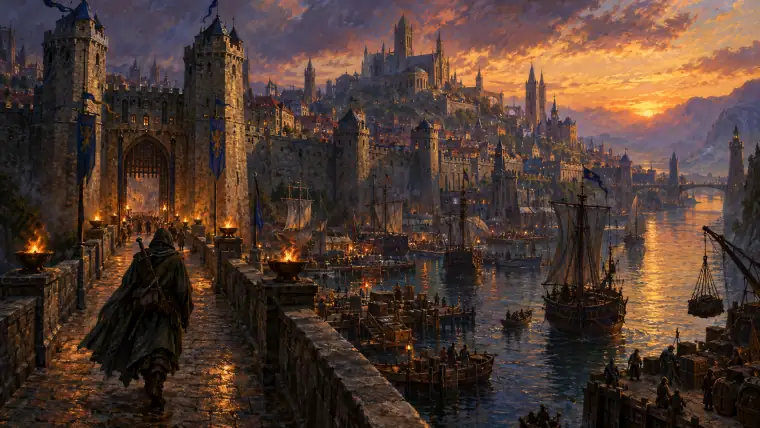
The Forgotten Realms is a Campaign setting for Dungeons & Dragons, centered on Faerûn, a continent of the world Toril. It is the setting most people now mean when they picture D&D: the teeming port of Waterdeep, the frontier village of Shadowdale, the pipe-smoking archmage Elminster, the Underdark of the drow, and the Sword Coast city whose name headlines Baldur's Gate. Created by the Canadian writer Ed Greenwood and published by TSR, Inc. as a boxed set in 1987, it became the backbone of TSR's game line, its fiction line and its computer licensing, and it remains the default world of fifth-edition D&D.
Origins
Greenwood, born in 1959 and raised in Toronto, began telling stories set in the Realms as a boy of about eight, a private "dream space" for sword-and-sorcery tales. When he discovered D&D in 1975 the Realms became his campaign world, with his players adventuring around Waterdeep and Shadowdale. From 1979 he began sending material to Dragon magazine, starting with a monster called the Curst in issue 30. Over the next years his articles, often framed as the recollections of Elminster, filled the magazine with spells, magic items and monsters from a world readers had never seen.
In 1986, after Gary Gygax had left the company and TSR was looking for a new campaign setting beyond his World of Greyhawk, designer Jeff Grubb was assigned to look at Greenwood's world. Greenwood reportedly sold it to TSR for a token fee and a promise that the company would publish his novels, then shipped dozens of boxes of pencil notes and maps. Grubb organized and rewrote the flood of material, Karen Martin edited it, and the Forgotten Realms Campaign Set appeared in 1987 with a cover by Keith Parkinson.
How it plays
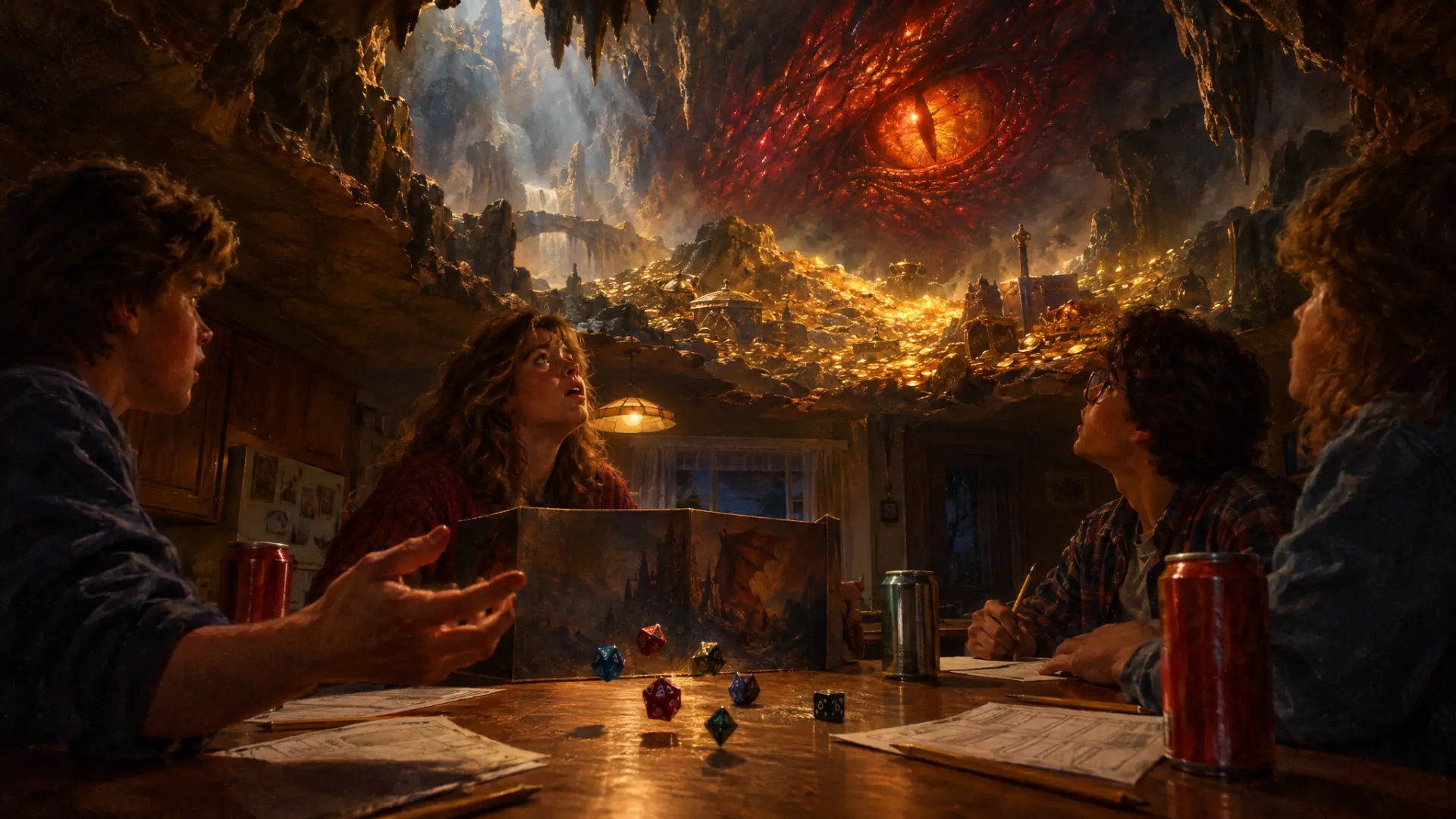
A campaign setting is not a separate game. Players still use the AD&D rules to create a fighter or a wizard and roll dice in combat; the setting supplies the world around them: its nations and cities, gods and history, conflicts and rumors. The Dungeon Master uses that material to decide where adventures happen and who the party meets.
The 1987 box held two 96-page books, four large color maps and two clear hex-grid overlays. The Cyclopedia of the Realms was an A-to-Z gazetteer of places, peoples and organizations; the Dungeon Master's Sourcebook of the Realms offered guidance on running the world, two complete adventures and a section on magical books. The design was deliberately roomy. Faerûn has frozen north and desert south, city intrigue and wilderness, secret societies such as the Harpers and the Zhentarim, so almost any kind of fantasy adventure could be set somewhere on the map. Later TSR supplements, the lettered FR series of regional sourcebooks, filled that map in region by region.
The Realms also has a living history. Official products advance the calendar, and events in novels and adventures change the world at the table. The most famous example came in 1989: to explain why magic and the gods worked differently under the new second edition rules, TSR staged the Time of Troubles, in which the gods were cast down to walk Faerûn in mortal forms, told in the Avatar novels and adventures.
Reception & impact
Designer Lawrence Schick described the Realms as the setting for most of TSR's AD&D scenarios from 1987 on, flexible enough to host a wide variety of campaigns. That flexibility made it a publishing engine. The first Realms novel, Douglas Niles's Darkwalker on Moonshae, came out in 1987. The next year R. A. Salvatore's The Crystal Shard, the first book of The Icewind Dale Trilogy, introduced the renegade dark elf Drizzt Do'Urden, who became the setting's most famous character and the hero of more than thirty novels.
The Realms had an even bigger effect on computer games. SSI chose it for its licensed "Gold Box" games, beginning with Pool of Radiance in 1988, and followed with Westwood's Eye of the Beholder (1991). Around the turn of the century BioWare's Baldur's Gate and Black Isle Studios's Icewind Dale brought the Sword Coast to a new audience, followed by Neverwinter Nights (2002). In 2023 Larian Studios' Baldur's Gate 3 made Faerûn one of the most celebrated game worlds of its decade.
Legacy
The Realms survived TSR's collapse and passed with the rest of D&D to Wizards of the Coast in 1997. It was the showcase setting for third edition and fourth edition, and when fifth edition arrived in 2014 its adventures were set on the Sword Coast by default. Greenwood himself went on to write more than thirty-five novels for TSR and contribute to hundreds of game products while working for decades at a Toronto-area public library.
What began as a boy's notebook became, in effect, shared property of millions of players, a model for how a single designer's Worldbuilding could become a franchise spanning tabletop, fiction and video games.
Marginalia
- Ed Greenwood began writing stories set in the Realms as a child, around 1967, years before he discovered D&D in 1975.
- Greenwood's first Dragon magazine article, in issue 30 in 1979, introduced readers to his world through a monster called the Curst.
- TSR bought the Realms after Gary Gygax's departure; Greenwood reportedly sold it for a token fee and a promise to publish his novels.
- Greenwood shipped TSR dozens of cardboard boxes of handwritten notes and maps, which Jeff Grubb shaped into the 1987 boxed set.
- The Time of Troubles, when the gods walked Faerûn as mortals, was invented in 1989 to explain the rules changes of AD&D 2nd edition.
- R. A. Salvatore's dark elf Drizzt Do'Urden debuted in The Crystal Shard (1988) and has since starred in more than thirty novels.
Quick answers
- When was Forgotten Realms first released?
- Forgotten Realms was first released in 1987 (boxed set); home campaign from the 1960s–70s.
- Who created Forgotten Realms?
- Forgotten Realms was made by Ed Greenwood (creator; co-designer of the 1987 Campaign Set).
- Who published or developed Forgotten Realms?
- TSR, Inc. and Wizards of the Coast.
- What kind of work is Forgotten Realms?
- Forgotten Realms is a campaign setting in the Tabletop Roleplaying Games, High / Epic Fantasy and Shared-World & Tie-In Fiction tradition, released for AD&D boxed set (1987), Every D&D edition since, Novels and Computer games.
- Why is Forgotten Realms important?
- The Forgotten Realms became one of the most extensively published fantasy settings in roleplaying history, the backdrop for hundreds of novels and many of the most important computer RPGs, from Pool of Radiance to Baldur's Gate 3.