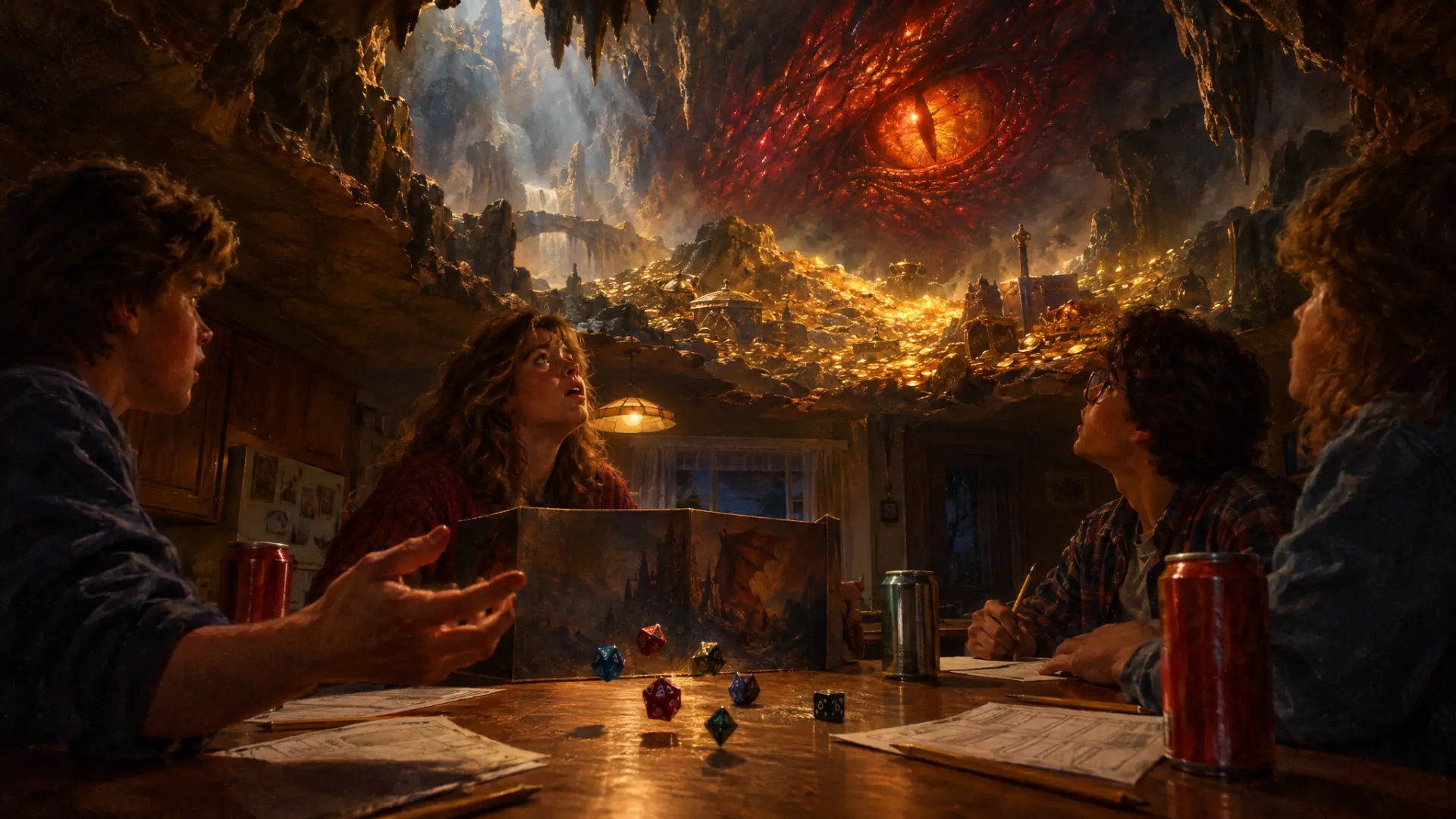
Weis co-wrote the Dragonlance Chronicles, proving that a roleplaying campaign could become a mass-market novel series. Pyramid magazine later credited her and Hickman with being basically responsible for the entire gaming-fiction genre.
Life
Margaret Edith Weis was born on March 16, 1948, in Independence, Missouri, and grew up there. She came to fantasy the way much of her generation did: a friend handed her The Lord of the Rings during a summer session at the University of Missouri in 1966, as Tolkien swept American campuses, and she could not put it down. She later said she read little other fantasy afterward, preferring Dickens, Austen and Sherlock Holmes. She graduated from Missouri in 1970 with a degree in creative writing and literature.
Her mother, certain the degree would lead to starvation, found her a proofreading job at a small publisher in Kansas City. Weis rose to editor and learned the book trade from the inside. From 1972 to 1983 she worked for Herald Publishing House, first as advertising director and then as head of its trade imprint, Independence Press, while writing well-researched books for young readers: a biography of Frank and Jesse James, and titles on robots, computer graphics and the history of Thanksgiving.
In 1983 she answered an advertisement in Publishers Weekly for a game editor at TSR, Inc. in Lake Geneva, Wisconsin. TSR did not give her that job; it hired her as a book editor instead. She moved to Lake Geneva, and the move changed the history of fantasy publishing.
Work
One of her first assignments was "Project Overlord," a plan to launch a new AD&D world through a linked set of adventure modules and a novel. It was the brainchild of Tracy Hickman, who with his wife Laura had conceived a world in which the dragons had returned. Weis and Hickman plotted the novel and hired an author to write it, but the drafts did not capture the characters they had lived with for months. With deadlines closing in, they wrote it themselves.
The project became Dragonlance. The first module, Dragons of Despair, appeared in March 1984, and the first novel, Dragons of Autumn Twilight, followed in November. TSR was so unsure of the book that it went with the minimum print run; demand forced reprints. The Dragonlance Chronicles trilogy was complete by 1985 and the Legends trilogy followed in 1986. The partnership had a clear division of labor, as Weis described it: Hickman was the worldbuilder who decided "when the moon rises and which way the winds blow," while she brought the characters. Her favorite, the ambitious, sickly mage Raistlin, later got a solo novel of his own, The Soulforge.
The pair had been writing in the evenings and on weekends. Once their books sold, they left TSR in 1986 to write full time. Weis and Hickman took their next series, The Darksword Trilogy, to Bantam, and followed it with the seven-book Death Gate Cycle, completed in 1994. Weis also wrote the space-opera series Star of the Guardians, which she has called her favorite of her own works.
They came back to Krynn with Dragons of Summer Flame (1995) and, after Wizards of the Coast bought TSR, the War of Souls trilogy beginning in 2000. In 2020 they sued Wizards over a cancelled new trilogy, then dropped the suit that December. The first book of that trilogy, Dragons of Deceit, was published in August 2022.
Weis was also a publisher. Her Sovereign Press produced the Sovereign Stone roleplaying game, set in a world created by Larry Elmore, and from 2002 it held the license for d20-era Dragonlance game books, supplementing the Dragonlance Campaign Setting (2003) that she co-wrote and Wizards of the Coast published. Margaret Weis Productions, which she founded in the mid-2000s, published licensed games such as Serenity and Battlestar Galactica, as well as Ed Greenwood's Castlemourn setting.
Legacy
Before Dragonlance, novels based on games were a curiosity. After it, they were an industry. TSR built a fiction line on its success, and the model of a setting written for play and for readers at once led directly to the Forgotten Realms novels and R. A. Salvatore's The Icewind Dale Trilogy. Weis and Hickman also showed that Shared-World & Tie-In Fiction tied to a game could reach readers who had never rolled a die, and the Heroes of the Lance became a first fantasy party for a generation of teenagers.
In 1999 Pyramid magazine named Weis one of the millennium's most influential people in adventure gaming, saying she and Hickman were "basically responsible for the entire gaming fiction genre." The Origins Hall of Fame inducted her in 2002. Four decades after Dragons of Despair, she is still writing about Krynn, which makes Dragonlance one of the longest creative partnerships in fantasy.
Marginalia
- TSR turned her down for the game-editor job she applied for in 1983 and hired her as a book editor instead.
- Her first book was a biography of the outlaws Frank and Jesse James; Frank was buried near her childhood school in Independence, Missouri.
- TSR doubted Dragons of Autumn Twilight would sell and considered ordering 30,000 copies before settling on the 50,000-copy minimum print run.
- She wrote much of The Seventh Gate, the final Death Gate Cycle novel, while undergoing chemotherapy for breast cancer in 1993.
- Her company Margaret Weis Productions published RPGs from licenses such as Serenity and Battlestar Galactica, plus Ed Greenwood's Castlemourn setting.
- She was inducted into the Origins Hall of Fame in 2002, recognized in part for Dragonlance.
Quick answers
- Who is Margaret Weis?
- A TSR book editor who, with Tracy Hickman, rescued a stalled tie-in novel and turned Dragonlance into the fantasy bestseller that made game fiction a genre of its own.
- When was Margaret Weis born?
- Margaret Weis was born in 1948 in Independence, Missouri.
- What is Margaret Weis known for?
- Margaret Weis is best known for Dragonlance Chronicles and Dragonlance.
- Why does Margaret Weis matter to fantasy and games?
- Weis co-wrote the Dragonlance Chronicles, proving that a roleplaying campaign could become a mass-market novel series. Pyramid magazine later credited her and Hickman with being basically responsible for the entire gaming-fiction genre.