Adkison turned a hobby start-up into the company that invented the collectible card game industry, rescued D&D from TSR's collapse, and commissioned its third edition. He later bought Gen Con, the convention where the hobby began.
Life
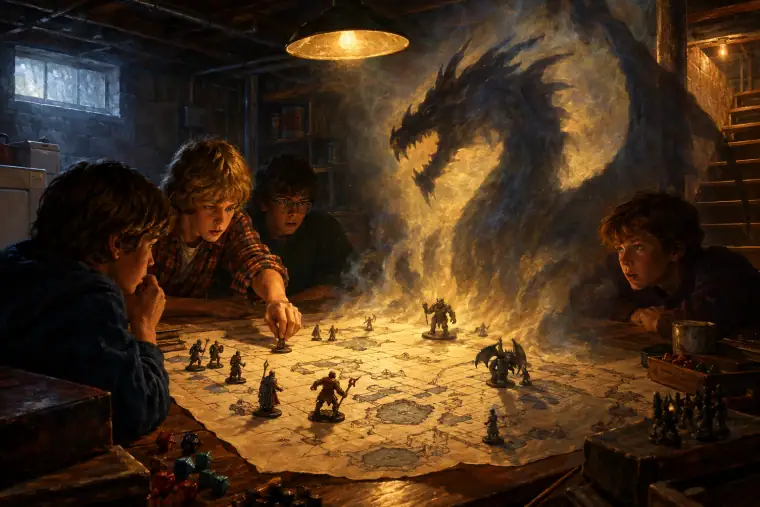
Peter D. Adkison played strategy games and wargames as a boy, and in 1978 he discovered Dungeons & Dragons, which, he said, "blew [him] away." He has kept playing ever since. In 1981 he began a D&D campaign set in a world he called Chaldea, and he still runs it. In the early 1980s his friend Terry Campbell suggested that their group start a game company named after the Wizards of the Coast, a guild one of their characters belonged to. Adkison used the name for a small self-published wargame for fantasy RPGs, Castles & Conquest.
He earned a bachelor's degree in computer science from Walla Walla College in 1985 and later an MBA from the University of Washington. From 1985 to 1991 he worked as a systems analyst for Boeing in the Seattle area. Games were a sideline, but not for long.
Work
On May 23, 1990, Adkison and his friend Ken McGlothlen founded Wizards of the Coast, run at first from Adkison's basement. Its first project, Adkison's own The Primal Order, a "capstone" system for running gods in any roleplaying game, came out in April 1992. It led to a lawsuit from Palladium Books over references to Palladium's system. The company also licensed Stephan Michael Sechi's Talislanta and published its third edition in 1992; Adkison co-wrote the map text for its Geographica.
Meanwhile a mathematics graduate student named Richard Garfield had pitched a board game, RoboRally. Adkison liked it but could not afford to make it. What he wanted was something fast, cheap to produce and easy to carry to conventions. Garfield returned with a card game in which players built their own decks from collectible cards. To shield it from the Palladium litigation, it was developed through a shell company, Garfield Games. Magic: The Gathering launched in the summer of 1993, and by that August's Gen Con it had sold out a supply of 2.5 million cards meant to last until year's end. Within two years Wizards had grown from a handful of people in a basement to about 250 employees. Adkison went to work at the company full time and served as its CEO from 1993 to 2001.
Magic funded everything that followed. Wizards launched a tournament circuit, bought Five Rings Publishing, and in 1999 began publishing the Pokémon Trading Card Game, which sold nearly 400,000 copies in less than six weeks. Its most important purchase was TSR, Inc.. By 1997 the publisher of D&D was insolvent and unable to print its own books. Through Five Rings, Adkison negotiated to buy it from Lorraine Williams; Wizards announced the deal on April 10, 1997, paying a reported $25–30 million (accounts differ), including TSR's debts. He then set about repairing the damage. He made favorable financial and legal arrangements with Gary Gygax and Dave Arneson and restored relations with authors such as Margaret Weis, Tracy Hickman and R. A. Salvatore. He also began planning a new edition from the start, eventually putting Jonathan Tweet in charge of the team that produced Dungeons & Dragons 3rd Edition in 2000.
In September 1999 Hasbro bought Wizards of the Coast for about $325 million. Adkison stayed on and began work on a D&D online game based on a design by Garfield and Skaff Elias. But Hasbro had moved the D&D computer rights to Hasbro Interactive, and they were then sold to Infogrames, which left Wizards unable to make the game. Adkison resigned at the end of 2000. In May 2002 he bought Gen Con from Hasbro. He had been attending since 1992, and the convention, founded by Gygax in Lake Geneva in 1968, now belonged to the man who had bought the company Gygax co-founded. He later led Hidden City Games, publisher of the Bella Sara collectible card game for girls.
Legacy
Few executives have shaped the hobby as much. Adkison's request for a cheap convention game produced the Collectible & Trading Card Games, a new category whose profits paid for everything else Wizards did. His purchase of TSR kept D&D intact at a time when its future was uncertain. The third edition he commissioned, released alongside the Open Game License, opened the game's rules to other publishers and started the d20 boom, including the later Pathfinder Roleplaying Game. As owner of Gen Con he has overseen its growth in Indianapolis into one of the largest tabletop gaming gatherings in North America, and he has become an advocate for small-press and indie roleplaying games. In 1999 Pyramid magazine named him one of the millennium's most influential people in adventure gaming.
Marginalia
- The name Wizards of the Coast, suggested by his friend Terry Campbell, came from a wizards' guild to which one of their D&D characters belonged.
- He turned down Richard Garfield's RoboRally as too expensive to make and asked instead for a quick, portable game; the result was Magic.
- Magic was developed through a shell company, Garfield Games, to protect it from a lawsuit Palladium Books had filed against Wizards.
- He co-wrote the map text for Wizards' 1992 Talislanta Geographica.
- Wizards announced its purchase of TSR on April 10, 1997; accounts put the price at $25–30 million, including the company's debts.
- He has run his D&D campaign world of Chaldea since 1981.
Quick answers
- Who is Peter Adkison?
- A Boeing systems analyst who started Wizards of the Coast in his basement, asked Richard Garfield for a cheap convention game, got Magic: The Gathering, and used the proceeds to buy TSR and Dungeons & Dragons.
- What is Peter Adkison known for?
- Peter Adkison is best known for Magic: The Gathering and Dungeons & Dragons 3rd Edition.
- Why does Peter Adkison matter to fantasy and games?
- Adkison turned a hobby start-up into the company that invented the collectible card game industry, rescued D&D from TSR's collapse, and commissioned its third edition. He later bought Gen Con, the convention where the hobby began.