Palladium was one of the first companies to run many genres on one house system and, with Rifts, produced one of the most successful kitchen-sink settings in roleplaying history, while becoming notorious for guarding its rules.
History
Palladium Books was founded in Detroit in April 1981 by the artist and designer Kevin Siembieda, who has run it ever since, with partners including Erick Wujcik, Alex Marciniszyn and the comics artist William Messner-Loebs. Its first release was The Mechanoid Invasion (1981), a science fiction game of colonists fighting psionic cyborgs. The company's fantasy line began with the Palladium Fantasy Role-Playing Game (1983), set in Siembieda's own world, and Heroes Unlimited (1984) added superheroes.
Palladium's distinctive move was to run all of these on essentially the same rules, which it called "Megaversal": not universal, but spanning many worlds. Characters from one book could, in principle, walk into another. Licensed games deepened the catalog. Teenage Mutant Ninja Turtles & Other Strangeness (1985), written by Wujcik, caught the Turtles in their black-and-white comics phase and spawned the post-apocalyptic After the Bomb; the Robotech RPG (1986) tied Palladium to the anime for three decades. Palladium also took pride in its format, claiming to be the first RPG publisher to perfect-bind its books, and kept most of them in paperback to hold prices down.
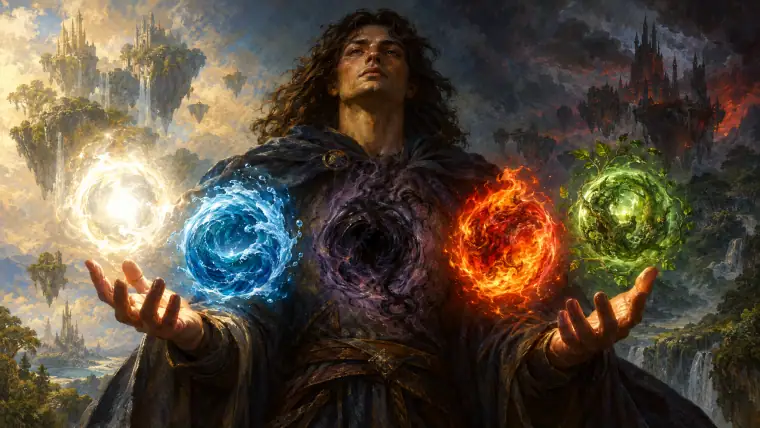
In 1990 it published Rifts, the game that defined the company. Rifts imagines a future Earth devastated when a nuclear war releases the planet's magical energy, tearing open dimensional rifts through which dragons, demons, aliens and alternate realities pour. Players could be cyborgs, wizards, dragon hatchlings, mutant dogs or giant robot pilots, all on one character sheet. The setting was crowded, contradictory and hugely popular, and dozens of "world books" followed, alongside spin-offs such as Phase World and the prequel Rifts Chaos Earth.
Palladium was also known for protecting its work. It sued Wizards of the Coast over references to Palladium's system in the supplement The Primal Order; the dispute, settled in 1993, led Wizards to launch Magic: The Gathering through a separate company. For years Palladium discouraged fans from publishing conversions of its games to other systems, citing legal advice.
The 2000s and 2010s were difficult. In 2006 Siembieda revealed that theft and embezzlement had cost the company between $850,000 and $1.3 million, and asked fans to buy directly to keep it afloat; a former sales manager was later sentenced over part of the losses. A Rifts film option with Jerry Bruckheimer and Disney, announced in 2003, never became a movie. A Robotech RPG Tactics Kickstarter raised $1,442,312 in 2013 but delivered late and incompletely, and when Harmony Gold declined to renew the Robotech license in 2018, remaining rewards were canceled. Since 2015 Pinnacle Entertainment Group has published Rifts for Savage Worlds under license.
Notable work
The Mechanoid Invasion, the Palladium Fantasy RPG, Heroes Unlimited, Teenage Mutant Ninja Turtles & Other Strangeness, Robotech, Beyond the Supernatural, Nightbane, Ninjas & Superspies, Dead Reign and Rifts.
Legacy
Palladium's rules have long been criticized as dated, but its imagination has never been. Rifts is the purest expression of the 1980s and 1990s urge to put everything in one game, a gonzo Science Fantasy that inspired a generation of Homebrew campaigns and remains in print. Siembieda's long, sometimes contentious stewardship makes Palladium one of the last founder-run publishers from the hobby's first boom.
Marginalia
- Palladium was founded in April 1981 in Detroit; its first game was The Mechanoid Invasion.
- The Palladium Fantasy Role-Playing Game appeared in 1983, followed by Heroes Unlimited in 1984.
- It published RPGs licensed from Teenage Mutant Ninja Turtles (1985) and Robotech (1986), and held the Robotech license for about 30 years.
- Palladium says it was the first RPG publisher to perfect-bind its books.
- It sued Wizards of the Coast over references in The Primal Order; the case, settled in 1993, pushed Wizards to create a separate company for Magic: The Gathering.
- A 2013 Robotech RPG Tactics Kickstarter raised $1,442,312 but many high-tier rewards were never delivered after Harmony Gold declined to renew the license in 2018.
- Since 2015 Pinnacle Entertainment Group has published Savage Worlds conversions of Rifts under license, the one exception to Palladium's strict conversion policy.
Quick answers
- What is Palladium Books?
- Kevin Siembieda's Detroit-born publisher whose 'Megaversal' rules tie together fantasy, superheroes, mutant turtles and Rifts, a post-apocalyptic Earth where every genre pours through dimensional tears.
- When was Palladium Books founded?
- Palladium Books was founded in 1981 and is based in Westland, Michigan (founded in Detroit).
- Who founded Palladium Books?
- Kevin Siembieda (principal), with Erick Wujcik, Anthony Falzon, Alex Marciniszyn and William Messner-Loebs.
- What is Palladium Books known for?
- Rifts.
- What happened to Palladium Books?
- Still publishing; privately owned and run by Kevin Siembieda.