Rifts was the breakout tabletop hit of 1990 and the purest expression of 'everything at once' science fantasy, sustaining an independent publisher for decades on a single sprawling line.
Overview
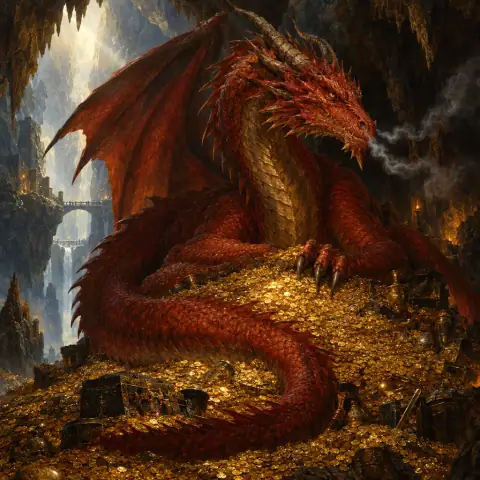
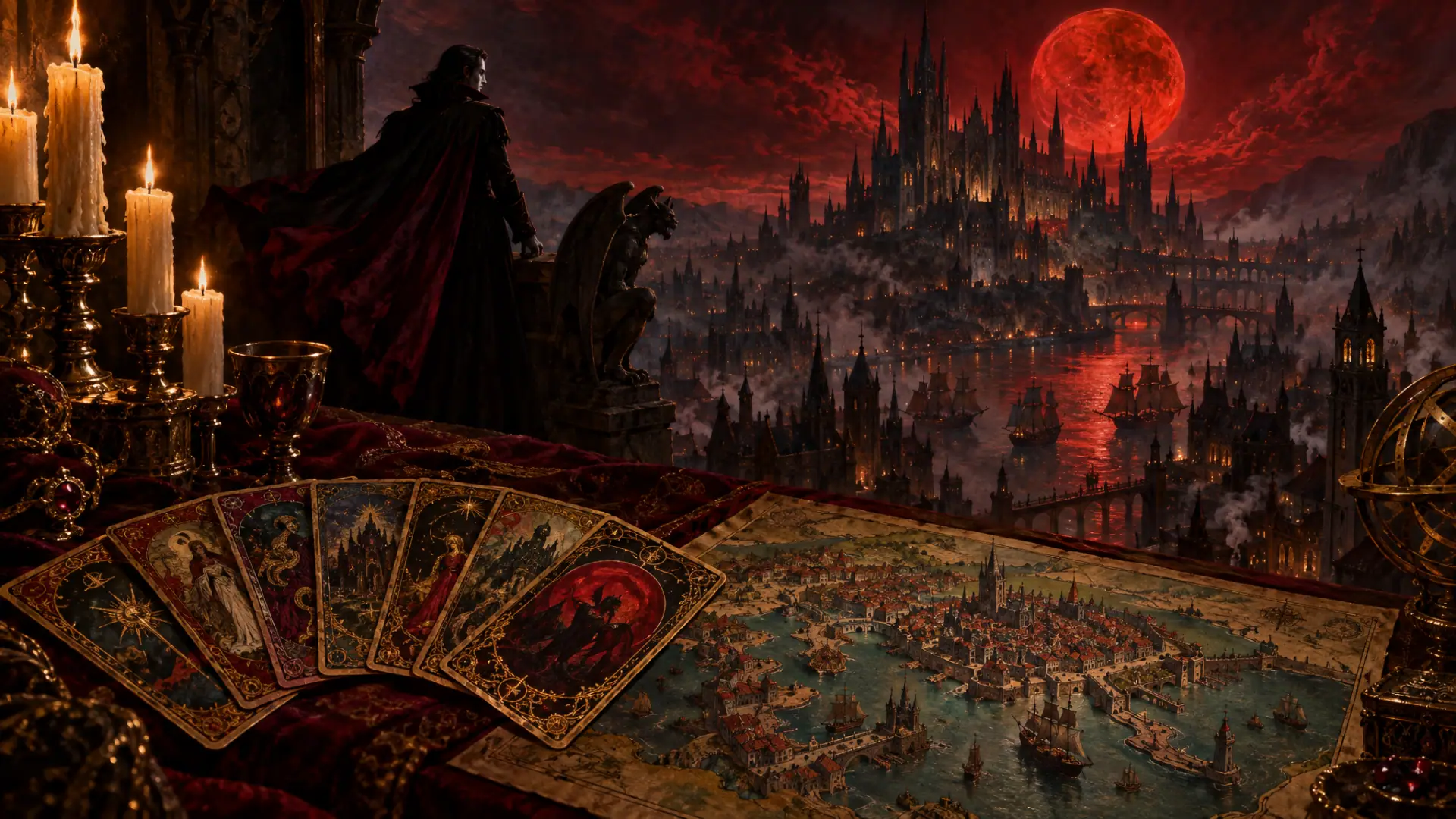
Rifts is what happens when a game designer refuses to choose. Published in August 1990 by Palladium Books, Kevin Siembieda's roleplaying game drops giant robots, cybernetic mercenaries, psychics, dragons, vampires, alien invaders and ley-line sorcerers onto a single ruined planet and dares the players to sort it out. The result is one of the defining works of Science Fantasy in the tabletop medium: gaudy, overstuffed, rules-heavy and beloved by a devoted audience for more than three decades.
The premise is apocalyptic. Centuries from now, a nuclear war releases a surge of psychic energy that supercharges Earth's ley lines, the invisible currents of mystic power that criss-cross the planet. Where the lines meet, "rifts" tear open to other dimensions, and everything from demons to star-faring empires pours through. By the time play begins, roughly three hundred years later, North America is a patchwork of fortified cities, magical kingdoms and monster-haunted wilderness.
Origins
Siembieda had founded Palladium in the Detroit area in April 1981, and by the late 1980s the company ran several lines on a shared engine: The Palladium Fantasy Role-Playing Game, the superhero game Heroes Unlimited, Teenage Mutant Ninja Turtles & Other Strangeness and the licensed Robotech RPG. Because these games used broadly compatible rules — what Palladium calls the "Megaversal" system — Siembieda could promise that characters from any of them might, in principle, cross over. Rifts turned that marketing idea into a cosmology. The ley-line rifts are literal doorways to every other Palladium world.
The book's look mattered as much as its premise. Keith Parkinson painted the original cover, and Kevin Long's detailed drawings of power armor, robot vehicles and armored soldiers gave the game a visual identity closer to Japanese mecha anime than to the medieval fantasy that dominated shelves at the time. The cartoonist and game designer John Kovalic called it "the runaway success of 1990."
How it plays
Rifts uses Palladium's traditional mechanics: percentile dice for skills and a twenty-sided die for combat, with characters built from an Occupational Character Class (O.C.C.) or, for non-humans, a Racial Character Class (R.C.C.). The options are the draw. A player might be a Glitter Boy pilot in mirrored power armor, a drug-enhanced Juicer who burns bright and dies young, a Cyber-Knight, a Dog Boy mutant bred as a tracker, a Ley Line Walker who draws spells from the land itself, a Techno-Wizard who fuses magic and machinery, or even a young Dragon.
The signature rule is the split between Structural Damage Capacity (S.D.C.) and Mega-Damage Capacity (M.D.C.). One point of mega-damage equals one hundred points of ordinary damage, so conventional guns and swords are nearly useless against mega-damage armor and monsters. The scale is exhilarating and notorious in equal measure: a table can easily contain one character who shrugs off tank shells and another who dies to a stray laser. Much of the fan conversation about Rifts has always concerned how game masters balance that gulf.
The setting gives the chaos a spine. The Coalition States, a fascist human empire centered on the arcology of Chi-Town, wage war on magic users and non-humans in skull-faced black armor. Around them lie the wizard-city of Tolkeen, the mercenary frontier and a map that later "World Books" extended to Atlantis, England, Africa, Japan, South America, the oceans and beyond — around eighty titles between 1990 and 2011.
Reception & impact
Rifts became Palladium's flagship line and the engine of its business for the rest of the decade. In 1996 the UK magazine Arcane placed it 22nd in its poll of the fifty most popular roleplaying games. Its appeal ran alongside the decade's other genre-blenders, such as FASA's Shadowrun, but where Shadowrun built a coherent cyberpunk-fantasy future, Rifts embraced excess as a design principle.
The line also had its difficulties. Palladium became known for aggressively discouraging fan-made conversions of its games to other systems, and in April 2006 Siembieda disclosed serious financial trouble tied to alleged embezzlement at the company. The line nonetheless continued, built since August 2005 on a consolidated Rifts Ultimate Edition.
Legacy
Rifts reached beyond the tabletop in scattered forms: a collectible card game from Precedence Entertainment in 2001, a 2003 film option by Jerry Bruckheimer Films and Disney that never produced a movie, and Rifts: Promise of Power for Nokia's N-Gage in late 2005. In 2015 Pinnacle Entertainment licensed the setting for its Savage Worlds rules, and the resulting Savage Rifts was crowdfunded in 2016 — a sign of how the Kickstarter era could give an old property new mechanics.
Its deeper legacy is attitudinal. Rifts showed that a tabletop world did not need a unifying tone or a tidy power curve to thrive; it needed a big enough canvas that every player could find the character they had always wanted to play. That promise, more than any single rule, is why its dimensional doors are still open.
Marginalia
- One point of Mega-Damage equals 100 points of ordinary Structural Damage, so a modern rifle barely scratches a suit of power armor.
- The first edition's painted cover was by Keith Parkinson; much of the book's machinery was drawn by Kevin Long.
- UK magazine Arcane ranked Rifts 22nd in its 1996 reader poll of the 50 most popular roleplaying games.
- In 2003 Jerry Bruckheimer Films and Disney optioned the film rights; no movie followed.
- A licensed video game, Rifts: Promise of Power, appeared on Nokia's N-Gage handheld in late 2005.
- Pinnacle Entertainment's Savage Rifts adaptation for Savage Worlds was crowdfunded on Kickstarter in 2016.
Quick answers
- When was Rifts first released?
- Rifts was first released in 1990 (August).
- Who published or developed Rifts?
- Palladium Books.
- What kind of work is Rifts?
- Rifts is a tabletop RPG in the Tabletop Roleplaying Games and Science Fantasy tradition, released for Hardcover rulebook and World Books & sourcebooks.
- Why is Rifts important?
- Rifts was the breakout tabletop hit of 1990 and the purest expression of 'everything at once' science fantasy, sustaining an independent publisher for decades on a single sprawling line.