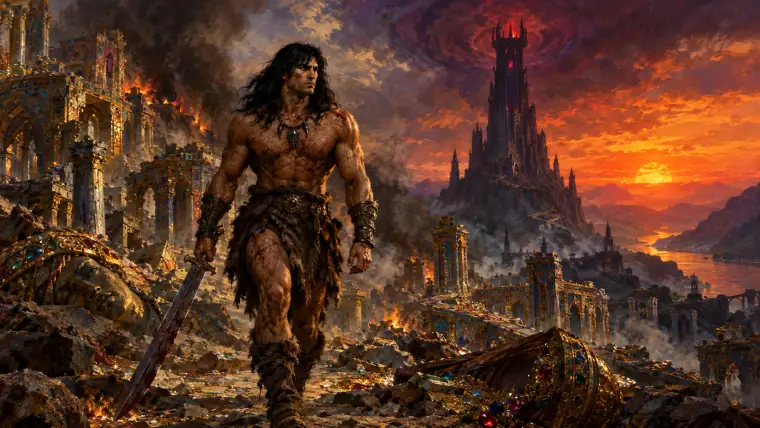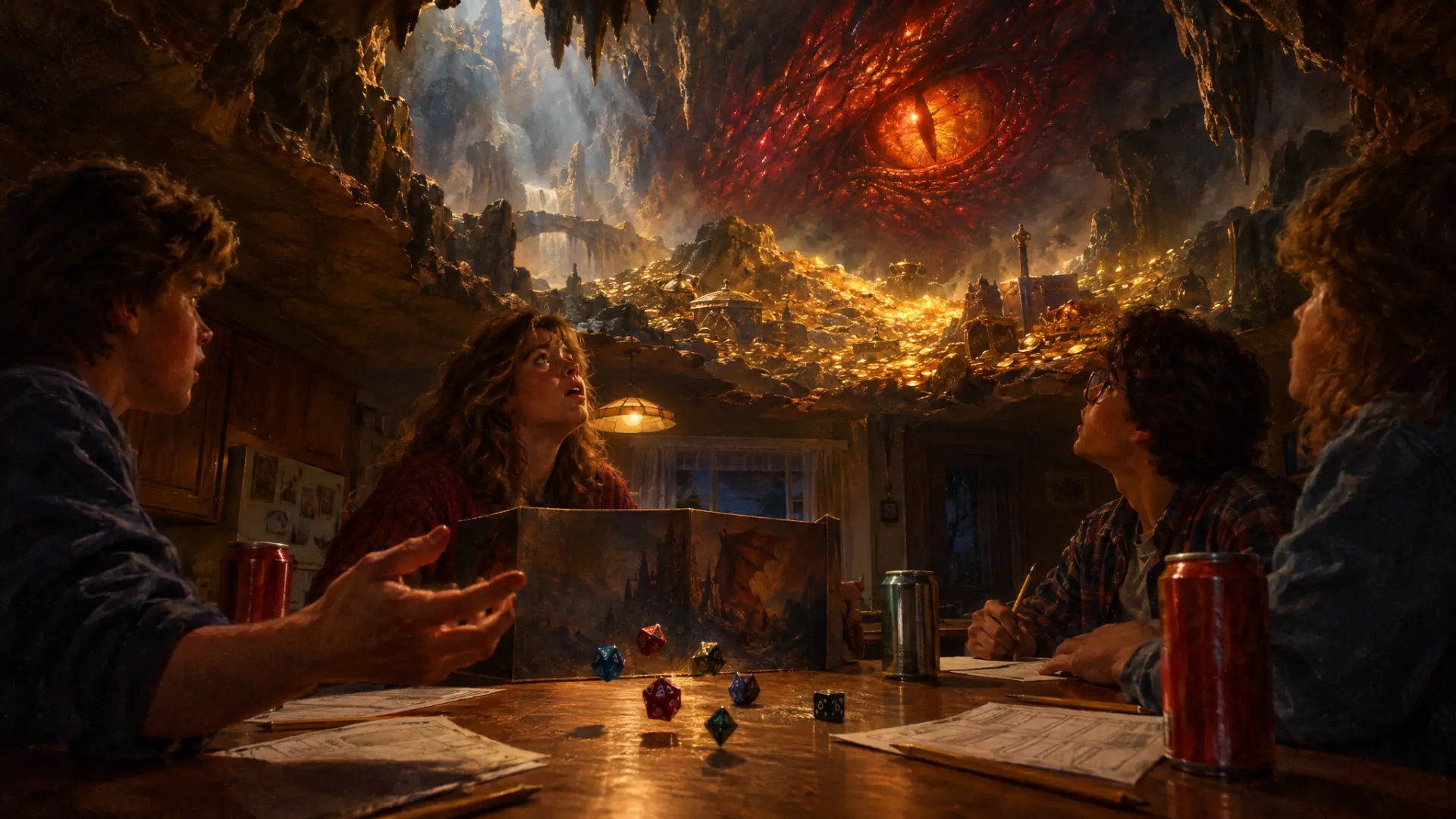
GURPS was the most influential early 'universal' roleplaying system, proving that one rulebook could serve every genre and popularizing point-buy character design, advantages and disadvantages, and meticulously researched sourcebooks.
Overview
GURPS — the Generic Universal RolePlaying System — is a roleplaying game designed by Steve Jackson and published by Steve Jackson Games, first as a boxed Basic Set in 1986. It set out to solve a problem every 1980s gamer knew: each genre came with its own incompatible rules. Fantasy meant D&D or RuneQuest; horror meant Call of Cthulhu; science fiction meant Traveller. GURPS offered one engine for everything.
It is not a world but a toolkit. The Basic Set tells you how to build characters and resolve actions; separate sourcebooks supply settings, from GURPS Fantasy to space opera, the Old West, the Middle Ages, cyberpunk and licensed worlds such as Terry Pratchett's Discworld. It anchors this museum's Universal & Generic RPG Systems gallery.
Origins
Jackson had designed Melee (1977) and Wizard (1978), fast tactical microgames that together formed the core of The Fantasy Trip at Metagaming. Jackson left Metagaming and founded his own company in 1980; when Metagaming closed in 1983 and he could not afford to buy back The Fantasy Trip, he began a new "third generation" system strongly shaped by it — its three-dice mechanics and point-based characters became the seed of GURPS. The combat engine appeared first, in 1985, as Man to Man: Fantasy Combat, accompanied by the adventure Orcslayer. The full GURPS Basic Set followed in 1986, a second edition in 1987 and a third in 1988, later revised in 1994. The fourth edition, developed by Sean Punch and David Pulver, arrived in 2004 as two full-color hardcovers, Characters and Campaigns.
How it plays
A roleplaying game has no board and no winner. One player, the Game Master, describes the situation and plays everyone else; the others each control a single Player character and say what that character attempts, with dice settling uncertain outcomes.
In GURPS, the dice are always three ordinary six-sided dice, and the rule is always the same: roll equal to or under the number you are testing. A swordsman with Broadsword-14 hits on 14 or less. Because three dice produce a bell curve, results cluster around the middle, and a small bonus near the center of the curve matters much more than one at the extremes — which makes competent characters reliably competent.
Characters are built, not rolled. Each player receives a budget of character points — typically 100 to 150 for a starting hero — and spends them on four attributes (Strength, Dexterity, Intelligence and Health), on skills, and on advantages such as Combat Reflexes or Magery. Players can gain extra points by taking disadvantages: Honesty, a Code of Honor, a bad temper, an enemy. The system rewards careful design; the same rules describe a medieval squire, a Victorian detective or a starship engineer. Combat is detailed and often deadly, tracking hit locations, active defenses (dodge, parry, block) and damage calculated from weapon and Strength.
Reception & impact
GURPS won the Origins Award for Best Roleplaying Rules of 1988 and was inducted into the Origins Hall of Fame in 2000. Arcane's 1996 reader poll ranked it fourteenth of the fifty most popular RPGs. Rick Swan's Complete Guide to Role-Playing Games (1990) gave it top marks, calling its achievement "stunning." Its sourcebooks, from ancient history to hard science fiction, became the line's backbone, letting one rulebook travel almost anywhere.
GURPS also made history off the table. On March 1, 1990, U.S. Secret Service agents raided the company's Austin offices, seizing computers and the manuscript of GURPS Cyberpunk while investigating its author, Loyd Blankenship, over a leaked BellSouth document. The raid helped prompt the founding of the Electronic Frontier Foundation, and in 1993 the company won its lawsuit against the Secret Service, with a judge calling the warrant preparation "sloppy."
Legacy
GURPS proved that a generic system could sustain a commercial line for decades, and it popularized conventions now common across the hobby: point-buy character creation, advantages and disadvantages, and a clean separation between rules and setting. Its lineage runs through later universal and toolkit systems, and its roll-under 3d6 remains one of the classic answers to the question of how to make dice feel fair. Steve Jackson Games eventually returned to its roots, too: Jackson reclaimed the rights to The Fantasy Trip in 2017 and republished it as the Legacy Edition in 2019, reuniting GURPS with its ancestor.
Marginalia
- GURPS grew from Steve Jackson's earlier microgames Melee and Wizard, the heart of The Fantasy Trip.
- Its combat rules appeared first, in 1985, as Man to Man: Fantasy Combat, with the adventure Orcslayer.
- Characters are bought with points: a typical starting hero has 100–150, with extra points earned by taking disadvantages.
- On March 1, 1990, the U.S. Secret Service raided Steve Jackson Games over GURPS Cyberpunk; the case helped spur the founding of the Electronic Frontier Foundation.
- Licensed GURPS worldbooks included Horseclans, Conan, Discworld, Riverworld and Wild Cards.
- A free, stripped-down GURPS Lite has been available since 1998.
Quick answers
- When was GURPS first released?
- GURPS was first released in 1986 (Basic Set); combat rules 1985.
- Who created GURPS?
- GURPS was made by Steve Jackson (designer).
- Who published or developed GURPS?
- Steve Jackson Games.
- What kind of work is GURPS?
- GURPS is a tabletop RPG in the Tabletop Roleplaying Games and Universal & Generic RPG Systems tradition, released for Boxed set (1986), Softcover and hardcover rulebooks and PDF.
- Why is GURPS important?
- GURPS was the most influential early 'universal' roleplaying system, proving that one rulebook could serve every genre and popularizing point-buy character design, advantages and disadvantages, and meticulously researched sourcebooks.