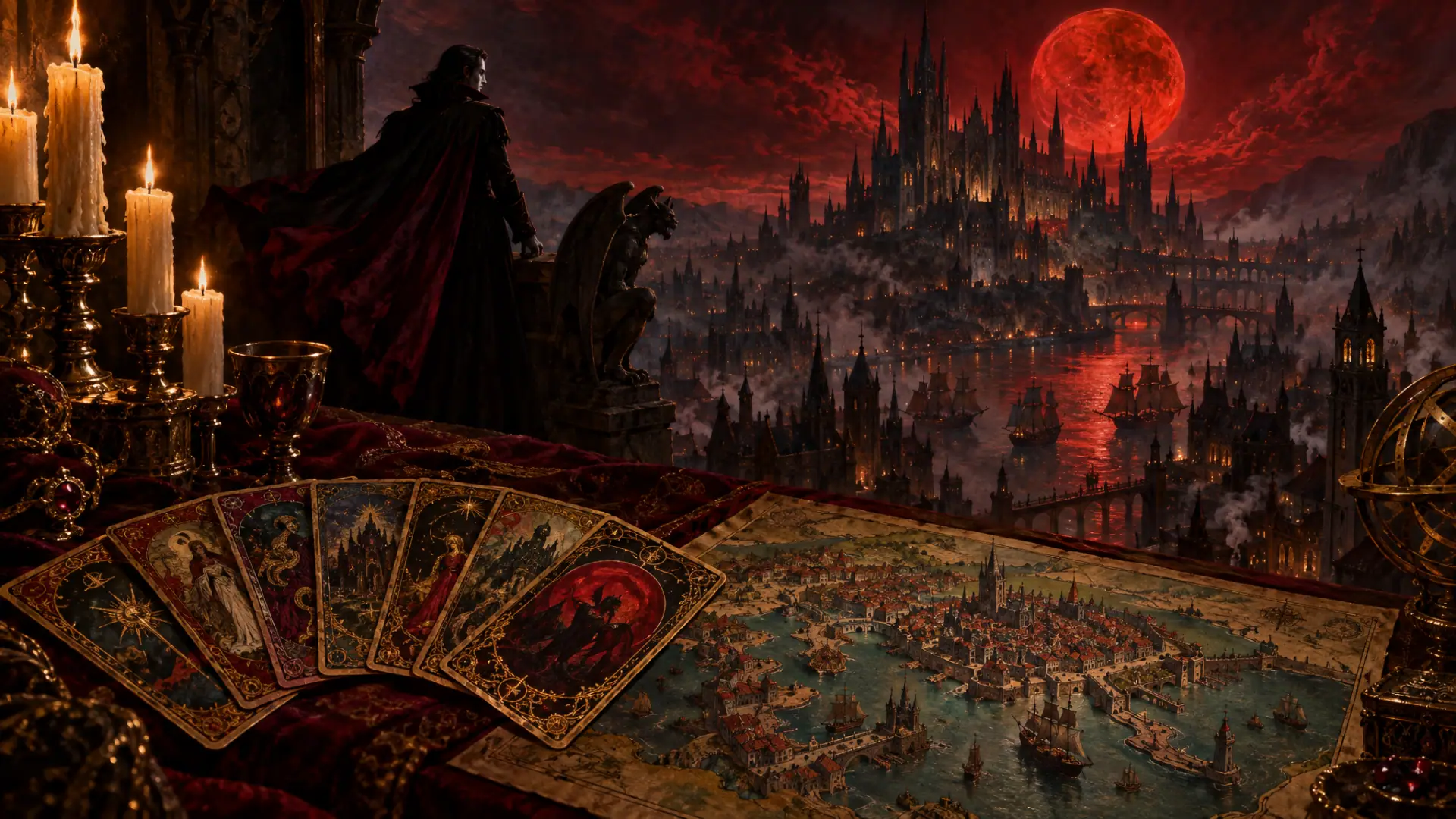
Erikson's Malazan saga is the clearest case of a tabletop campaign world becoming major literature, carrying the texture of years of play into a vast, morally serious epic that subverted fantasy's conventions.
Life
Steve Rune Lundin was born in Toronto on October 7, 1959, and grew up in Winnipeg, Manitoba. He trained and worked as an archaeologist and anthropologist, disciplines that shape the deep time and layered ruins of his fiction, and he is a graduate of the Iowa Writers' Workshop, where his thesis was a story cycle about an archaeologist in Central America, later published as A Ruin of Feathers (1991). He later lived for some years in England with his wife and son before returning to Canada. He also paints in oils.
His first four books, mostly realist fiction, appeared under his own name from small presses and then Hodder and Stoughton. For fantasy he took the name Steven Erikson, in homage to his mother's maiden name.
Work
The Malazan world was born at a gaming table. In 1982 Erikson and his friend and fellow archaeologist Ian Cameron Esslemont began building it as a backdrop for roleplaying campaigns run with a modified version of Advanced Dungeons & Dragons; by 1986 they had moved to GURPS, and the setting had grown toward its eventual scale. Erikson has credited pen-and-paper roleplaying as the biggest influence on his writing career, and has observed that for many epic fantasy writers of his generation the Tolkien tropes arrived "not from books, but from Dungeons & Dragons." The two friends then developed a feature-film script, Gardens of the Moon. When it did not sell, Erikson rewrote it as a novel in 1991–92.
Gardens of the Moon was published by Bantam UK in 1999, and Bantam signed the full series for £675,000. It opens deliberately in mid-story, with an empire, a pantheon of meddling gods and Ascendants, a warren-based Hard & soft magic systems, and a large cast already in motion, and it trusts readers to catch up. The Malazan Book of the Fallen ran to ten volumes, ending with The Crippled God (2011), and moves across continents and many millennia of history. Its soldiers of the Bridgeburners and the Bonehunters, its tragic Tiste races and its long "Chain of Dogs" retreat in Deadhouse Gates (2000) mix military grit with philosophical reach. Erikson has said compassion is the driving theme of all his work, and he and Esslemont deliberately built societies without gender hierarchies. Esslemont's own six novels, beginning with Night of Knives (2004), fill in the shared canon.
Around the main sequence Erikson wrote the darkly comic Bauchelain and Korbal Broach novellas, which the Encyclopedia of Science Fiction likens to Fritz Leiber's Fafhrd and the Gray Mouser; the prequel Kharkanas Trilogy, begun with Forge of Darkness (2012); the Star Trek-spoofing Willful Child books; and the sequel sequence The Tales of Witness, with The God Is Not Willing (2021) and No Life Forsaken (October 2025).
Legacy
Gardens of the Moon was shortlisted for a World Fantasy Award, and the series had sold more than three million copies by 2018. Glen Cook called it a masterwork, and Stephen R. Donaldson, whose Thomas Covenant books Erikson counts among his influences alongside Cook's The Black Company and Robin Hobb, compared him to Conrad and Dostoevsky. Its unflinching violence and moral seriousness made it a cornerstone of the Grimdark conversation, though Erikson's emphasis on empathy sets it apart from mere cynicism.
For the history of games, Malazan matters as proof of concept. Countless players have built worlds across years of sessions; Erikson and Esslemont turned theirs into sixteen canonical novels without losing the feel of a living campaign, where the story began before the reader arrived and continues after the characters leave. Erikson has also spoken of talks with a roleplaying-game group about a Malazan game that would release the pair's original maps and notes, bringing the world back to the table where it began.
Marginalia
- He and Ian Cameron Esslemont created the Malazan world in 1982 for roleplaying games using a modified AD&D, adopting GURPS by 1986.
- Gardens of the Moon began as a feature-film script co-written with Esslemont; when it failed to sell, Erikson turned it into a novel in 1991–92.
- Bantam UK's contract for the series, worth £675,000, was among the largest fees ever paid for a fantasy series.
- The ten Malazan novels run from Gardens of the Moon (1999) to The Crippled God (2011); Esslemont's six companion novels share the canon.
- His pen name honors his mother's maiden name; his first four books appeared as Steve Lundin.
- No Life Forsaken, the second of his Tales of Witness sequel novels, was published in October 2025.
Quick answers
- Who is Steven Erikson?
- Canadian archaeologist whose ten-volume Malazan Book of the Fallen grew out of an AD&D and GURPS campaign run with his friend Ian Cameron Esslemont, and became epic fantasy's most demanding cult classic.
- When was Steven Erikson born?
- Steven Erikson was born in 1959 in Toronto, Ontario.
- What is Steven Erikson known for?
- Steven Erikson is best known for Malazan Book of the Fallen.
- Why does Steven Erikson matter to fantasy and games?
- Erikson's Malazan saga is the clearest case of a tabletop campaign world becoming major literature, carrying the texture of years of play into a vast, morally serious epic that subverted fantasy's conventions.