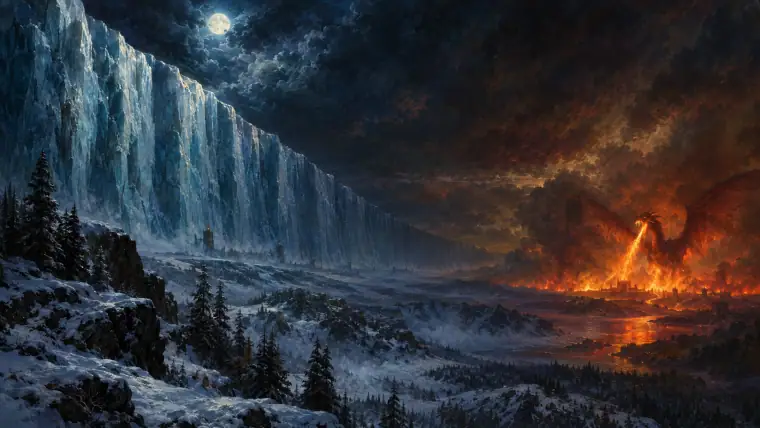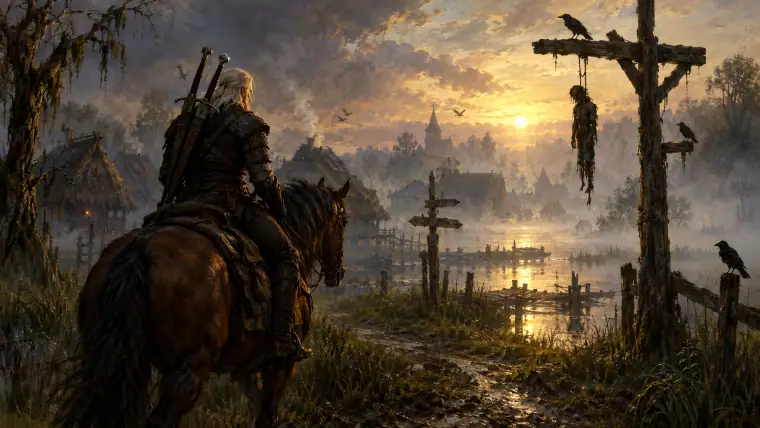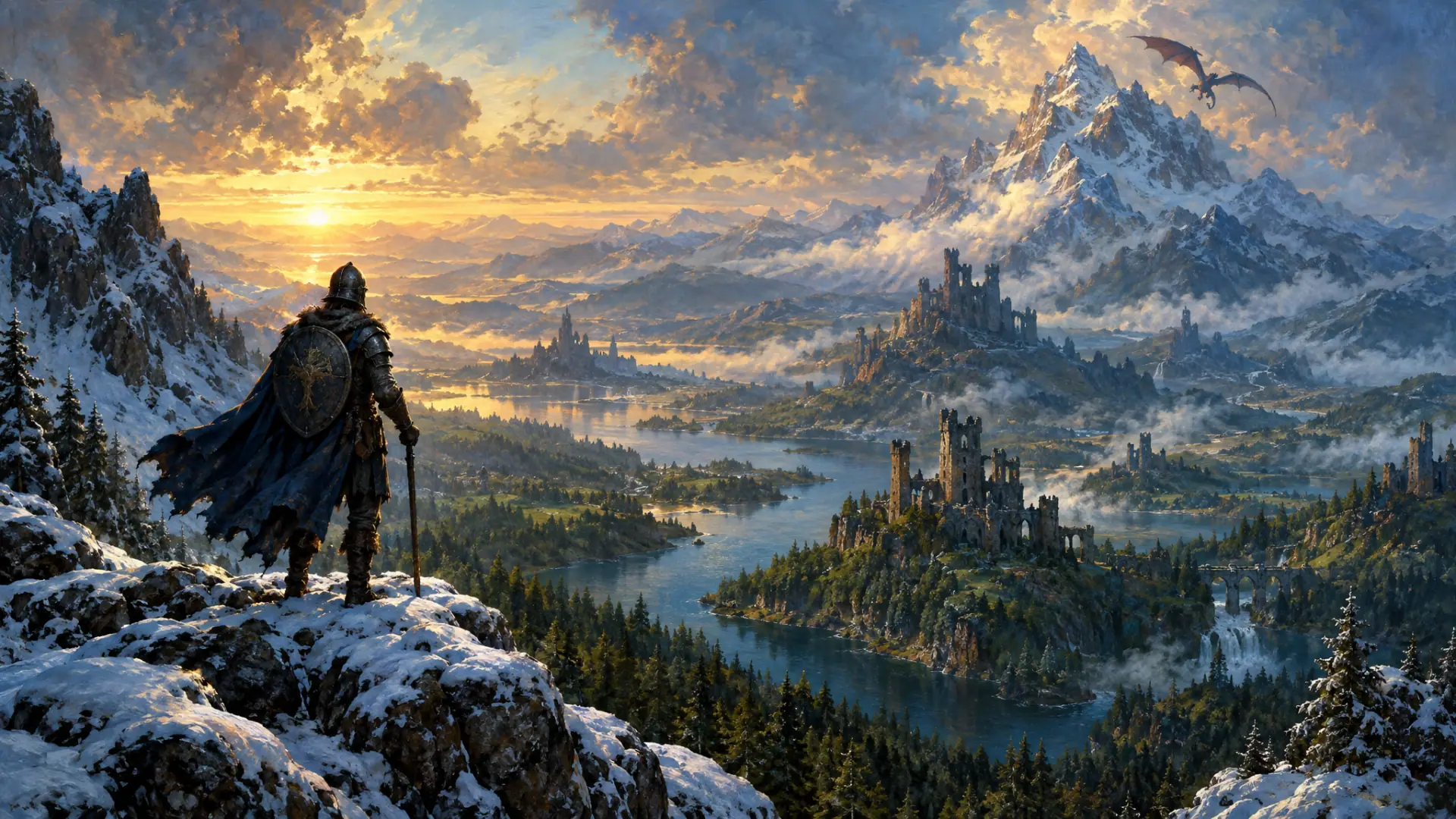
Grimdark was the dominant new mood in 21st-century epic fantasy, driven by George R. R. Martin and Joe Abercrombie and amplified by Game of Thrones. Its name is a reminder of how much tabletop wargaming shaped the language of modern fantasy.
Hallmarks
- Moral bleakness: no clean heroes, no trustworthy institutions, might often makes right
- Graphic violence and war shown from the ground, with consequences that linger
- Protagonists who are killers, torturers, mercenaries or survivors — often narrators
- Deliberate subversion of Tolkienian tropes: the prophecy lies, the chosen one fails
- Realpolitik — betrayal, dynastic scheming, sieges — over quests
- Epic scale with little faith that the world can be made better
What it is
Grimdark is fantasy — usually epic in scale — that is pervasively violent, cynical and morally bleak. Its worlds are ruled by the strong and the ruthless; its protagonists are sellswords, torturers, disgraced knights and survivors; its wars are shown from the mud, with rape, famine and betrayal in view. Where High / Epic Fantasy promises that good will prevail, grimdark suggests that "good" is mostly a story told by winners.
Critics have tried to pin it down. Adam Roberts called it an "anti-Tolkien" approach: fiction "where nobody is honourable and Might is Right." Jared Shurin identified three components: a grim tone, a sense of realism in which kings are useless and heroes flawed, and genuine agency, since in a world without destiny, characters must choose. Its detractors, such as Liz Bourke, see a valorization of darkness for its own sake. Whether it is a genre or merely a marketing label remains a live argument.
Origins
The word itself is a gamer's word. Games Workshop's Warhammer Fantasy Battle (1983) and its science-fiction sibling Warhammer 40,000 (first published as Rogue Trader in October 1987) built famously pitiless settings, and 40K's slogan — "In the grim darkness of the far future, there is only war" — gave the language "grimdark." Even the company's Warhammer Fantasy Roleplay (1986) promised "a grim world of perilous adventure," with rat-catchers and grave robbers in place of noble paladins.
The literary lineage runs back further. Michael Moorcock's Elric, Poul Anderson's The Broken Sword and Karl Edward Wagner's Kane had long rejected consolation. The key 1980s text is Glen Cook's The Black Company (1984), in which a mercenary unit's physician chronicles its service to a sorceress-tyrant in flat, soldierly prose.
Those tabletop worlds reached a vast audience. Warhammer 40,000 is described as the most popular miniature wargame in the world and is often called the foundational work of grimdark; from 1997 Games Workshop's Black Library imprint turned both Warhammer settings into an enormous shelf of novels, most of them war stories told by soldiers, inquisitors and zealots. For many readers, that shelf defined the mood before the word reached literary fantasy.
Evolution
George R. R. Martin's A Song of Ice and Fire (from 1996) brought the mode into the mainstream of epic fantasy: medieval realpolitik, beloved characters killed without warning, magic held at the margins. Steven Erikson's Malazan Book of the Fallen (1999–2011) combined military grit with vast mythic scope; R. Scott Bakker's Prince of Nothing (from 2003) was darker still. With Joe Abercrombie's The First Law (2006–08) — a torturer, a barbarian and a vain officer undercutting every trope of the quest — the label stuck, and Abercrombie cheerfully adopted the handle "Lord Grimdark." Mark Lawrence's Prince of Thorns (2011) and others followed.
HBO's Game of Thrones (2011–19) made the mood a global phenomenon, and games kept pace: CD Projekt Red's The Witcher 3: Wild Hunt (2015) built its moral choices on grimdark foundations, and Darkest Dungeon (2016) turned stress and despair into mechanics. Backlash arrived too. In 2016 Damien Walter complained in The Guardian of grimdark's "bigger swords, more fighting, bloodier blood"; in 2017 Alexandra Rowland coined "hopepunk" as its opposite, and "noblebright" and, later, Cozy Fantasy offered readers the reverse mood.
How to tell it apart
- Grimdark vs. Dark Fantasy: grimdark is a branch of the dark-fantasy family, but the darkness comes from people, not the supernatural. The First Law has little horror and a great deal of cruelty; a haunted castle full of ghouls is dark fantasy even if its hero is noble.
- vs. Sword & Sorcery: both favor morally gray fighters. S&S is swift, personal and fun; grimdark is usually epic in scope and intentionally bleak, with multiple viewpoints and political wars.
- vs. High / Epic Fantasy: same maps and armies, opposite theology. High fantasy trusts heroism and Eucatastrophe; grimdark distrusts both.
- vs. Low Fantasy: grimdark's scarcity of magic leads some critics to call Martin and Abercrombie "low fantasy," but in the strict sense they are secondary-world epics.
- vs. Cozy Fantasy: the reverse image. Cozy fantasy lowers the stakes and raises the kindness; grimdark raises the stakes and lowers the kindness.
Where to start
- The Black Company (Glen Cook, 1984) — the soldier's-eye view that started it.
- A Song of Ice and Fire — A Game of Thrones (1996).
- The First Law — The Blade Itself (2006): grimdark with jokes.
- Malazan Book of the Fallen — Gardens of the Moon, for grimdark at mythic scale.
- Warhammer Fantasy Roleplay — the tabletop world that gave the mood its vocabulary.
Marginalia
- The word comes from Games Workshop's Warhammer 40,000 slogan: "In the grim darkness of the far future, there is only war."
- Warhammer 40,000 first appeared as Warhammer 40,000: Rogue Trader in October 1987; its fantasy sibling, Warhammer Fantasy Roleplay (1986), billed itself as "a grim world of perilous adventure."
- Glen Cook's The Black Company (1984), narrated by a mercenary company's physician, is often cited as a founding grimdark novel.
- Joe Abercrombie, author of The First Law, uses the online handle "Lord Grimdark."
- Critic Adam Roberts called grimdark an "anti-Tolkien" mode, fiction "where nobody is honourable and Might is Right."
- In 2017 writer Alexandra Rowland proposed "hopepunk" as grimdark's opposite; "noblebright" is another counter-label.
Quick answers
- What is Grimdark?
- Fantasy with the heroism burned out: sellswords, torturers and scheming kings in worlds where nobody is honorable and might makes right — named after a Warhammer 40,000 slogan.
- What are the hallmarks of Grimdark?
- Moral bleakness: no clean heroes, no trustworthy institutions, might often makes right; Graphic violence and war shown from the ground, with consequences that linger; Protagonists who are killers, torturers, mercenaries or survivors — often narrators; Deliberate subversion of Tolkienian tropes: the prophecy lies, the chosen one fails; Realpolitik — betrayal, dynastic scheming, sieges — over quests; Epic scale with little faith that the world can be made better.
- When did Grimdark emerge?
- 1980s roots (The Black Company, Warhammer); named and booming 2000s–2010s.
- Where does the name “Grimdark” come from?
- From the Warhammer 40,000 tagline "In the grim darkness of the far future, there is only war"; applied to fantasy fiction in the 2000s.
- What are the key works of Grimdark?
- A Song of Ice and Fire, The First Law, Malazan Book of the Fallen, Warhammer Fantasy Battle, Warhammer Fantasy Roleplay, Game of Thrones, The Witcher 3: Wild Hunt and Darkest Dungeon.