Few novelists shaped the rules of Dungeons & Dragons more concretely. Anderson's troll, swan-may and Law-versus-Chaos cosmology went straight into the game, and The Broken Sword set the grim, Norse-hued template for later dark fantasy.
Life
Poul William Anderson was born on 25 November 1926 in Bristol, Pennsylvania, to parents of Danish descent; his first name is the Danish spelling of "Paul." After his father's death the family lived for a time in Denmark before settling on a farm in Minnesota, and Anderson grew up bilingual, steeped in Scandinavian sagas and ballads as well as in science fiction pulps. He studied physics at the University of Minnesota, graduating with honors in 1948, but by then he was already selling stories, and he became a full-time writer rather than a scientist.
In 1953 he married Karen Kruse, a fellow fan and writer who became a frequent collaborator; their daughter Astrid later married the science fiction writer Greg Bear. The Andersons settled in the San Francisco Bay Area, eventually in Orinda, and were central figures in its science fiction and fantasy community. In 1966 Anderson was among the founders of the Society for Creative Anachronism, the medieval re-creation group born at a tournament party in Berkeley. He served as president of the Science Fiction Writers of America from 1972 to 1973, and he was an enthusiastic member of fan clubs and literary societies throughout his life. He died of prostate cancer at his home in Orinda on 31 July 2001.
Work
Anderson published more than a hundred books across five decades: rigorous space opera such as the Polesotechnic League and Dominic Flandry series, the time-patrol stories, and the celebrated Tau Zero (1970), about a starship that cannot stop accelerating. He won seven Hugos and three Nebulas and was named an SFWA Grand Master in 1998.
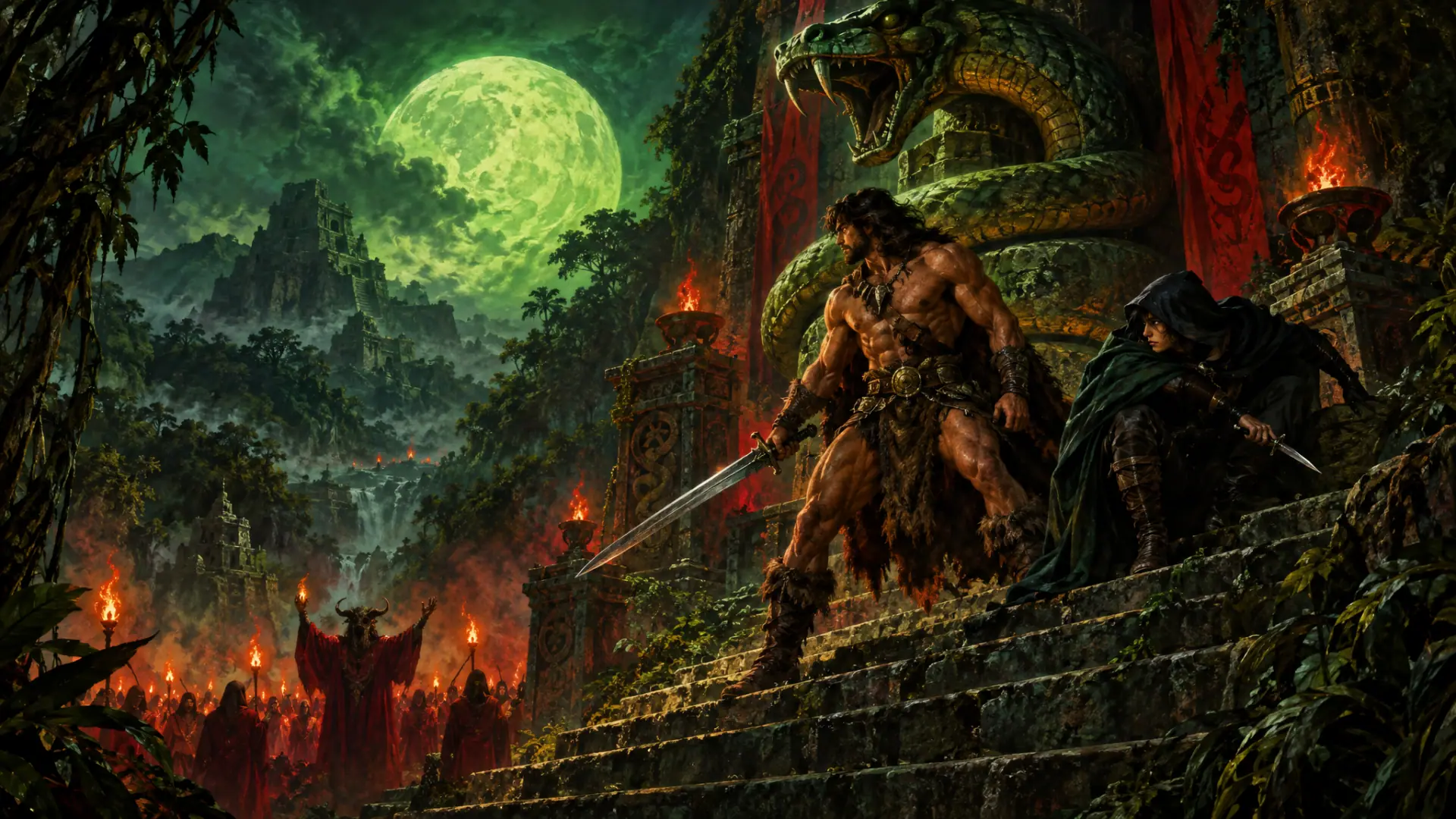
His fantasy was equally distinguished. The Broken Sword (1954) is a bleak, tragic tale of a changeling war between elves and trolls in a Viking-age world, full of incest, betrayal and a cursed sword — dark fantasy decades before the term was common, and published the same year as The Fellowship of the Ring. Three Hearts and Three Lions (novella 1953; novel 1961) sends Holger Carlsen, a Danish engineer fighting in the resistance in World War II, into a parallel world of Carolingian romance, where he discovers that he is the legendary paladin Holger Danske. The world is divided between the forces of Law and Chaos; Holger rides with a swan-may and a dwarf, and fights a troll that keeps putting itself back together. The High Crusade (1960) is a comic masterpiece about a medieval English village that captures an alien spaceship. Later he wrote Hrolf Kraki's Saga (1973) and A Midsummer Tempest (1974).
Legacy
Anderson's mark on Dungeons & Dragons is exceptionally direct. Gary Gygax listed Three Hearts and Three Lions, The High Crusade and The Broken Sword on Appendix N, and the first of these supplied some of the game's most distinctive elements. The D&D Troll, which regenerates from wounds and can only be finished off with fire or acid, comes from Anderson's troll, and Gygax regularly named Anderson among the authors who shaped the game. Holger Carlsen, a holy warrior with a destiny and a code, is a model for the paladin class introduced in the 1975 Greyhawk supplement. The swanmay and the nixie followed him into the monster books, and his cosmic struggle between Law and Chaos — which Michael Moorcock developed in parallel — became the original three-point Alignment system of the 1974 Dungeons & Dragons: Law, Neutrality and Chaos.
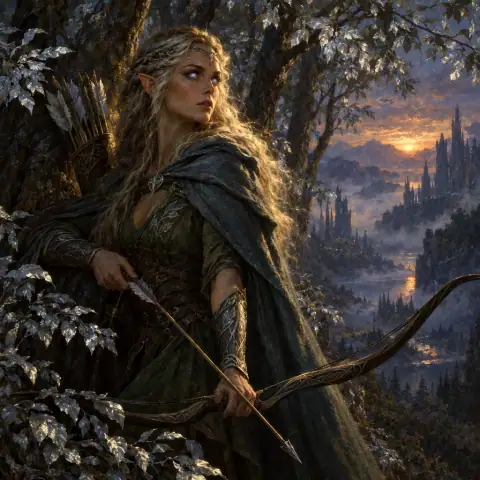
Anderson's role in the SCA also connects him to the living-history and Live-Action Roleplay (LARP) traditions that fed tabletop play. And The Broken Sword, with its doomed heroes and cold, beautiful, amoral elves, helped establish the darker, Norse-inflected strand of Dark Fantasy; Moorcock praised it above Tolkien, and critics have long noted how closely Skafloc's cursed blade prefigures Elric's soul-drinking Stormbringer. Anderson revised the novel for the Ballantine Adult Fantasy Series series in 1971.
Marginalia
- Anderson took a physics degree with honors from the University of Minnesota in 1948, and his science fiction was known for its scientific rigor.
- Three Hearts and Three Lions began as a 1953 novella in The Magazine of Fantasy & Science Fiction and was expanded into a novel published by Doubleday in 1961.
- Its hard-to-kill troll, which regrows from severed pieces unless burned, is the direct source of D&D's regenerating troll.
- Gygax listed Three Hearts and Three Lions, The High Crusade and The Broken Sword on Appendix N.
- He was a founding member of the Society for Creative Anachronism in 1966.
- He won seven Hugo Awards and three Nebula Awards and was named an SFWA Grand Master in 1998.
Quick answers
- Who was Poul Anderson?
- A physics graduate of Danish descent who wrote hard science fiction and saga-dark fantasy with equal skill — and whose Three Hearts and Three Lions handed D&D its paladin, its regenerating troll and its war of Law and Chaos.
- When was Poul Anderson born?
- Poul Anderson was born in 1926 in Bristol, Pennsylvania and died in 2001.
- What is Poul Anderson known for?
- Poul Anderson is best known for Three Hearts and Three Lions and The Broken Sword.
- Why does Poul Anderson matter to fantasy and games?
- Few novelists shaped the rules of Dungeons & Dragons more concretely. Anderson's troll, swan-may and Law-versus-Chaos cosmology went straight into the game, and The Broken Sword set the grim, Norse-hued template for later dark fantasy.