Nearly everything modern fantasy knows about dwarves, elves, giants, trolls, cursed rings and the end of the world passes through the Eddas, which fed Tolkien directly and D&D, Magic: The Gathering and Skyrim in turn.
Overview
Almost everything we know of Norse myth comes down to two Icelandic books, both called Edda. The Prose Edda, written around 1220 by the chieftain and scholar Snorri Sturluson, retells the cosmos from creation to Ragnarök in lucid prose. The Poetic Edda is a collection of older anonymous poems — about gods, heroes, dwarves and giants — preserved mainly in a single 13th-century manuscript, the Codex Regius.
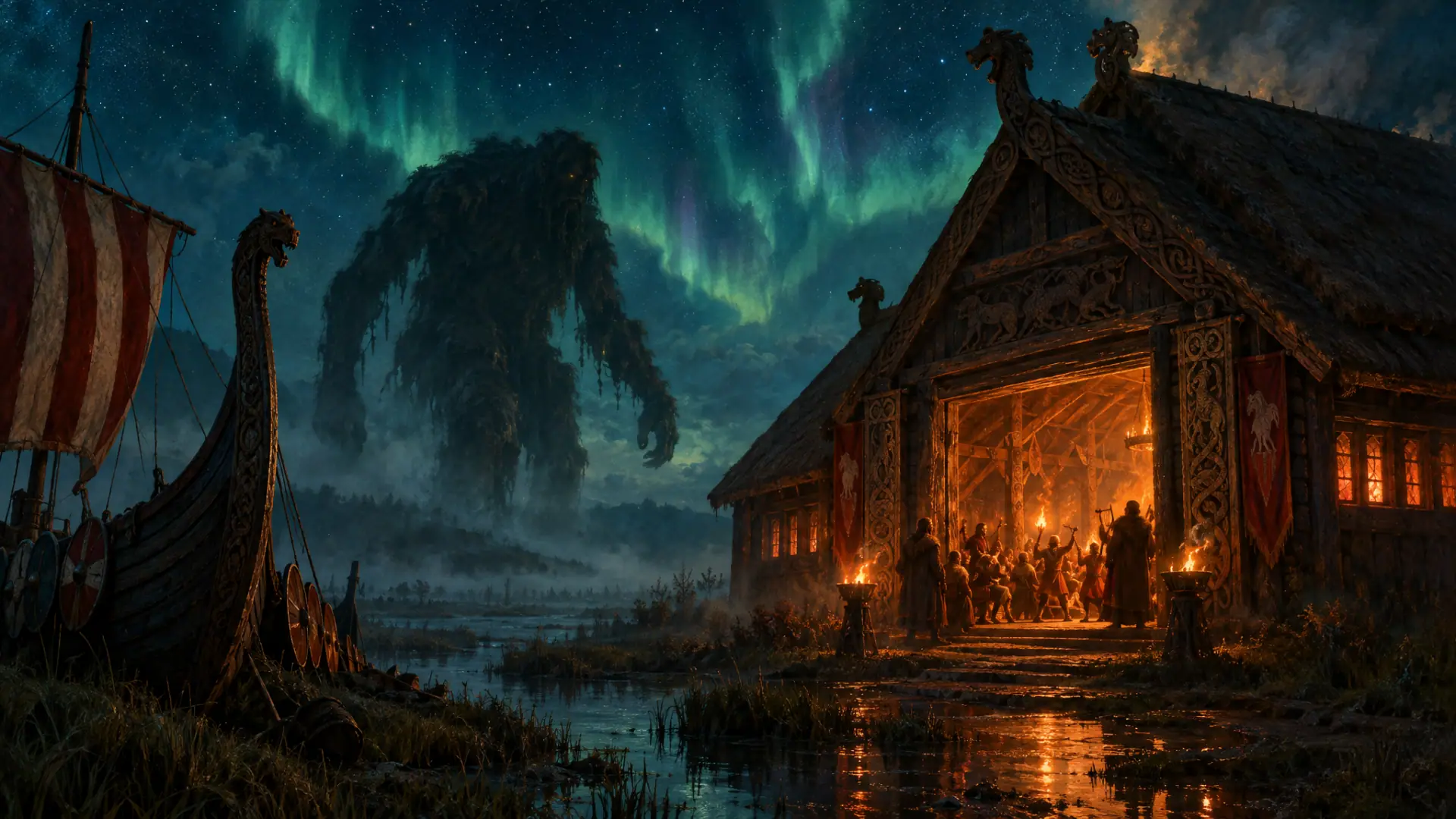
Together they are the northern twin of Greek myth, and for fantasy the more consequential of the two. Odin's wandering and one-eyed wisdom, Thor's hammer, the World Tree Yggdrasil, the frost giants, the dwarf smiths, the dragon on its gold, the cursed ring and the doom of the gods all descend to modern readers and players through these pages — very often by way of J. R. R. Tolkien.
Origins
The mythological poems of the Poetic Edda are older than their manuscript, though how much older is debated; some may reach back to the Viking Age, others were probably shaped in Christian Iceland. They survive because Icelanders, converted to Christianity around the year 1000, kept writing down the old stories as heritage and as the key to their poetic tradition. The Codex Regius was written in the 13th century, dropped from sight, and was acquired in 1643 by Bishop Brynjólfur Sveinsson, who sent it to the Danish king. It stayed in Copenhagen until 1971, when it was carried back to Iceland by ship under naval escort, a national homecoming.
Snorri's Prose Edda had a practical purpose: Icelandic court poetry depended on kennings, riddling phrases that only make sense if you know the myths behind them. Its four parts are a Prologue (which explains the gods euhemeristically, as deified Trojan warriors), Gylfaginning (a question-and-answer tour of the myths), Skáldskaparmál (a treatise on poetic diction) and Háttatal (a catalogue of verse forms). Seven manuscripts survive from about 1300 to 1600. Snorri himself was murdered at his farm at Reykholt in 1241, a casualty of Iceland's feuding politics.
The story
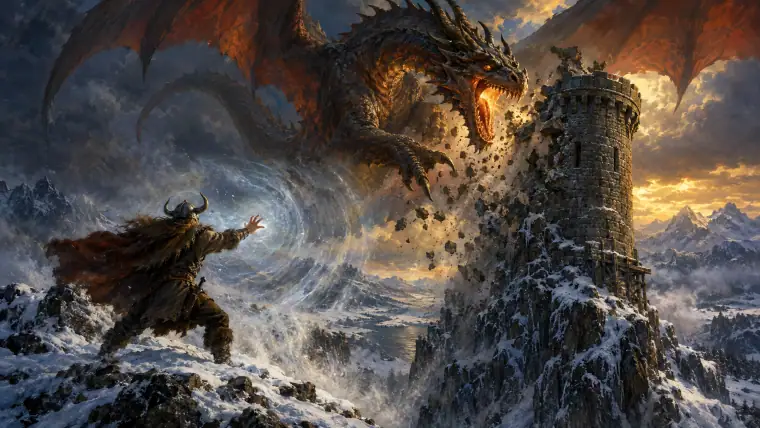
The Eddas are a cycle rather than a single tale. Völuspá, "the prophecy of the seeress", opens the Poetic Edda by recounting the whole arc of the world: creation from the body of the giant Ymir, the gods' ordering of the cosmos, the coming of death and deceit, and the final battle of Ragnarök, when the wolf Fenrir swallows Odin and the world burns and sinks before rising anew. Other poems give Odin's hard-won wisdom (Hávamál), Thor's comic battles with giants, and a sequence of heroic lays about Sigurd, who kills the dragon Fáfnir, wins a cursed hoard with a ring at its heart, and is destroyed by the tragedy that follows. Snorri's Gylfaginning weaves the myths into a connected narrative that remains the standard introduction.
Reception & impact
Rediscovered by antiquarians in the 17th century, the Eddas fed Scandinavian and German Romanticism, Richard Wagner's operatic Ring cycle and William Morris's saga translations. They arrived in Oxford in the person of a young philologist who, in the 1920s, founded the Kolbítar ("coal-biters"), a club for reading Icelandic sagas and Eddas in the original; C. S. Lewis was a member.
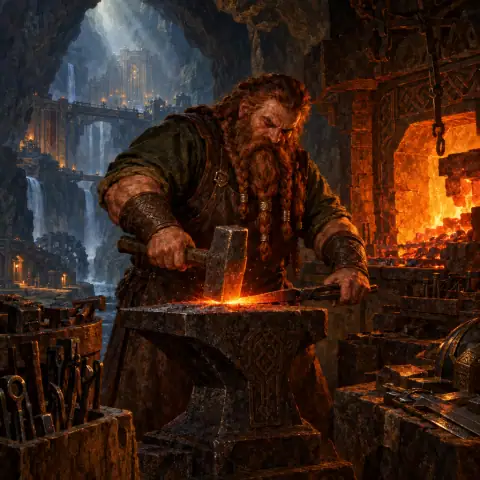
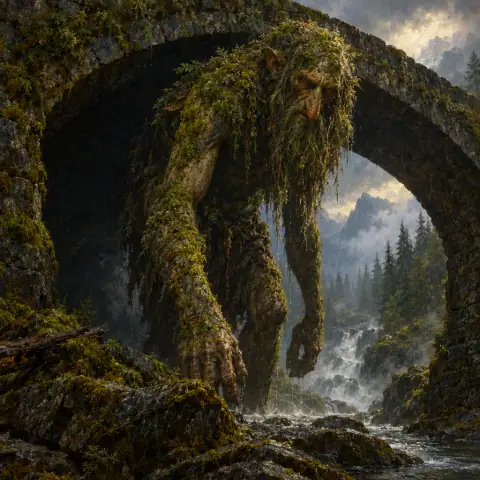
The Eddas left some of the most visible fingerprints anywhere in Tolkien's fiction. The Dvergatal, the roster of dwarves in Völuspá, supplied nearly the whole company of The Hobbit: Thorin and his byname Eikinskjaldi, "Oakenshield", along with Fili, Kili, Bifur, Bofur, Bombur, Nori, Dori and Ori, and the ancestral names Durin, Dain, Thror and Thrain — and a dwarf called Gandalf, whose name went to the wizard. In Alvíssmál Thor keeps a dwarf talking until sunrise turns him to stone, the fate of Bert, Tom and William the trolls. Tolkien later set the Völsung story in Eddic meter in poems published in 2009 as The Legend of Sigurd and Gudrún. Brushing off a translator's claim that his Ring derived from Wagner's, he wrote that "both rings were round, and there the resemblance ceases" — but the Northern theme of a cursed treasure is common ground.
Legacy
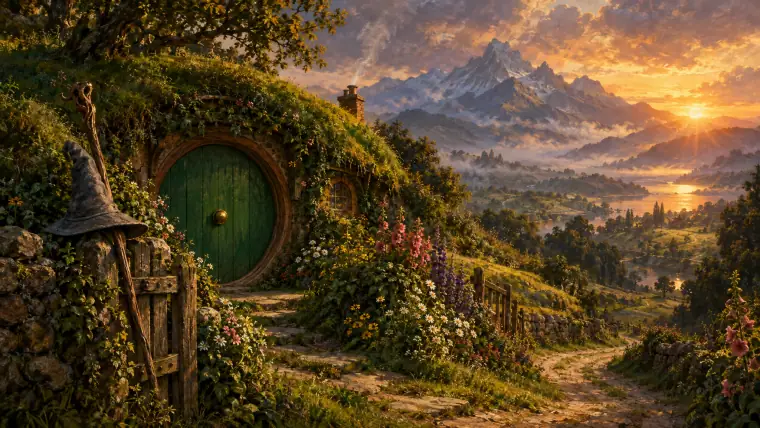
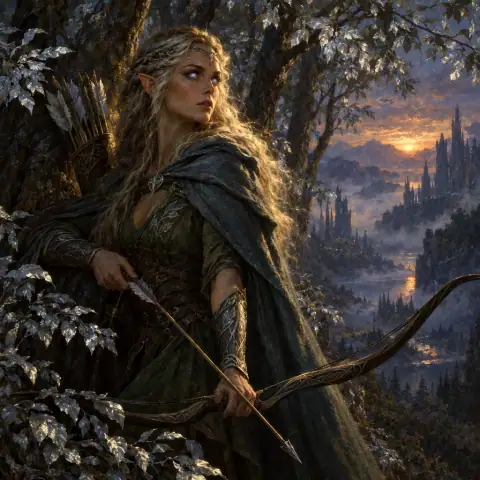
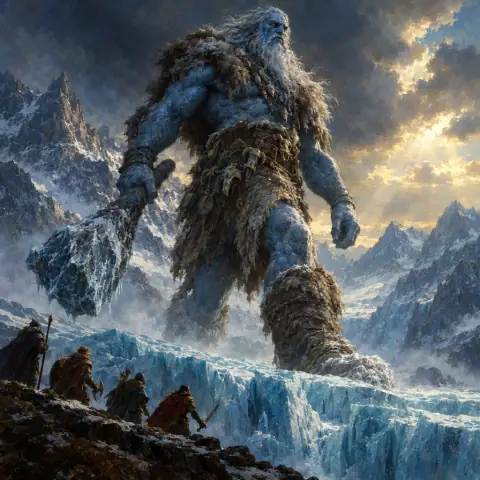
Through Tolkien, the Eddas set the default for fantasy races. Dwarves became bearded underground smiths and elves became luminous and ancient; giants were tied to frost and fire. Dungeons & Dragons went to the sources as well: the Norse pantheon appeared in Gods, Demi-gods & Heroes (1976) and Deities & Demigods (1980), and the game's frost and fire giants echo the jötnar of the Eddic cold and burning worlds. Poul Anderson's The Broken Sword (1954) steeped heroic fantasy in the same saga-darkness.
Video games have made the Norse cosmos one of their most familiar settings: the Nordic province of The Elder Scrolls V: Skyrim (2011), Santa Monica Studio's God of War (2018), and Iron Gate's Viking survival game Valheim (2021) all build on material first set down in medieval Iceland. Magic: The Gathering devoted its 2021 set Kaldheim to a Norse-inspired plane. Snorri wrote to help poets understand the old stories; eight centuries later, his handbook is still doing the job.
Marginalia
- The 'Dvergatal' in the poem Völuspá lists dwarves named Durin, Thorin, Fili, Kili, Bifur, Bofur, Bombur, Nori, Dain, Thrain, Thror — and Gandalf.
- Völuspá's dwarf list also gives the byname Eikinskjaldi, 'Oakenshield'.
- In Alvíssmál, Thor keeps a clever dwarf talking until dawn, and the sunlight turns him to stone — the fate of Tolkien's trolls in The Hobbit.
- Snorri wrote the Prose Edda around 1220 partly as a handbook for poets, explaining the myths behind traditional kennings.
- The Codex Regius of the Poetic Edda was carried home from Copenhagen to Iceland by ship, with naval escort, in 1971.
- Tolkien's Eddic-meter poems on the Völsung story were published in 2009 as The Legend of Sigurd and Gudrún.
Quick answers
- When was The Eddas first published?
- The Eddas was first published in Prose Edda c. 1220; Poetic Edda manuscript (Codex Regius) c. 1270s.
- Who created The Eddas?
- The Eddas was made by Snorri Sturluson (author and compiler of the Prose Edda).
- What kind of work is The Eddas?
- The Eddas is a myth cycle in the Myth & Epic, Mythic Fantasy and High / Epic Fantasy tradition.
- Why is The Eddas important?
- Nearly everything modern fantasy knows about dwarves, elves, giants, trolls, cursed rings and the end of the world passes through the Eddas, which fed Tolkien directly and D&D, Magic: The Gathering and Skyrim in turn.