Dark Age of Camelot built an MMORPG around Realm versus Realm, organized three-sided war over keeps, towers and relics, and showed that player-versus-player combat could be structured, meaningful and popular, a model echoed by later MMOs.
Overview
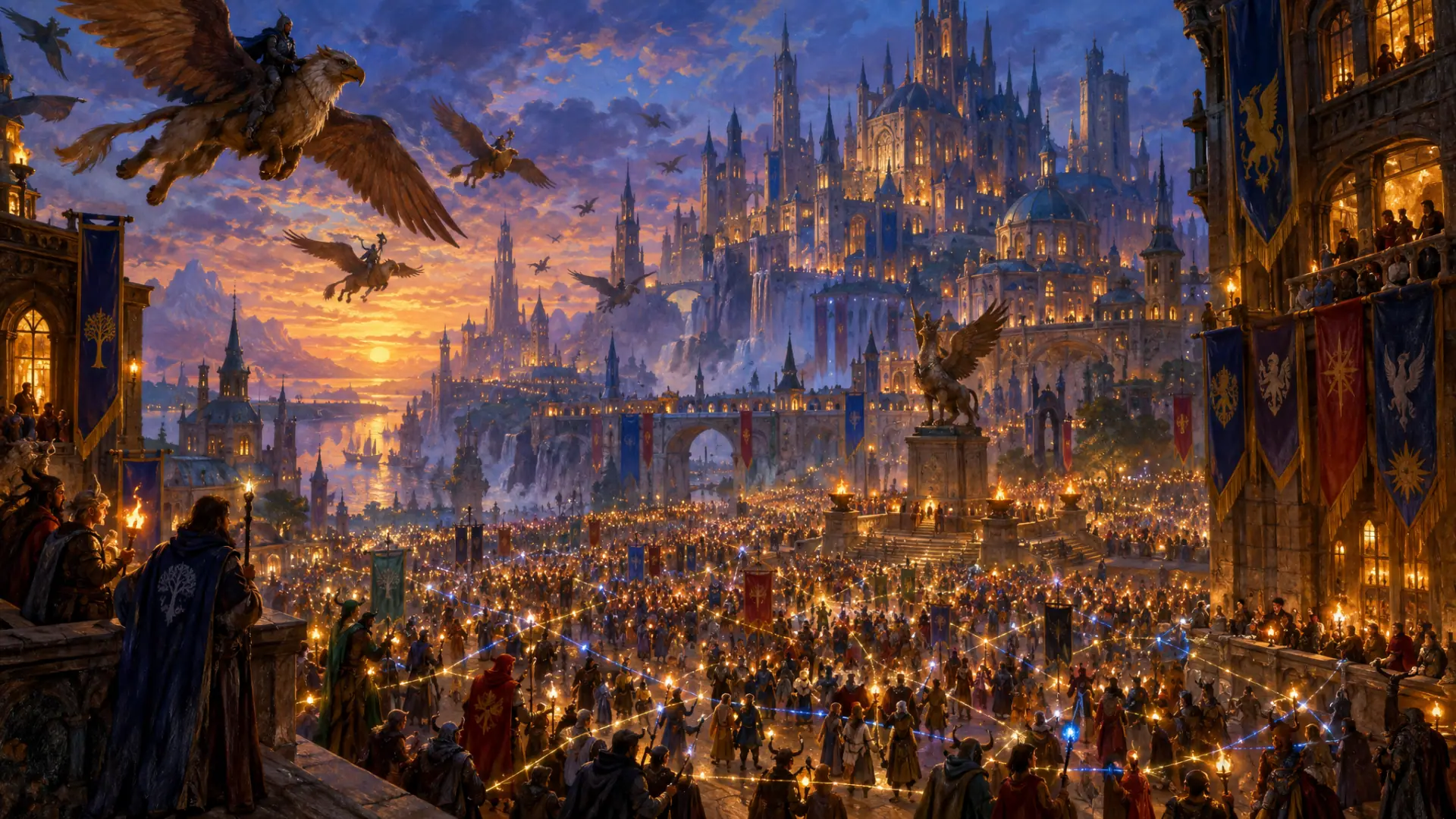
Arthur is dead, and his kingdom has broken into three. Dark Age of Camelot, released in North America on October 9, 2001, by Mythic Entertainment of Fairfax, Virginia, set Albion, Hibernia and Midgard against one another in a war with no end, and made that war the point of the game. Players fought monsters and leveled as in EverQuest, but the destination was the frontier, where armies from all three realms besieged keeps, held towers and carried off one another's sacred relics. Mythic called it Realm versus Realm, or RvR, and it gave player-versus-player combat something the genre had lacked: a shared cause.
Origins
Mythic was an old hand at online games. Mark Jacobs had run commercial online role-playing games since Aradath in 1984, and his company merged with Rob Denton's Interesting Systems in 1995; together they produced a string of games for services such as AOL and GameStorm, among them the text MUD-style Darkness Falls: The Crusade. The decision to build Dark Age of Camelot came in late 1999, first conceived as a graphical MUD and in large part an adaptation of Darkness Falls. Jacobs proposed Arthurian legend, the world of Le Morte d'Arthur, partly because it was in the public domain and required no license.
Mythic built the game in 18 months with 25 full-time developers, Denton as lead programmer and Matt Firor as producer. By the studio's account development cost about US$2.5 million excluding equipment leases; other reports put the total investment at $3.2 million, still more than double all its previous games combined. The end of development was precarious. Mythic had never borrowed money, so it lacked the credit rating to lease the Dell servers it needed; refused, it bought each machine with development funds. Nearly every publisher it approached passed. Only Vivendi Universal Games said yes, and GOA published the game in Europe from January 2002.
How it plays
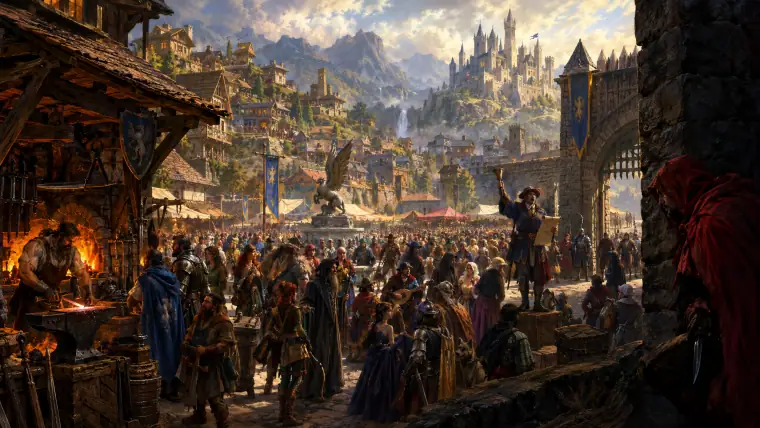
Each realm draws on a different mythology. Albion is Arthurian Britain, with Camelot as its capital, Stonehenge on Salisbury Plain and the undead of Morgana as its threat. Hibernia is a Celtic land of forest and magic, ruled from Tir na Nog and troubled by the Unseelie Court. Midgard is the Norse north of the Eddas, home to Jordheim, trolls and giants. Classes were deliberately asymmetrical: rather than mirror one another, each realm's roster was balanced at the level of realm warfare, so a Midgard Berserker had no exact counterpart in Albion or Hibernia.
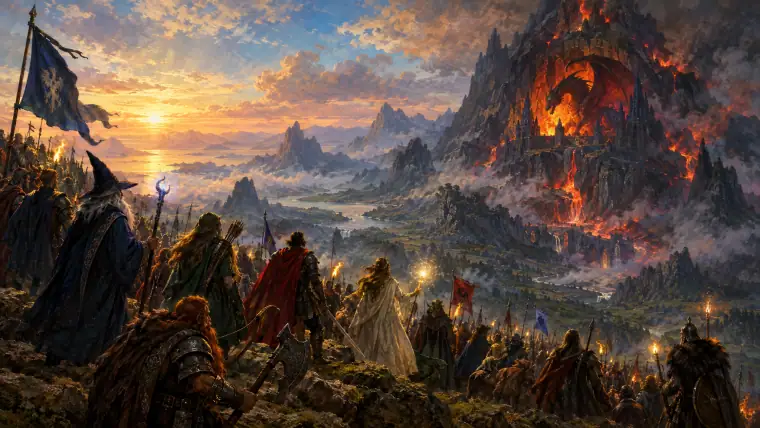
The frontiers joined the three. There, realm armies fought for keeps and towers, for control of the entrance to the demon-haunted dungeon Darkness Falls, and above all for relics, sacred artifacts that each realm guards in fortified temples and the others try to seize and carry home. Guilds formed alliances with shared chat channels, claimed captured towers and keeps in their own names, and ran organized campaigns across the border zones.
The technology was lean. At its height Mythic ran 120 dual-processor Pentium servers on Linux, six to a world, each world capable of 20,000 simultaneous players but capped around 4,000. The client was built for a 10 kbit/s data stream per player, a design for the dial-up era.
Reception & impact
Mythic forecast 30,000 U.S. players at launch. The first shipment sold out within a day, 51,000 units sold in four days, and the game topped the NPD computer charts for October 2001. By the first week of November it had sold 115,894 copies in the United States; GameSpot judged it a bigger success than that year's other MMO launch, Anarchy Online. By August 2006 U.S. sales had reached 300,000 copies and $10.4 million, and the franchise with expansions 780,000 units; in Europe the game sold more than 100,000 copies by March 2003. The Academy of Interactive Arts & Sciences gave it the Massive Multiplayer/Persistent World award.
Expansions came yearly: Shrouded Isles (November 2002), with new lands and classes; Trials of Atlantis (October 2003); Catacombs (December 2004), which added instanced dungeons and underground kobolds; Darkness Rising (October 2005), with mounts; and Labyrinth of the Minotaur (November 2006), which added the Minotaur as a race for all three realms. Free updates added player housing and player-run shops (Foundations, June 2003) and rebuilt the frontiers with siege engines (New Frontiers, June 2004).
Legacy
Electronic Arts bought Mythic in June 2006. The studio released Warhammer Online: Age of Reckoning in 2008, was folded into a division under BioWare's Ray Muzyka in 2009, and was closed by EA in May 2014. Camelot outlived it: Rob Denton's new studio, Broadsword, took over its development, along with Ultima Online, and in 2019 launched a free-to-play tier, Endless Conquest.
Its ideas traveled with its people. Matt Firor went on to head ZeniMax Online Studios and direct The Elder Scrolls Online (2014), in which three alliances war over the throne of Cyrodiil. Mark Jacobs raised money on Kickstarter in 2013 for Camelot Unchained, a three-realm PvP game. Where Lineage made war a matter of guilds and castles, Dark Age of Camelot made it a matter of nations, and it remains the reference point whenever an MMO promises faction warfare that matters.
Marginalia
- Mark Jacobs chose Arthurian legend partly because it was in the public domain, sparing Mythic any licensing fees.
- Dell refused to lease Mythic the servers it needed, so the studio bought them outright with development money.
- Every publisher Mythic first approached turned the game down except Vivendi.
- Its servers were designed for 20,000 simultaneous players, but Mythic capped them at about 4,000 so worlds would not feel crowded.
- Mythic forecast 30,000 U.S. players at launch; the first shipment sold out in a day and 51,000 copies sold in four days.
- When EA closed Mythic in 2014, ex-Mythic staff at Broadsword took over both Camelot and Ultima Online.
Quick answers
- When was Dark Age of Camelot first released?
- Dark Age of Camelot was first released in 2001 (North America); 2002 (Europe).
- Who published or developed Dark Age of Camelot?
- Mythic Entertainment and Electronic Arts.
- What kind of work is Dark Age of Camelot?
- Dark Age of Camelot is a MMORPG in the MMORPGs and Arthurian Fantasy tradition, released for Windows.
- Why is Dark Age of Camelot important?
- Dark Age of Camelot built an MMORPG around Realm versus Realm, organized three-sided war over keeps, towers and relics, and showed that player-versus-player combat could be structured, meaningful and popular, a model echoed by later MMOs.