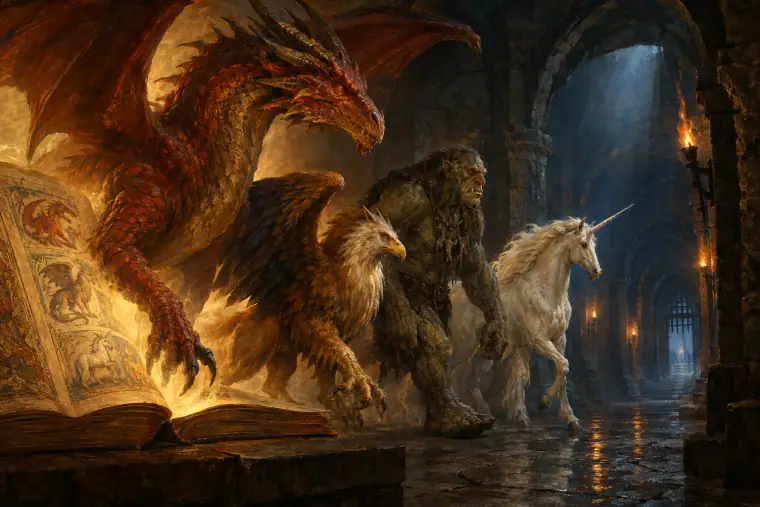
The kobold traces a whole arc of fantasy adaptation: folklore spirit to wargame troop to first-level cannon fodder to beloved underdog, reinvented by later D&D editions as the small cousins of dragons.
Origins
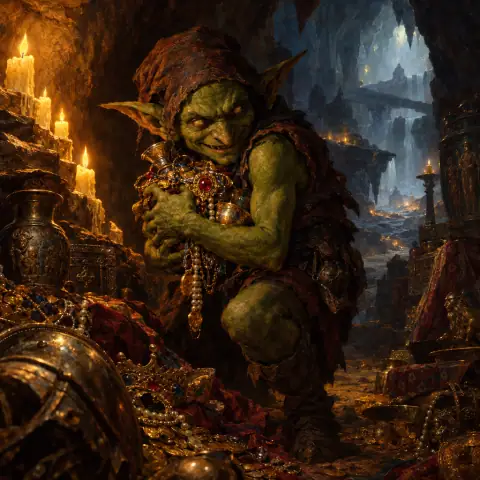
In German folklore the kobold was a household spirit before it was anything else. The word first appears in 13th-century Middle High German, where kobolt jokingly named little figures of wood or wax representing a mischievous house sprite; linguists now derive it from kob, "house, chamber", and walt, "ruler". A kobold might do chores, bring luck, play pranks or burn the house down if slighted. The Brothers Grimm collected stories of such spirits, including the shape-shifting Hinzelmann; Cologne told of its own helpful house sprites, the Heinzelmännchen, who secretly finished the craftsmen's work by night.
A second kobold lived underground. Saxon silver miners of the 16th century blamed mine spirits — often conflated with kobolds — for ores that looked rich but yielded no silver and gave off poisonous fumes when smelted. They called it Kobold ore. When the Swedish chemist Georg Brandt isolated a new metal from it in 1735, the goblin's name stuck: cobalt. Paracelsus had equated such mine spirits with the earth elemental he called the gnome, and the boundary between kobolds, gnomes and goblins has been blurry ever since.
Into the dungeon
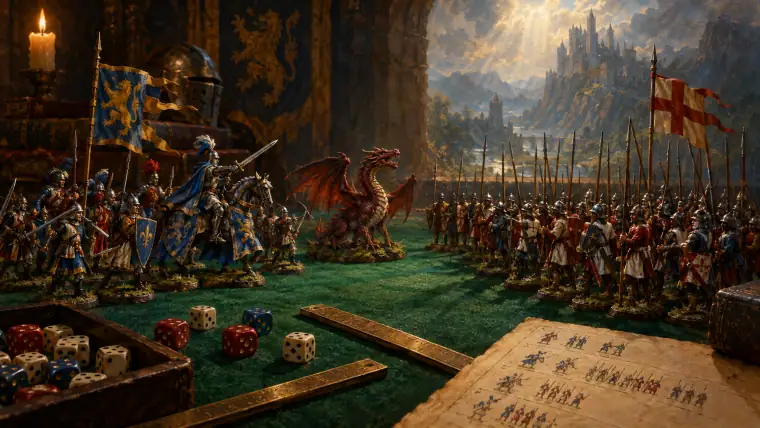
Kobolds entered gaming before roleplaying existed. Gary Gygax's Fantasy Supplement to Chainmail (1971) listed them as troops alongside goblins, orcs and trolls, and Dungeons & Dragons (1974) kept them as the weakest of the dungeon's humanoid tribes. Gygax even used them in his first playtests. The first-edition Monster Manual (1977) of Advanced Dungeons & Dragons gave them a look — hairless humanoids with small horns, living in tribes in dark forests and underground warrens — and SSI's Pool of Radiance (1988) put that look onto computer screens. Generations of players remember kobolds as their first fight, a few hit points apiece.
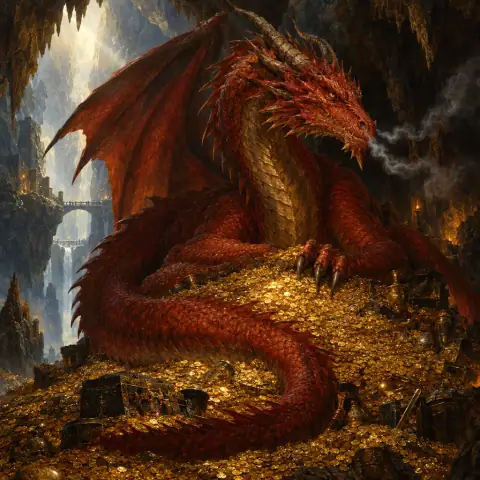
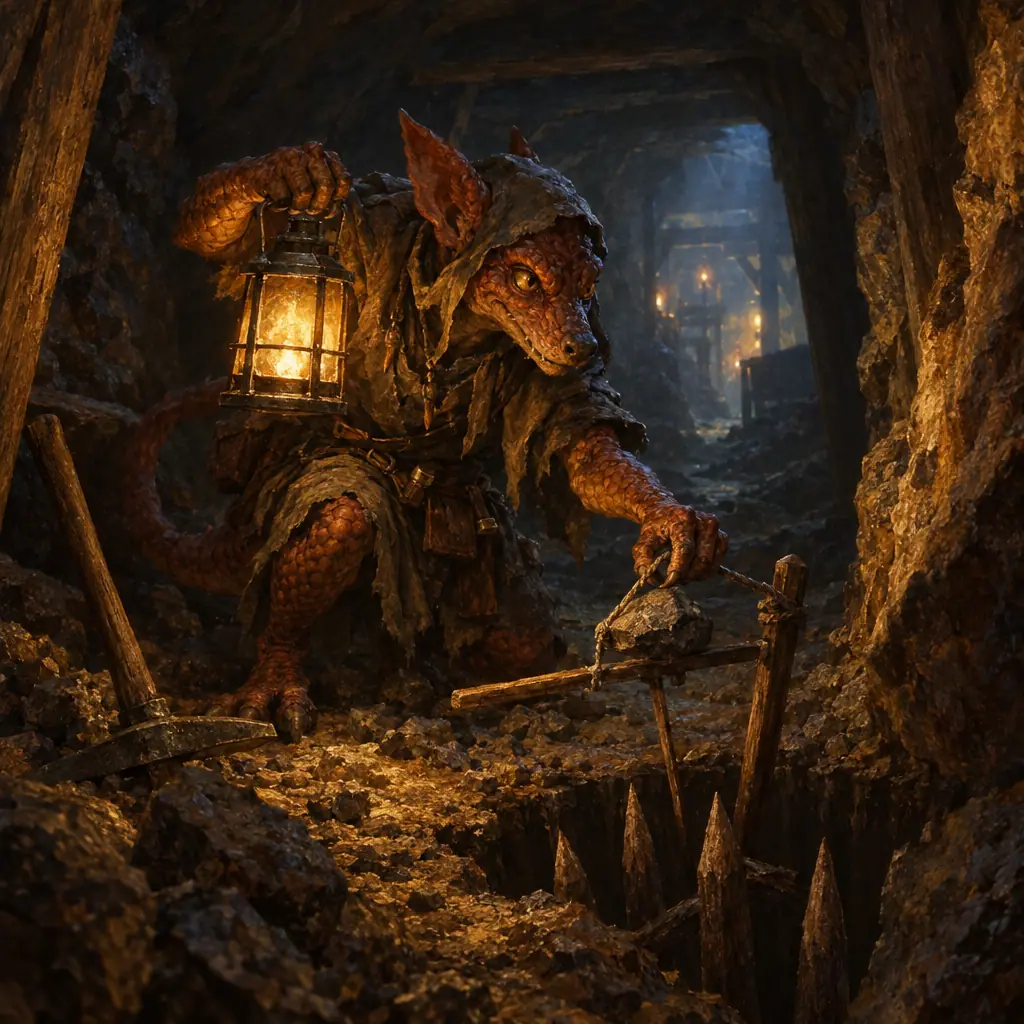
Then kobolds got clever. In 1987 Dragon editor Roger E. Moore described a Dungeon Master named Tucker whose kobolds, fighting on their own ground with traps, murder holes, fire and retreat, terrified a party of high-level adventurers. "Tucker's Kobolds" became a byword for smart monster tactics. Dungeons & Dragons 3rd Edition (2000) then gave kobolds a new identity: small, reptilian and proudly descended from dragons, whom they worship and serve. The edition's first published adventure, The Sunless Citadel, introduced Meepo, a hapless kobold keeper of a stolen white dragon wyrmling, and players adopted him en masse. BioWare's Shadows of Undrentide (2003), an expansion to Neverwinter Nights, added Deekin Scalesinger, a kobold bard who wants to write the hero's story. Dungeons & Dragons 5th Edition kept the draconic kobold and has since offered it as a playable race.
Variations
Folklore's kobold is a house spirit, a mine spirit, or both. D&D's kobold passed through a vaguely doglike, horned goblinoid phase in older editions' art before its draconic reinvention, and fans still argue about which is the "real" game kobold. Other games have taken the name their own way: in World of Warcraft kobolds are candle-headed miners muttering "You no take candle!", a joke that quietly restores their folkloric link to mines. Across all versions the kobold's charm is the same: it is small, underestimated and, given time to prepare, much more dangerous than it looks.
Migration
How the creature traveled from story to story.
- 1200Middle High German glossaries (13th c.)The earliest 'kobolt' is a jokey word for little wooden or wax figures of a mischievous house spirit.
- 1735SwedenGeorg Brandt isolates a new metal from the 'kobold ore' that Saxon silver miners blamed on goblins; it is named cobalt.
- 1971Chainmail Fantasy SupplementKobolds join goblins, orcs and trolls as troop types in Gygax and Perren's wargame.
- 1974Original D&D boxed setKobolds become the weakest of the dungeon's humanoid tribes.
- 1987Dragon magazine, "Tucker's Kobolds"Roger E. Moore's editorial shows how well-prepared kobolds can terrify high-level heroes.
- 2000D&D 3rd EditionKobolds are recast as small reptilian humanoids who claim kinship with dragons; the adventure The Sunless Citadel introduces Meepo.
- 2003Neverwinter Nights: Shadows of UndrentideBioWare's kobold bard Deekin Scalesinger becomes a fan-favorite companion.
Marginalia
- The chemical element cobalt is named for the kobold: German miners blamed goblins for ore that looked valuable but yielded no silver.
- Grimm's German Legends records Hinzelmann, a multi-formed household kobold said to have haunted a castle in Lower Saxony.
- Kobolds fought alongside goblins, orcs and trolls in Chainmail's 1971 fantasy supplement, before D&D existed.
- The 1977 Monster Manual described kobolds as hairless humanoids with small horns; 3rd edition (2000) made them draconic.
- Roger E. Moore's 1987 Dragon editorial "Tucker's Kobolds" made kobold ambush tactics a byword among Dungeon Masters.
- Meepo, the kobold keeper of a lost dragon in The Sunless Citadel (2000), was many players' first friendly monster in 3rd edition.
Quick answers
- Where does the Kobold come from?
- German household and mine spirits (Middle High German kobolt, 13th century)
- When did the Kobold first appear?
- c. 1200, in Middle High German glossaries (13th c.).
- How did the Kobold get into games?
- Key appearances: Chainmail Fantasy Supplement (1971), Original D&D boxed set (1974), D&D 3rd Edition (2000) and Neverwinter Nights: Shadows of Undrentide (2003).
- Why is the Kobold significant?
- The kobold traces a whole arc of fantasy adaptation: folklore spirit to wargame troop to first-level cannon fodder to beloved underdog, reinvented by later D&D editions as the small cousins of dragons.