Bundled with the Basic Set at the height of the 1980s boom, B2 may have been the most widely owned roleplaying adventure ever printed, and its home-base-plus-dungeon structure became the default shape of a first campaign.
Overview
The Keep on the Borderlands, module B2, is an introductory D&D adventure written by Gary Gygax and published by TSR, Inc. for the Dungeons & Dragons Basic Set. Its first printing is dated December 1979, and from then until 1982 it came packed inside every Basic Set — including the red-bordered 1981 edition sold at the peak of the game's popularity. For a very large number of people, it was the first adventure they ever ran or played.
Its premise is the frontier. Civilization ends at a walled keep on a road through wild country; beyond it, in a wooded ravine, lie the Caves of Chaos, where tribes of monsters den side by side. The player characters arrive at the keep, make it their base, and ride out to clear the caves.
Origins
The first Basic Sets shipped with dungeon geomorph maps and monster-and-treasure booklets; from 1978, TSR substituted Mike Carr's B1 In Search of the Unknown, an adventure designed to teach new Dungeon Masters. Jon Peterson has argued that the choice of bundled module had a financial and legal dimension. Dave Arneson's lawsuit over royalties loomed, and after the September 1979 press frenzy over the disappearance of student James Dallas Egbert III — wrongly linked to the game — Basic Set sales soared, turning Carr's bundled module into a significant source of income for its author. In early 1980 Gygax's own module replaced it. Peterson notes that Gygax's Caves of Chaos owe nothing to Carr's dungeon, although much of Carr's advice on refereeing is effectively paraphrased in B2.
The 32-page booklet came in a folder with a cover by Jim Roslof and interior art by Erol Otus and David LaForce. The first printing noted that it could be used with Advanced Dungeons & Dragons with minor changes; later printings dropped the line.
How it plays
B2 is a toolkit more than a story. The booklet opens with advice for novice referees, then describes the Keep in detail: its gatehouse, guards, tavern, bank, chapel, merchants and notable residents, some of whom are not what they seem — a treacherous priest among them. Players can shop, hire help, gather rumors and rest here between expeditions, learning that a Game Master plays a whole community, not just monsters.
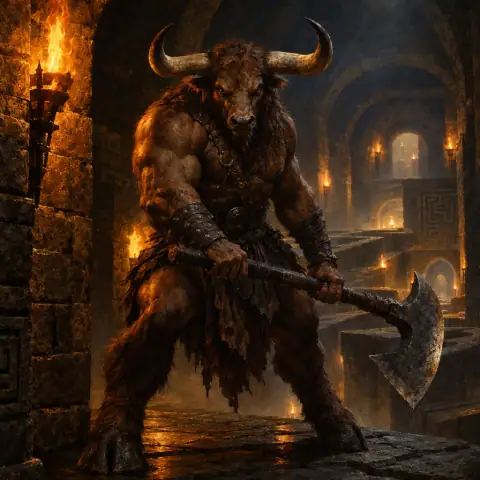
Outside, a short wilderness section offers hazards such as a lizard-man swamp and a mad hermit. Then come the Caves of Chaos: a ravine riddled with separate cave complexes, each the lair of a different tribe — kobolds, goblins, orcs, hobgoblins, gnolls, bugbears — plus an ogre, a Minotaur's labyrinth and a temple of evil chaos. Because the lairs are distinct, a group can tackle one cave per session, retreat to the Keep, heal and return. The tribes know each other; clever players can exploit their rivalries, bribe them, or set them against one another, while careless ones bring the whole ravine down on their heads.
This is the rhythm of an early D&D campaign: a safe base, a dangerous place nearby, a The party of first-level characters with few Hit points, and a loop of exploration, combat, Loot & loot tables and Experience points that slowly makes them heroes.
Reception & impact
Reviewers praised it as a model introduction. Anders Swenson in Different Worlds called it "a good introduction to D&D"; The Space Gamer's Kirby Griffis found it "interesting and full of excitement," though he thought the map sloppy. Lawrence Schick's Heroic Worlds (1991) called it "a good start for new players" and speculated that more copies of B2 had been printed than of any other scenario. Peterson has written that, bundled with Moldvay's 1981 set, it sold 750,000 copies a year. In 2004 Dungeon magazine ranked it seventh among the greatest D&D adventures.
Legacy
B2 has been revisited repeatedly: Return to the Keep on the Borderlands (1999) placed it in the World of Greyhawk; 2010's Keep on the Borderlands: A Season of Serpents reworked it for fourth edition's weekly Encounters program; a 2012 playtest adventure, Caves of Chaos, previewed fifth edition; and Goodman Games' Into the Borderlands (2018) reprinted it with fifth-edition conversions. In September 2025 Wizards of the Coast released Heroes of the Borderlands, a starter set for the revised fifth edition built around the Keep, the wilderness and the Caves of Chaos. More broadly, its structure — frontier town, nearby dungeon full of rival factions — became the template for countless home campaigns and for the Sandbox ideals of the Old-School Renaissance (OSR).
Marginalia
- Gygax wrote B2 for the Basic Set, replacing Mike Carr's B1 In Search of the Unknown as the bundled module.
- Jon Peterson links the swap to the royalty stakes of Arneson's lawsuit and the post-1979 sales surge: Carr's bundled module had proved a lucrative royalty earner.
- Peterson writes that, shipping with the Moldvay Basic Set in 1981, it was selling 750,000 copies a year.
- Lawrence Schick speculated in 1991 that more copies of B2 had been printed than of any other roleplaying scenario.
- Its Caves of Chaos house kobolds, goblins, orcs, hobgoblins, gnolls, bugbears, an ogre, a minotaur and an evil temple.
- A 2025 D&D starter set, Heroes of the Borderlands, was built on the original.
Quick answers
- When was The Keep on the Borderlands first released?
- The Keep on the Borderlands was first released in 1979 (first printed December; widely sold 1980).
- Who created The Keep on the Borderlands?
- The Keep on the Borderlands was made by Gary Gygax (writer).
- Who published or developed The Keep on the Borderlands?
- TSR, Inc. and Wizards of the Coast.
- What kind of work is The Keep on the Borderlands?
- The Keep on the Borderlands is an adventure module in the Tabletop Roleplaying Games tradition, released for Adventure module: 32-page booklet with outer folder.
- Why is The Keep on the Borderlands important?
- Bundled with the Basic Set at the height of the 1980s boom, B2 may have been the most widely owned roleplaying adventure ever printed, and its home-base-plus-dungeon structure became the default shape of a first campaign.