The troll shows how a single scene in a novel can rewrite a folk creature for every game that follows: nothing in folklore regenerates like the D&D troll, but after Anderson, almost every game troll does.
Origins
In the Old Norse texts, "troll" is less a species than a mood. The word could be applied to a jötunn (Giant), a witch, a ghost, a berserker, a magical boar or a demon — anything dangerous, uncanny and outside Christian society. Snorri Sturluson's Prose Edda (c. 1220) preserves an encounter in which a troll-woman challenges the skald Bragi on a dark forest road, answering in verse that lists her own grim names. Trolls in the sagas live in mountains and caves, usually in pairs, and are rarely friendly.
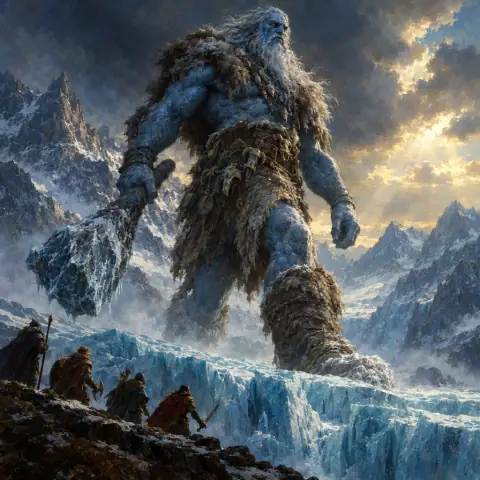
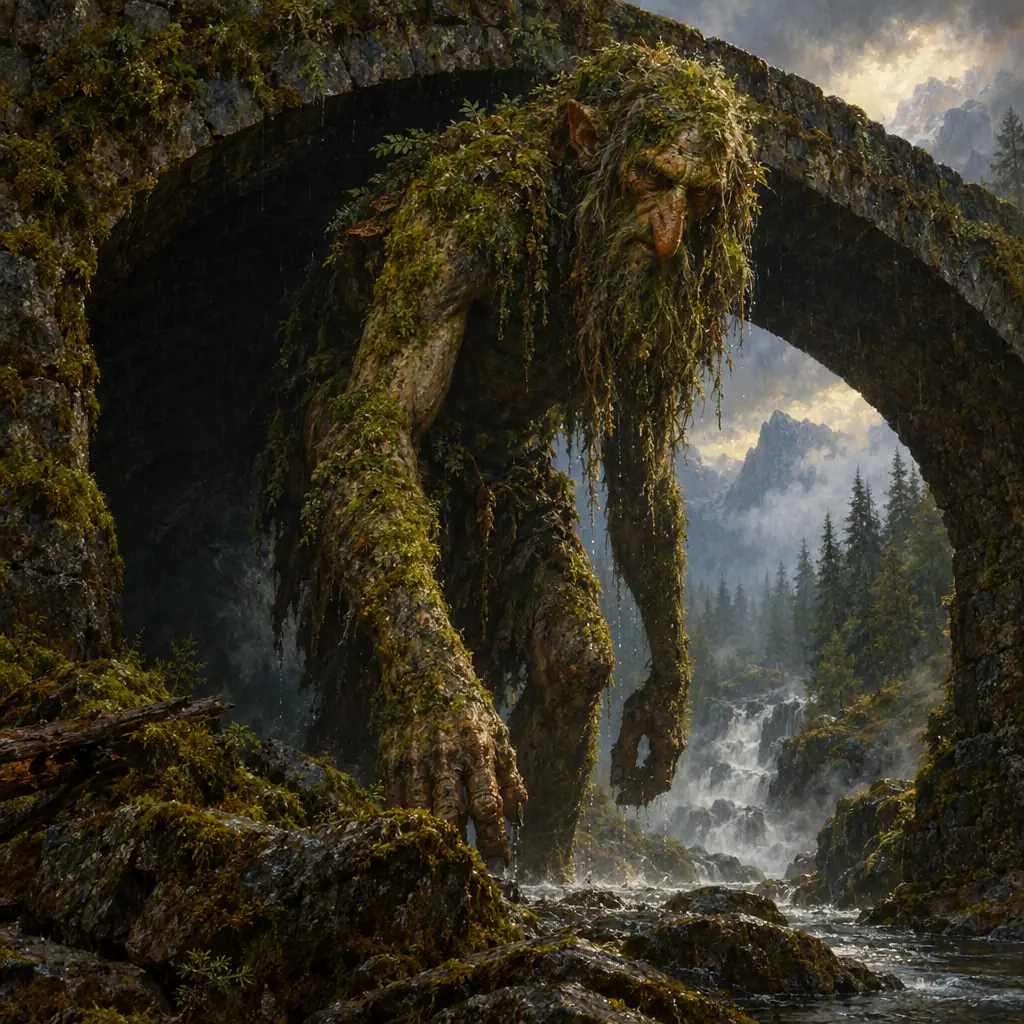
Later Scandinavian folklore gave the troll a body. The tales collected by Peter Christen Asbjørnsen and Jørgen Moe, whose Norwegian Folktales began appearing in 1841, describe trolls as immensely old, strong, slow-witted and hungry for human flesh; they may have several heads, hate church bells, flee lightning, and burst or turn to stone in sunlight, which is why certain boulders and crags are said to be trolls caught out at dawn. "The Three Billy Goats Gruff," with its troll under the bridge, is from this tradition.
J. R. R. Tolkien used both strands. The three trolls of The Hobbit (1937) — Bert, Tom and William, with Cockney accents and appalling table manners — are kept arguing by Gandalf until daybreak turns them to stone, a fate Tolkien borrowed from the dwarf Alvíss in the Poetic Edda. In The Lord of the Rings the trolls grow grimmer: a cave troll in Moria, mountain trolls swinging the ram Grond at Minas Tirith, and the Olog-hai, bred by Sauron to endure the sun.
Into the dungeon
The troll that walks through every game, though, comes from somewhere else. In Poul Anderson's Three Hearts and Three Lions (1953 in magazine form; novel 1961), the hero fights a tall, green, rubbery troll whose severed pieces keep crawling back to its body until he and his companions destroy it with fire. When Gygax and Arneson wrote Dungeons & Dragons (1974), they described the troll as "thin and rubbery" and able to regenerate — and in AD&D only fire or acid stops it for good. Generations of players learned the lesson at the table: when a troll goes down, burn the pieces. Ken St. Andre's Tunnels & Trolls (1975) put the creature in its title and made room for monster player characters.
Computer games carried Anderson's rule forward. In NetHack, dead trolls climb back to their feet unless their corpses are dealt with; trolls in the Elder Scrolls games regenerate and flinch from fire. Blizzard went its own way with tusked, blue- and green-skinned jungle trolls steeped in voodoo, playable in the Horde of World of Warcraft (2004), though its trolls regenerate too. J. K. Rowling's Harry Potter returned to the folk troll, stupid and enormous, in the troll loose in Hogwarts that Harry, Ron and Hermione defeat together in the first book.
Variations
D&D has bred a whole family: ice trolls, two-headed trolls and spirit trolls in the Fiend Folio (1981), the aquatic scrag, and fifth edition's rot and venom trolls; since that edition the troll is officially a giant. Terry Pratchett's Discworld made trolls silicon-based life forms who think faster in the cold. The Broken Sword fought an elf–troll war with Norse ferocity; Tove Jansson's Moomins are, technically, trolls too. The internet's "troll," a provoker lurking under the conversational bridge, may be the folk creature's most successful descendant of all.
Migration
How the creature traveled from story to story.
- 1220Snorri's Prose EddaA troll-woman accosts the skald Bragi in a dark forest; in Old Norse 'troll' overlaps with jötunn, witch and demon.
- 1841Asbjørnsen and Moe, Norwegian FolktalesThe collection that began in 1841 fixes the folk troll: huge, old, dim, man-eating, and apt to burst or turn to stone in sunlight.
- 1937The HobbitBert, Tom and William argue over how to cook the dwarves until dawn turns them to stone.
- 1953Three Hearts and Three LionsPoul Anderson's green, rubbery troll reassembles itself after every blow until it is burned.
- 1974Dungeons & DragonsThe D&D troll is 'thin and rubbery,' regenerates, and fears only fire and acid.
- 1975Tunnels & TrollsKen St. Andre's rival RPG puts the troll in its title and lets players be monsters.
- 1997Harry PotterA troll loose in Hogwarts forges the friendship of Harry, Ron and Hermione.
- 2004World of WarcraftBlizzard's tusked, voodoo-practicing jungle trolls join the Horde as a playable race.
Marginalia
- In Old Norse sources 'troll' could mean a giant, a witch, a ghost, a berserker or a demon; only later folklore made it a distinct creature.
- Scandinavian folklore held that church bells and lightning drove trolls away — and that some boulders were trolls caught by sunrise.
- Anderson's troll fight, in which severed limbs crawl back to the body until burned, is the direct source of D&D's regenerating troll.
- In NetHack, a slain troll can rise again unless its corpse is eaten, tinned or otherwise disposed of.
- Tolkien gave the Hobbit's trolls Cockney voices and the names Bert, Tom and William.
- In D&D's fifth edition the troll is classed as a giant, not a humanoid.
Quick answers
- Where does the Troll come from?
- Old Norse literature and Scandinavian folklore (Snorri's Prose Edda, c. 1220); the regenerating game troll from Poul Anderson's Three Hearts and Three Lions (1953)
- When did the Troll first appear?
- c. 1220, in Snorri's Prose Edda.
- How did the Troll get into games?
- Key appearances: Dungeons & Dragons (1974), Tunnels & Trolls (1975) and World of Warcraft (2004).
- Why is the Troll significant?
- The troll shows how a single scene in a novel can rewrite a folk creature for every game that follows: nothing in folklore regenerates like the D&D troll, but after Anderson, almost every game troll does.