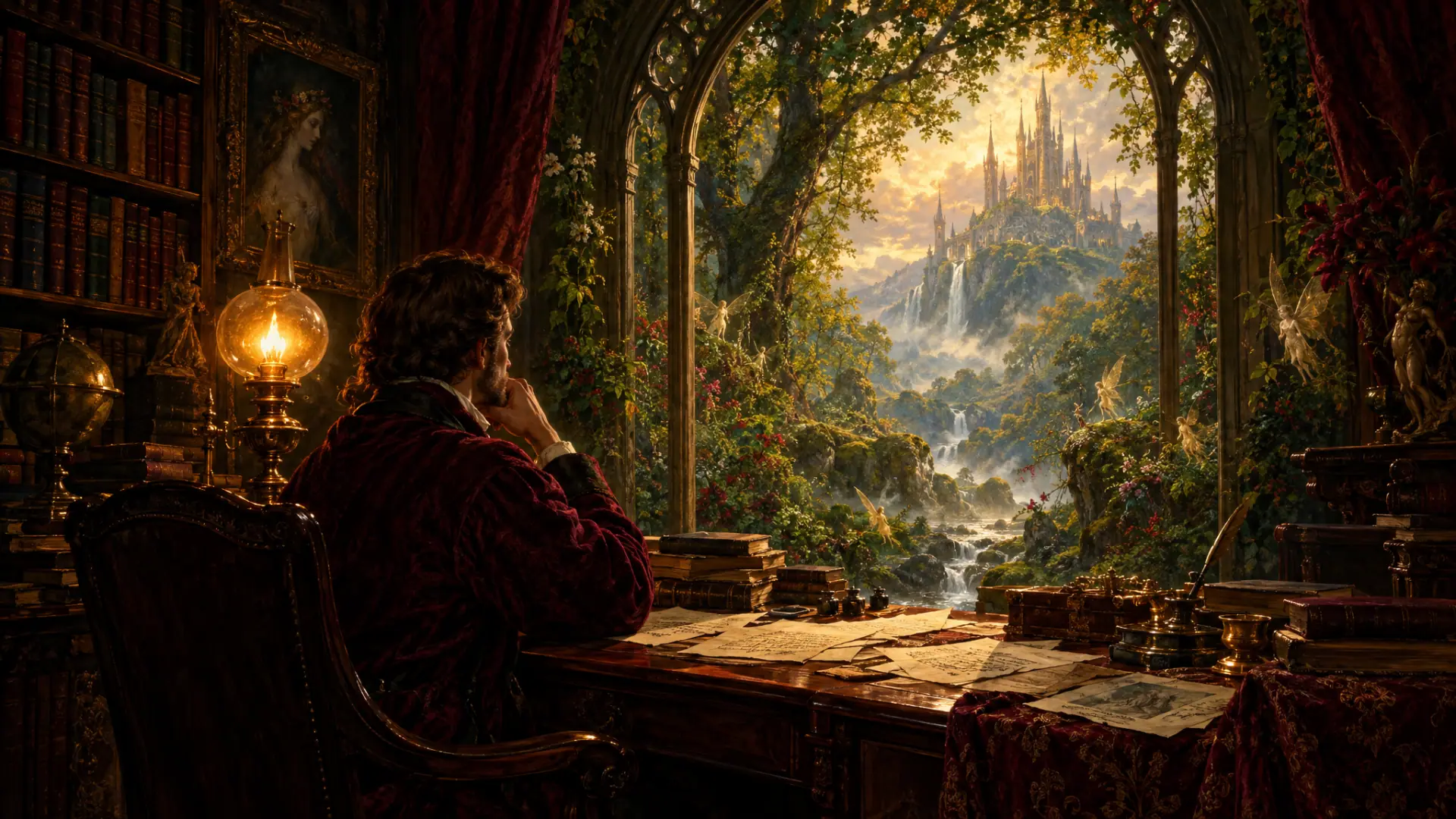
Lord Dunsany's masterpiece defined Elfland as a place of perilous, time-bending enchantment; through Lovecraft, Lin Carter and Gygax's Appendix N it shaped the fey realms of fantasy fiction and roleplaying games.
Overview
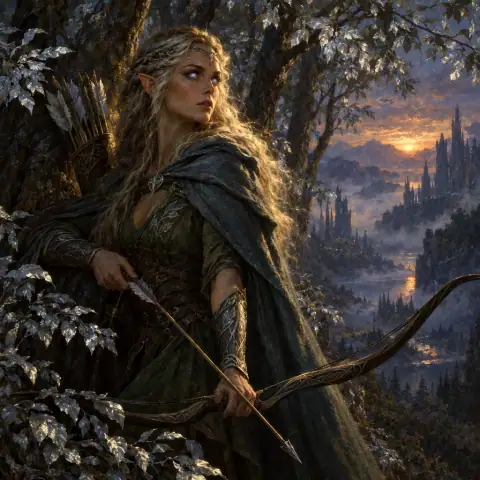
The people of Erl, a small valley "in the fields we know", decide they want to be ruled by a magic lord. So their old lord sends his son Alveric east, past the border of twilight, into Elfland, to win the King of Elfland's daughter. Alveric returns with Lirazel, and they have a son, Orion. But an elf cannot learn mortal ways — why one must not worship the stars — and when a spell from her father reaches her, Lirazel drifts home to Elfland, which then recedes before Alveric like a tide. He spends years searching for a border that will not let him back in.
The King of Elfland's Daughter (1924) is Lord Dunsany's finest novel and one of the most beautiful books in fantasy literature. Its subject is the collision between the timeless and the mortal, between enchantment and home — and it treats neither side as simply good.
Origins
Edward Plunkett, 18th Baron of Dunsany, was an Anglo-Irish aristocrat, soldier, sportsman and chess player who wrote quickly and prolifically. He had made his name two decades earlier with The Gods of Pegāna (1905), a book of myths about an invented pantheon, followed by collections of short tales — The Sword of Welleran, The Book of Wonder — set in lands "at the edge of the world". Those stories, told in a cadenced, Biblical prose, made him the most admired fantasist in English before J. R. R. Tolkien.
In the 1920s Dunsany turned to novels, and The King of Elfland's Daughter was his most ambitious. It draws on the old belief, strong in Irish and British folklore, that fairyland lies close beside the human world and that mortals who cross into it lose track of time.
The story
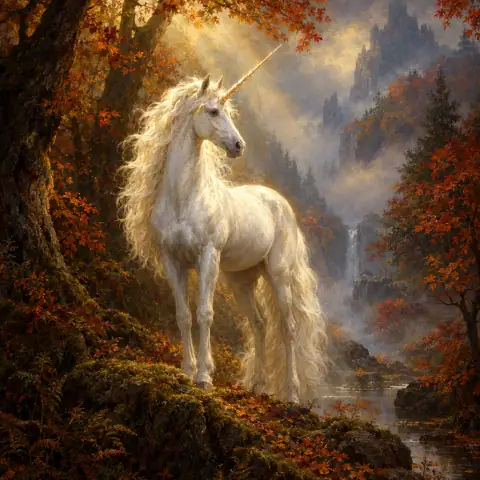
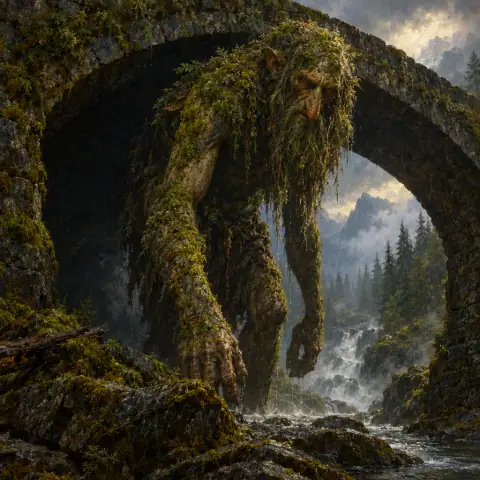
The book moves between two realms with opposite laws. In Erl, time passes and things change; in Elfland, where Lirazel's father rules from a palace describable only in song, nothing ages. Alveric carries a sword forged from thunderbolts by the witch Ziroonderel, and the King answers his daughter's departure with runes of great power. Orion grows up into a hunter who, finding ordinary deer too tame, pursues unicorns along the border of Elfland with a pack of hounds, while the troll Lurulu visits Erl and is astonished by how quickly mortal life rushes past. Alveric, meanwhile, leads a band of the mad and the lost across a plain in a hopeless search for the vanished border. The resolution, when it comes, is magical rather than heroic: the King of Elfland spends his last rune to bring his daughter's happiness, and Elfland itself sweeps over Erl.
Reception & impact
The novel was admired but little read for decades. That changed in June 1969, when Lin Carter made it the second volume of the Ballantine Adult Fantasy series, packaging it for the readers who had just discovered Tolkien. Carter and L. Sprague de Camp championed Dunsany as one of the great founders of the genre, and the book has remained in print since. In 1977 it even became a folk-rock concept album by Bob Johnson and Peter Knight of Steeleye Span, narrated by Christopher Lee.
Dunsany's influence on fantasy writers was enormous. H. P. Lovecraft heard him lecture in Boston in 1919 and wrote a whole cycle of "Dreamlands" stories in his manner, culminating in The Dream-Quest of Unknown Kadath. Many later writers of fairy-tale fantasy, from Peter S. Beagle's The Last Unicorn to Neil Gaiman's Stardust, work in the same territory of a perilous Faerie just across a border from the ordinary world.
Legacy
Dunsany's name appears in Appendix N, the list of "inspirational and educational reading" Gary Gygax printed in the 1979 Dungeon Masters Guide for Advanced Dungeons & Dragons. His short tales, in which thieves and adventurers creep into guarded temples and towers after jewels — "The Distressing Tale of Thangobrind the Jeweller", "The Hoard of the Gibbelins" — are prototypes of the treasure-hunting adventure. And his Elfland — a realm of dangerous beauty where time runs strangely, bargains bind, and mortals may never return unchanged — became the model for the fey otherworlds of later fantasy games, where elves are uncanny rather than merely pointy-eared humans.
Through Lovecraft his influence also reached horror gaming: Chaosium's Call of Cthulhu adopted Lovecraft's Dunsany-flavored Dreamlands as a setting of its own. A century after it was written, The King of Elfland's Daughter remains the touchstone for fantasy that wants its magic to feel genuinely other.
Marginalia
- The story begins when the parliament of Erl asks to be ruled by a magic lord.
- Before Alveric sets out, the witch Ziroonderel forges him a magic sword from thunderbolt iron.
- Time runs differently in Elfland: years in Erl can pass while an elf barely notices a moment.
- Ballantine made it the second book in its Adult Fantasy series in June 1969, after Fletcher Pratt's The Blue Star.
- H. P. Lovecraft heard Dunsany lecture in Boston in 1919, and his Dreamlands stories are steeped in Dunsany's manner.
- Lord Dunsany is one of the authors on Gary Gygax's Appendix N reading list in the 1979 Dungeon Masters Guide.
Quick answers
- When was The King of Elfland's Daughter first published?
- The King of Elfland's Daughter was first published in 1924.
- Who created The King of Elfland's Daughter?
- The King of Elfland's Daughter was made by Lord Dunsany (author).
- What kind of work is The King of Elfland's Daughter?
- The King of Elfland's Daughter is a novel in the Fairy-Tale Fantasy and High / Epic Fantasy tradition.
- Why is The King of Elfland's Daughter important?
- Lord Dunsany's masterpiece defined Elfland as a place of perilous, time-bending enchantment; through Lovecraft, Lin Carter and Gygax's Appendix N it shaped the fey realms of fantasy fiction and roleplaying games.