Almost everything modern fantasy knows about Odin, Thor, Loki, the World Tree and the dwarves passed through Snorri's hands. Without his Edda there would be no Norse pantheon to borrow, and far fewer dwarf names.
Life
Snorri Sturluson was born in 1179 at Hvammur in western Iceland, into the ambitious Sturlungar family whose feuds would give the whole bloody half-century its name, the Age of the Sturlungs. At about three years old he was sent to be fostered at Oddi, in the household of Jón Loftsson, the most powerful chieftain in Iceland and a kinsman of the Norwegian royal house. Oddi was the nearest thing medieval Iceland had to a university, and there the boy absorbed genealogy, law, history, Latin learning and — above all — the old court poetry of the skalds.
A marriage in 1199 brought him property and chieftaincies, and Snorri turned out to have a gift for accumulating both. He settled at Reykholt, where the stone-lined bathing pool known as Snorralaug still survives, and became one of the wealthiest men on the island. He was twice elected lawspeaker of the Althing, the office that required its holder to recite the law from memory at the national assembly.
Snorri also looked east. He visited Norway, cultivated the young King Hákon Hákonarson and the powerful Earl Skúli, and accepted a courtly title from the crown. That entanglement proved fatal. As Norway pressed to bring Iceland under its rule, Snorri was seen as unreliable, and on 23 September 1241 a party led by his former son-in-law Gissur Þorvaldsson, acting with the king's approval, attacked Reykholt at night. Snorri was found hiding in a cellar. The contemporary Sturlunga saga records his last words as "Eigi skal höggva!" — "Do not strike!" He was cut down all the same.
Work
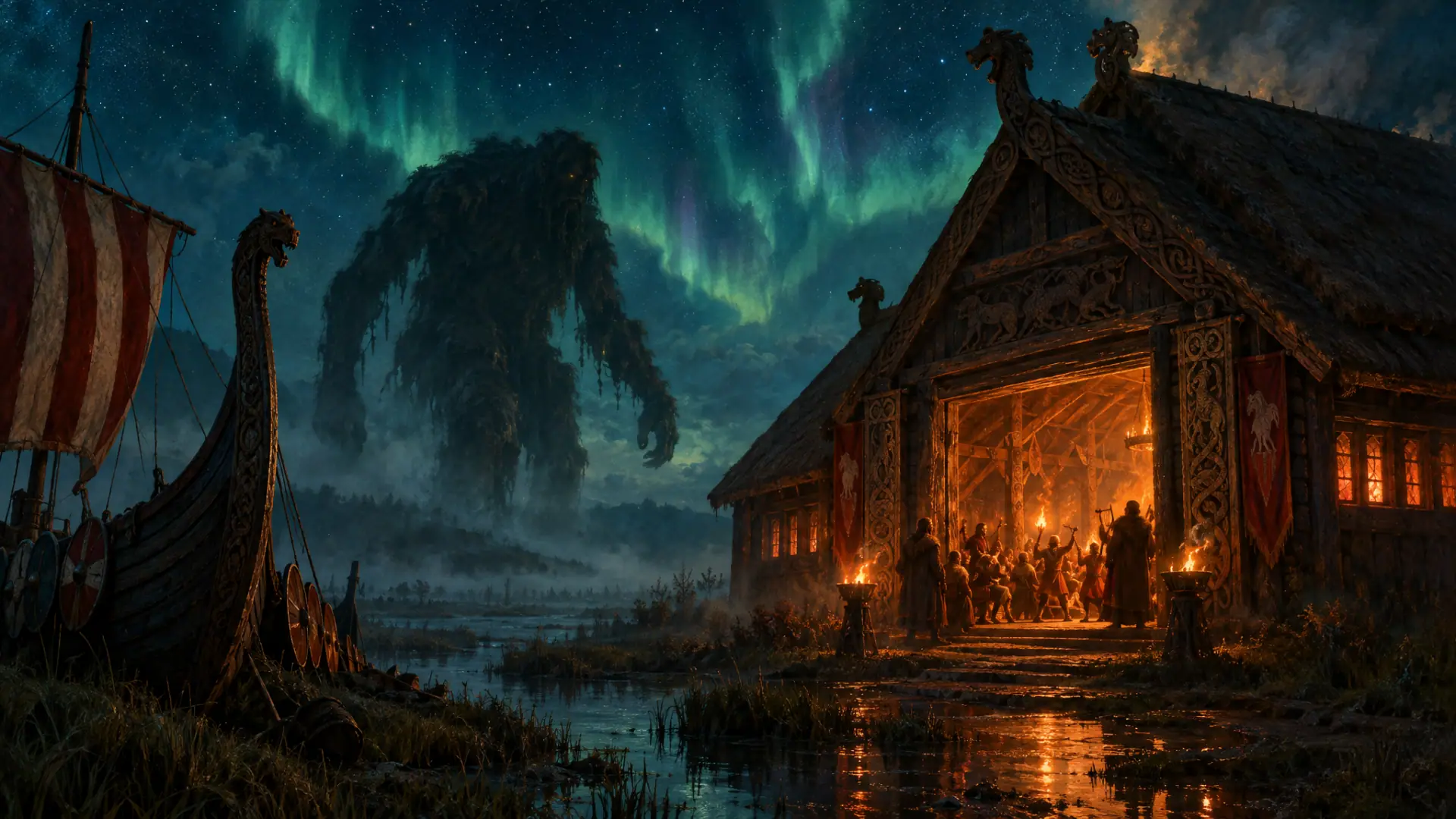
Snorri's masterpiece, the Prose Edda (written around 1220), is catalogued in this museum with the older poems it draws upon as The Eddas. It was a practical book. Skaldic verse was built from kennings — "the whale's road" for the sea, "Sif's hair" for gold — and a poet could not use them without knowing the stories behind them. So Snorri wrote those stories down. After a Prologue, Gylfaginning ("the tricking of Gylfi") frames the whole of Norse mythology as a conversation between a Swedish king and three mysterious figures: the creation of the world from the body of the giant Ymir, the ash Yggdrasil, Thor's misadventures with the giants, the death of Baldr, and the doom of the gods at Ragnarök. Skáldskaparmál catalogues the poetic diction, and Háttatal is a virtuoso poem demonstrating more than a hundred verse forms.
Much of the mythology survives nowhere else. Snorri was a Christian writing two centuries after Iceland's conversion, and scholars still debate how much he systematized, rationalized or embroidered, but his lucid, often very funny prose is the lens through which the world has seen the Norse gods ever since. He is also traditionally credited with Heimskringla, a sweeping history of the kings of Norway from the mythical Ynglings to 1177, and many scholars attribute Egil's Saga to him on grounds of style.
Legacy
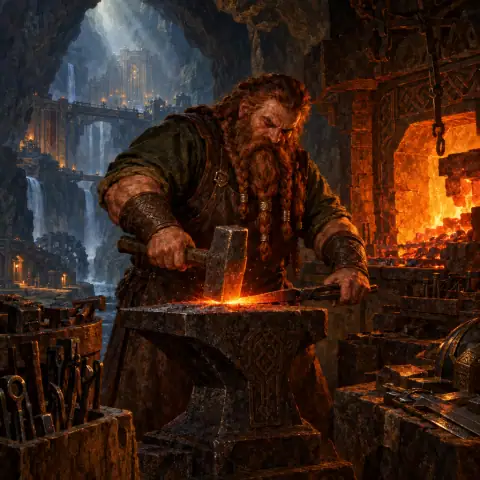
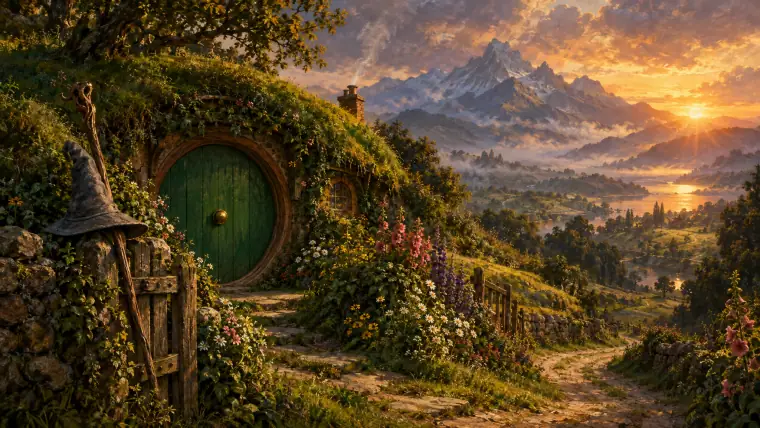
Snorri is a founding stone of Myth & Epic in the modern imagination. His Edda fed the nineteenth-century Norse revival — William Morris traveled to Iceland and translated its sagas — and it was central to the professional life of J. R. R. Tolkien, who taught Old Norse at Oxford. In Gylfaginning Snorri quotes the old catalogue of dwarves from the Völuspá, and it is in that list that Durin, Thorin, Fíli, Kíli, Bifur, Bofur, Bombur and a dwarf called Gandálfr ("wand-elf") appear. Tolkien lifted the names nearly wholesale for The Hobbit, and the bearded, gold-loving, mountain-dwelling Dwarf of Tolkien — and therefore of Dungeons & Dragons — is in large part a Norse inheritance. E. R. Eddison, another saga translator, carried the same spirit into The Worm Ouroboros.
Snorri is not among the authors on Gygax's Appendix N, which lists modern novelists, but his material entered games directly. TSR's Deities & Demigods (1980) included a Norse pantheon alongside Greek, Egyptian and other mythologies, giving D&D clerics Odin and Thor to serve, and frost giants, fire giants and Valhalla became fixtures of the tabletop cosmos. On screens, the Norse north shaped the Nords and their Sovngarde afterlife in The Elder Scrolls V: Skyrim, and Santa Monica Studio's God of War (2018) sent its hero into a world of Midgard, Jötunheim and the looming Ragnarök — Snorri's cosmology, rendered in real time. Every one of these journeys begins with a thirteenth-century chieftain writing a textbook for poets.
Marginalia
- Snorri was fostered from the age of about three at Oddi, the great Icelandic seat of learning, in the household of the chieftain Jón Loftsson.
- He served twice as lawspeaker of the Althing, Iceland's parliament, and became one of the richest chieftains in the country.
- The Prose Edda was written as a handbook for poets: it explains the myths so that skalds could understand the kennings that alluded to them.
- Snorri's Gylfaginning quotes the Völuspá's catalogue of dwarves, the list from which Tolkien took Thorin, Fíli, Kíli, Durin and Gandalf.
- He was killed at his farm at Reykholt on 23 September 1241 by men led by Gissur Þorvaldsson; the sagas record his last words as 'Do not strike!'
- Heimskringla, the great history of the Norwegian kings, is traditionally attributed to him, and many scholars also credit him with Egil's Saga.
Quick answers
- Who was Snorri Sturluson?
- The Icelandic chieftain, poet and lawspeaker whose Prose Edda preserved the Norse gods, dwarves and Ragnarök for Tolkien, D&D and every game that ever sent a hero to Valhalla.
- When was Snorri Sturluson born?
- Snorri Sturluson was born in 1179 in Hvammur, western Iceland and died in 1241.
- What is Snorri Sturluson known for?
- Snorri Sturluson is best known for The Eddas.
- Why does Snorri Sturluson matter to fantasy and games?
- Almost everything modern fantasy knows about Odin, Thor, Loki, the World Tree and the dwarves passed through Snorri's hands. Without his Edda there would be no Norse pantheon to borrow, and far fewer dwarf names.