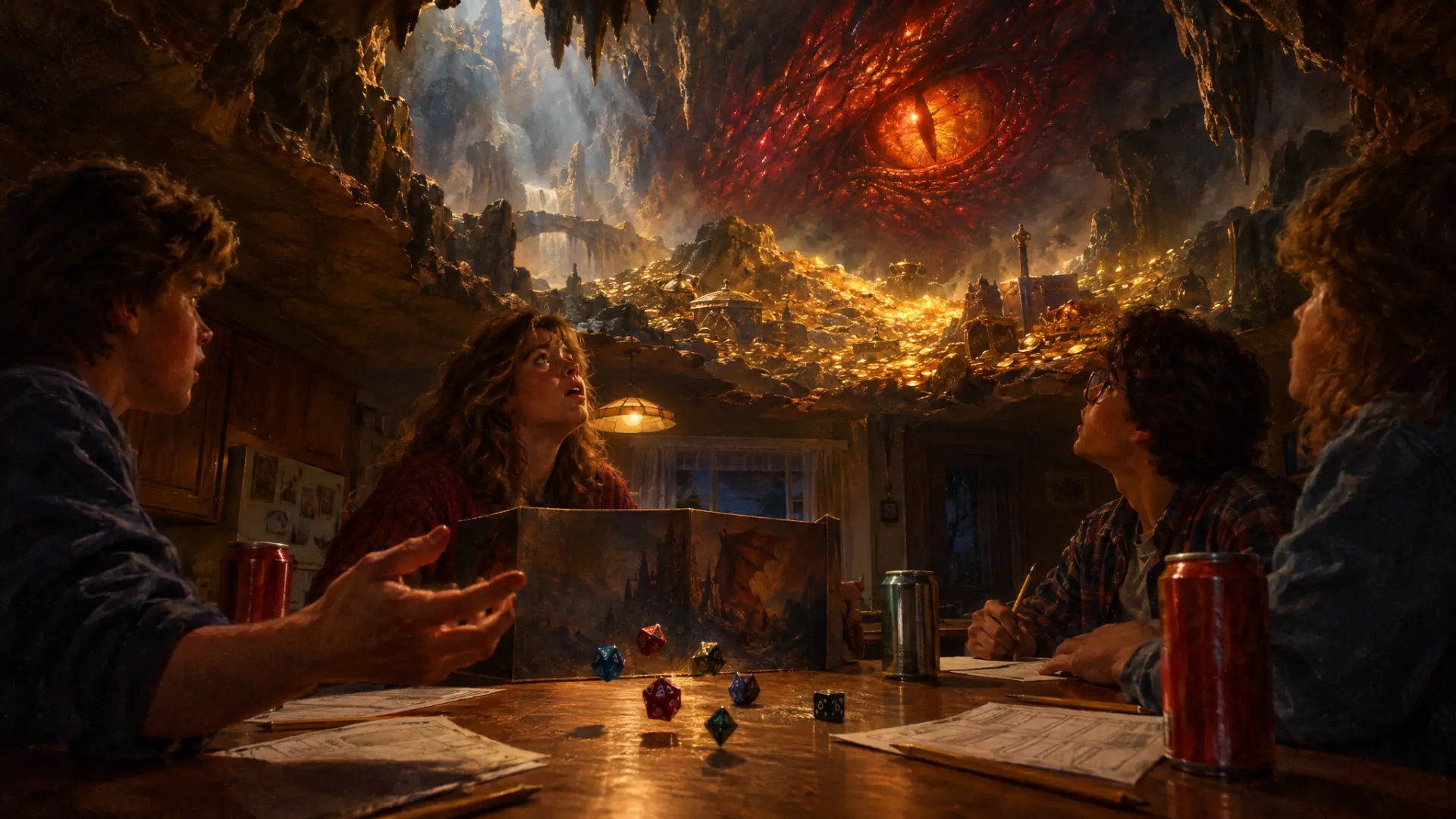
Call of Cthulhu inverted the fantasy RPG: investigators grew weaker, not stronger, as they learned the truth. Petersen's game created horror roleplaying as a genre and made Lovecraft a pillar of gaming culture, and his later career linked tabletop design to landmark video games.
Life
Carl Sanford Joslyn "Sandy" Petersen was born on September 16, 1955, in St. Louis, Missouri. He studied zoology at Brigham Young University and entomology at the University of California, Berkeley, and a naturalist's taste for classification never left his games, which are crowded with carefully described creatures. He would become one of the best-known interpreters in games of the cosmic horror of H. P. Lovecraft.
He has worked in both tabletop and digital games for more than four decades and now runs his own company, Petersen Games.
Work
Petersen came to professional design through Chaosium and its fantasy world of Glorantha. Between 1979 and 1981 he wrote or contributed to numerous Chaosium publications for RuneQuest, most notably Trollpak (1982), co-written with Greg Stafford, which treated Glorantha's trolls as a full culture with its own history, religion and ecology.
His defining work, though, came from his love of Lovecraft. Call of Cthulhu, published by Chaosium in 1981 with Petersen as principal author, adapted the company's percentile Basic Role-Playing system to 1920s investigators confronting the Cthulhu Mythos first chronicled in Weird Tales. It was the first roleplaying game built around Lovecraft's Mythos (Petersen had already put Lovecraftian monsters into his RuneQuest supplement Gateway Bestiary in 1980), and its design broke with fantasy conventions. Characters were ordinary people (professors, journalists, private detectives) who gained no great powers; the monsters were almost always too strong to fight; and the Sanity rules meant that learning forbidden knowledge or glimpsing the unspeakable eroded a character's mind. The game rewarded investigation, caution and, often, a noble failure. With Stafford and Chaosium's Lynn Willis he also co-designed West End Games' Ghostbusters RPG (1986).
From 1989 Petersen worked in computer games at MicroProse, contributing to titles including Sid Meier's Pirates!, Civilization and Darklands. In 1993 he joined id Software, where he designed 20 of the 27 levels in Doom and 17 of the 32 in Doom II, and named many of its demons and levels. He also worked on Quake, whose revised storyline and seven of whose levels are credited to him, before moving to Ensemble Studios, where he worked on Age of Empires titles including The Rise of Rome, The Age of Kings and The Conquerors, leading design on expansion packs.
In 2013 he returned to Lovecraft on the tabletop with Cthulhu Wars, a board game of rival Great Old Ones battling for Earth; its Kickstarter raised more than $1.4 million. Petersen Games has since published a range of board and roleplaying games.
Legacy
Call of Cthulhu is one of the longest-running roleplaying games in print and established horror as a major RPG genre, a field later joined by games such as Vampire: The Masquerade. More broadly, it demonstrated that a roleplaying game did not have to be a power fantasy. Its Sanity mechanic has been widely imitated in tabletop and digital games, and it played a central role in making the Cthulhu Mythos a shared vocabulary of modern gaming.
Few designers have a résumé that runs from Glorantha's troll culture through the first-person-shooter revolution to real-time strategy. Petersen's career traces the migration of tabletop designers into digital games in the 1980s and 1990s, carrying the sensibilities of the Tabletop Roleplaying Games into new media. He was inducted into the Origins Hall of Fame in 1990.
Marginalia
- Petersen was born on September 16, 1955, in St. Louis, Missouri, and studied zoology at Brigham Young University and entomology at UC Berkeley.
- Lovecraftian monsters first appeared in his debut book, the RuneQuest supplement Gateway Bestiary (1980), a year before Call of Cthulhu (1981).
- Its Sanity rules made madness a resource that drains away as characters confront the truth.
- He co-wrote the classic RuneQuest sourcebook Trollpak (1982) with Greg Stafford.
- At id Software he designed 20 of the 27 levels in the original Doom (1993) and 17 of the 32 in Doom II.
- His 2013 Kickstarter for the board game Cthulhu Wars raised more than $1.4 million.
Quick answers
- Who is Sandy Petersen?
- The zoology student turned designer who brought H. P. Lovecraft's mythos to roleplaying with Call of Cthulhu (1981), then built many of Doom's levels and co-designed Age of Empires expansions.
- When was Sandy Petersen born?
- Sandy Petersen was born in 1955 in St. Louis, Missouri.
- What is Sandy Petersen known for?
- Sandy Petersen is best known for Call of Cthulhu and RuneQuest.
- Why does Sandy Petersen matter to fantasy and games?
- Call of Cthulhu inverted the fantasy RPG: investigators grew weaker, not stronger, as they learned the truth. Petersen's game created horror roleplaying as a genre and made Lovecraft a pillar of gaming culture, and his later career linked tabletop design to landmark video games.