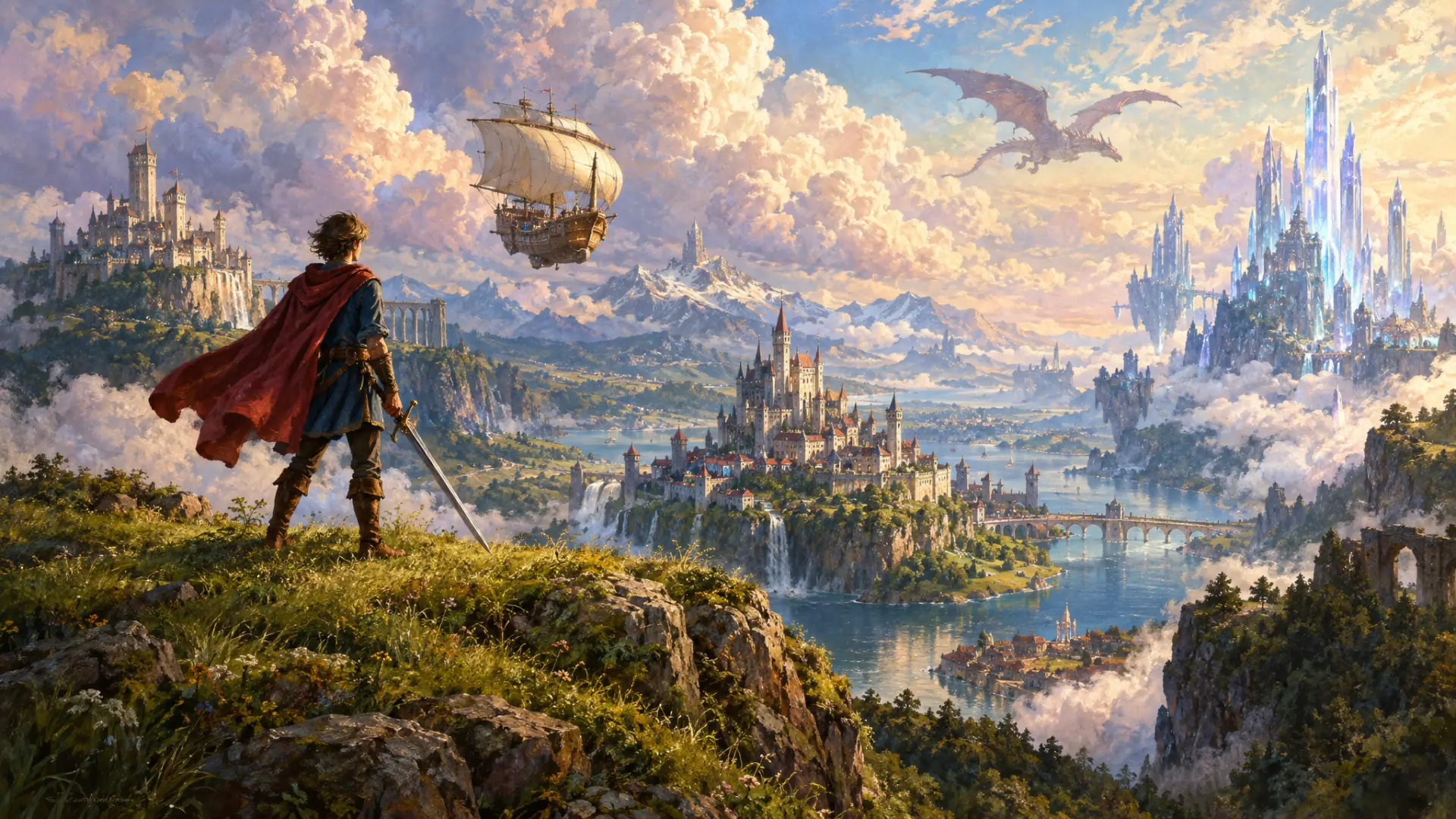
Secret of Mana married Zelda-style real-time action to a Square RPG's party and story, let up to three players drop in and out cooperatively, and introduced many Western players to console role-playing.
Overview
Secret of Mana is an action role-playing game developed and published by Square for the Super Nintendo. It was released in Japan as Seiken Densetsu 2 ("The Legend of the Sacred Sword 2") on August 6, 1993, in North America in October 1993, and in Europe on November 25, 1994. It is the sequel to the Game Boy's Seiken Densetsu (1991), which had been sold in North America as Final Fantasy Adventure — and Secret of Mana was the first entry marketed as its own Mana series rather than as a Final Fantasy offshoot.
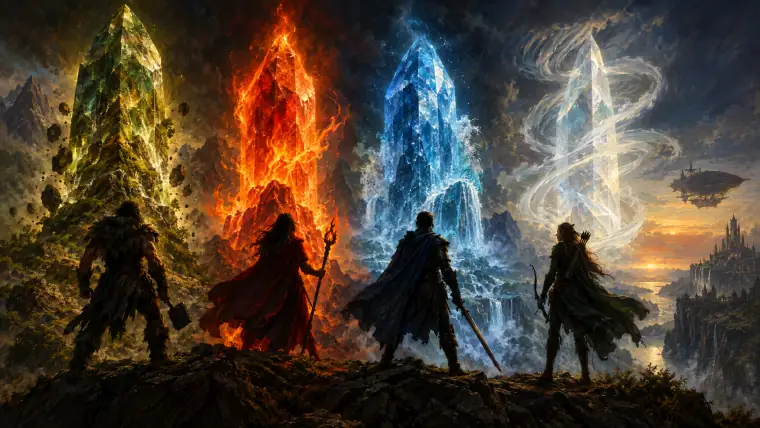
The world runs on mana, a life energy once abused by an ancient civilization to build the Mana Fortress, a flying warship. Now an empire is unsealing eight Mana Seeds to raise the fortress again. A boy from the village of Potos stumbles into a lake, finds a rusted sword set in a stone — an Arthurian image — and pulls it free, loosing monsters on the countryside. Banished from home, he learns the blade is the Mana Sword and sets out to re-energize it, joined by a runaway girl searching for the knight she loves and a sprite child who has lost its memory.
Origins
Director and designer Koichi Ishii, who had created Final Fantasy Adventure and earlier contributed the crystals to the first Final Fantasy, considered Secret of Mana more "his game" than anything else he worked on. Producer Hiromichi Tanaka described its real-time battles as an extension of the systems in the first three Final Fantasy games, with experience and levels taken from Final Fantasy III; he also said the project had originally been conceived as Final Fantasy IV with a more action-based world, before becoming a separate project. Nasir Gebelli, programmer of the original Final Fantasy, again did most of the coding.
The game was planned as a launch title for the SNES-CD add-on. When Nintendo's partnership with Sony fell apart — Sony turned its work into the PlayStation — Square moved the game to a cartridge over the objections of the developers. Branching routes and multiple endings were dropped, the story lost a darker original tone, and Ishii estimated that as much as 40 percent of the planned content was cut. Some unused ideas passed to the team making Chrono Trigger.
Composer Hiroki Kikuta, working on his first game score, created his own instrument samples to fit the Super NES hardware and wrote music inspired by landscapes and the music of Bali; he later called it his favorite creation.
How it plays
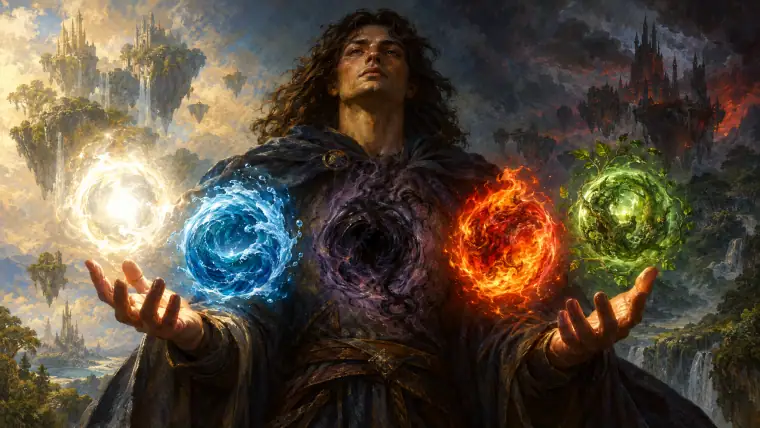
The view is overhead, as in The Legend of Zelda, and combat happens in real time. A power gauge at the bottom of the screen empties with each swing and refills over a moment; waiting for a full charge makes an attack count. The trio's roles are distinct: the boy masters weapons fastest but cannot cast magic, the girl heals and supports, and the sprite casts attack spells. There are eight weapon types — sword, spear, bow, axe, boomerang, glove, whip and javelin — each upgradable at blacksmiths with Weapon Orbs and each unlocking charged special attacks as its skill rises. Magic comes from rescuing eight Elementals.
The Ring Command menu pauses the action and arranges items, spells and options in a ring around the active character. Whichever hero the player is not controlling is run by adjustable artificial intelligence — or by a friend: using the Super Multitap, up to three people can play simultaneously, dropping in and out at will. Later the party travels on Flammie, a small dragon, flying over a world map rendered with the SNES's rotating Mode 7 graphics.
Reception & impact
The first Japanese shipment sold out within days, and the magazine Dengeki Oh counted 1.003 million sales in Japan in 1993, second only to Street Fighter II Turbo. In North America it arrived with little hype but became the second-best-selling SNES game on Babbage's chart in October 1993, and Next Generation reported more than 500,000 US sales by 1996. Electronic Gaming Monthly named it Best Role-Playing Game of 1993, and Edge called its combat and interface the best yet designed. Sandy Petersen, reviewing it in Dragon, described it as much like Zelda but with conventional role-playing features and predicted it would be regarded as a classic.
Legacy
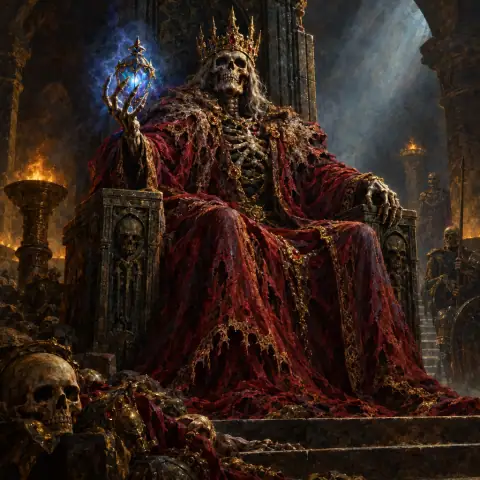
Secret of Mana is regularly ranked among the best games of the 16-bit era, and it helped make console RPGs popular in Europe and North America. Its ring menu was borrowed by later games, including the PC's The Temple of Elemental Evil, and its cooperative play has been cited as an influence on Dungeon Siege III. The story ends with a dragon, the Mana Beast, and a villain, Thanatos, who is revealed in a skeletal lich form. A 3D remake appeared in 2018 to mixed reviews, but the original, re-released on the Super NES Classic Edition in 2017, remains the version players remember.
Marginalia
- It launched in Japan as Seiken Densetsu 2 on August 6, 1993, and in North America by October 1993; Europe waited until November 25, 1994.
- It began as a planned launch title for the SNES-CD add-on; when Nintendo's deal with Sony collapsed, it was squeezed onto a cartridge and director Koichi Ishii estimated up to 40 percent of the game was cut.
- Ted Woolsey's English translation was done in about 30 days, and the game was first advertised in North America as Final Fantasy Adventure 2.
- With the Super Multitap accessory, three people can play at once, joining or leaving at any time.
- Its Ring Command menu pauses the action to show items and spells in a circle around the character — a design Edge later called "oft-mimicked."
- Game designer Sandy Petersen reviewed it for Dragon magazine and predicted it would be regarded as a classic.
- Square reported 1.83 million copies shipped worldwide by 2003, 1.5 million of them in Japan.
Quick answers
- When was Secret of Mana first released?
- Secret of Mana was first released in 1993 (Super Famicom, Japan, August; SNES, North America, October).
- Who published or developed Secret of Mana?
- Square / Square Enix.
- What kind of work is Secret of Mana?
- Secret of Mana is an action RPG in the Action RPGs & Hack-and-Slash and Japanese RPGs (JRPG) tradition, released for Super Famicom / SNES, Wii & Wii U Virtual Console, Mobile & iOS, Android, Nintendo Switch (Collection of Mana) and PlayStation 4, Vita & Windows (2018 remake).
- Why is Secret of Mana important?
- Secret of Mana married Zelda-style real-time action to a Square RPG's party and story, let up to three players drop in and out cooperatively, and introduced many Western players to console role-playing.