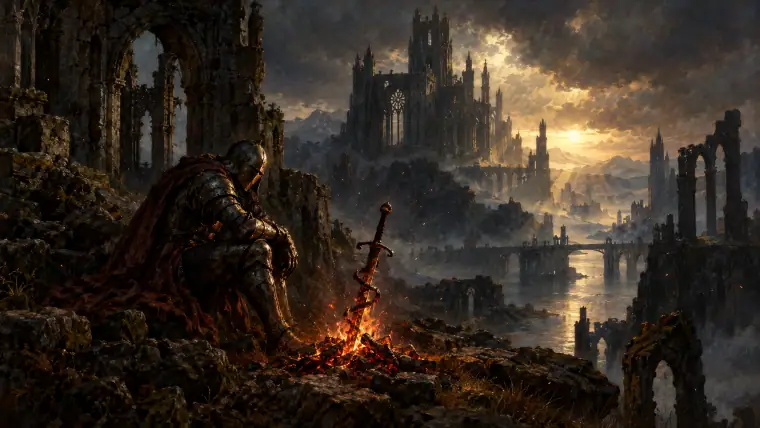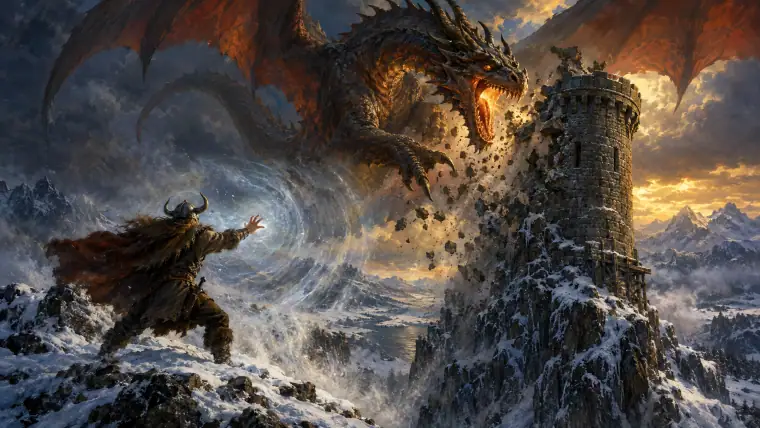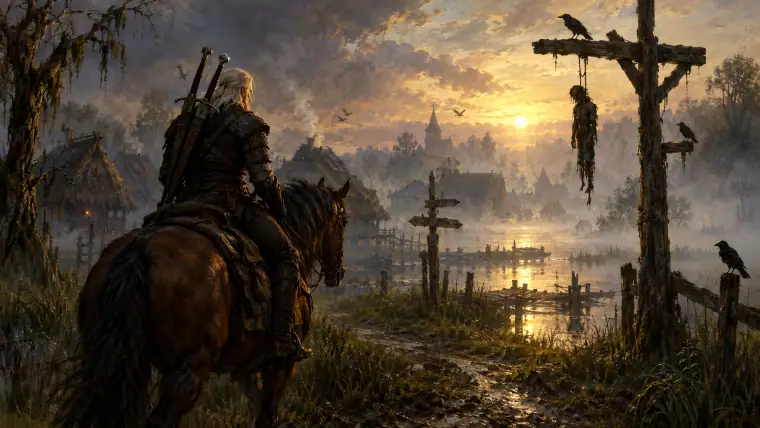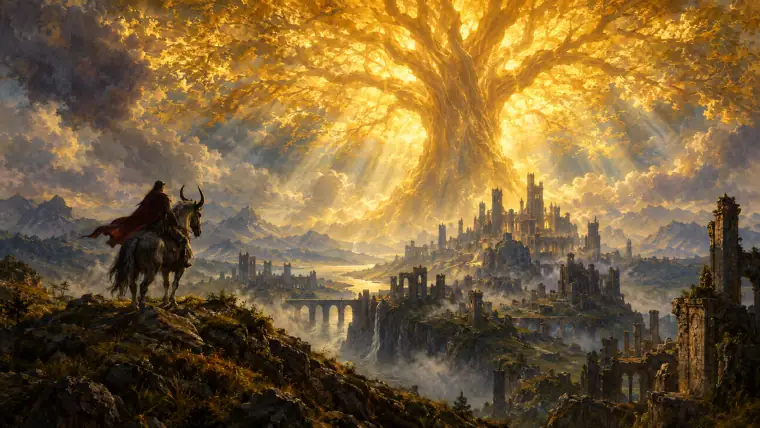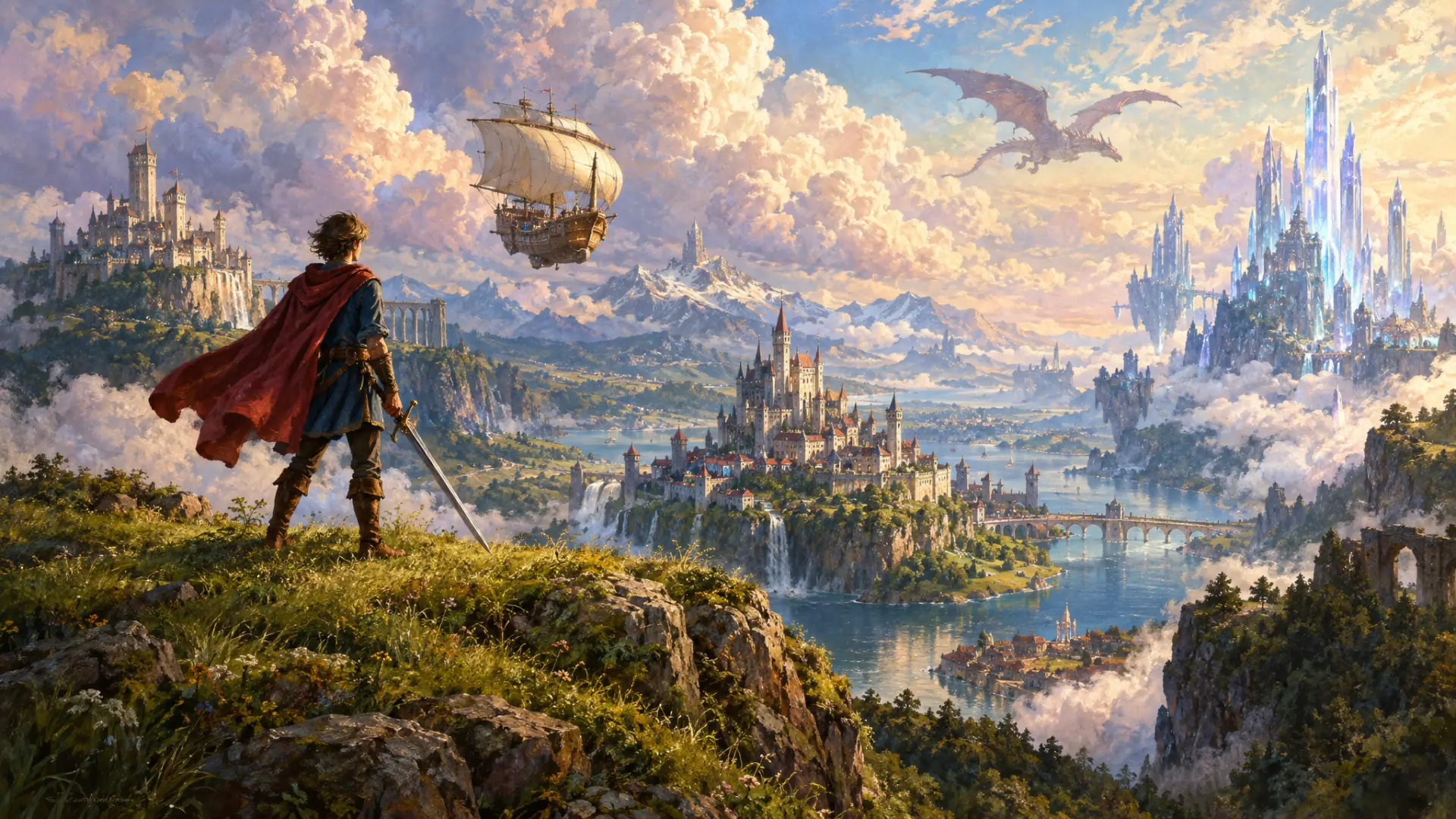
The action RPG fused arcade immediacy with role-playing progression and became the mainstream shape of the video game RPG, from Zelda-like adventures to Diablo's loot economy to Elden Ring.
Hallmarks
- Real-time combat decided partly by the player's reflexes and positioning
- Character statistics, levels and gear that still shape every blow
- Direct control of one hero, sometimes with companions or co-op partners
- In the Diablo line, a compulsive loop of kill, loot and upgrade
- Randomized item drops with tiers of rarity
- Online or local cooperative play as a core pleasure
What it is
An action RPG gives you the sword arm. Instead of choosing "Attack" from a menu and watching dice resolve, you press the button, time the swing, dodge the counterblow. Yet the numbers never go away. Experience points, levels, stats and equipment decide how hard the swing lands and how much punishment you can take. That double nature is the genre's definition: the player's skill and the character's growth both count. It is a broad tent. It covers the overhead sword adventure, the isometric click-and-loot "Diablo-like," the third-person open world, and the Soulslikes.
Origins
The genre was born in Japan in 1984. Namco's arcade game The Tower of Druaga (June 1984) mixed maze combat with hidden treasures and puzzles. Nihon Falcom's Dragon Slayer (September 1984, PC-8801) threw out command menus for real-time fighting in a dungeon, and it is often called the first action RPG. T&E Soft's Hydlide (December 1984) added an open overworld and a health bar that refilled when the hero rested. Falcom's Ys (1987) followed. In the arcades, Atari's Gauntlet (1985) turned the party into four players at one cabinet.
Nintendo's The Legend of Zelda (1986), by Shigeru Miyamoto and Takashi Tezuka, gave the hero a dedicated attack button instead of the bump-to-fight of Hydlide and Dragon Slayer, and a battery to save progress. Strictly it is an action-adventure, without experience levels, but it became the template for a generation. Its sequel, Zelda II (1987), added levels outright.
Evolution
Through the early 1990s, action RPGs thrived on consoles, where gamepads suited real-time play. Square's Secret of Mana (1993) added a pausable ring menu and let friends drop in cooperatively. On computers, purists in Computer Gaming World complained about "arcade" or "Nintendo-style" combat creeping into their RPGs.
Blizzard's Diablo (1996) ended the argument on PC. David Brevik had designed a turn-based Roguelikes. Blizzard asked for real time, and the result was a click-driven descent through randomized dungeons, with color-coded Loot & loot tables and free online play on Battle.net. Diablo II (2000) added skill trees and a trading economy, and it defined the "loot chase" for twenty years. Its heirs include Titan Quest (2006), Torchlight (2009), Grinding Gear Games' free-to-play Path of Exile (2013), and Diablo IV (2023). On consoles, Kingdom Hearts (2002) and Capcom's Monster Hunter series carried the form in other directions.
Online play reshaped the genre as much as combat did. Battle.net launched alongside Diablo in January 1997 and gave strangers a free place to meet and descend together. Sega's Phantasy Star Online (2000) brought that instanced, cooperative formula to consoles. The loot economy that grew around these games was powerful enough to cause trouble. Diablo III (2012) launched with a real-money auction house, and Blizzard closed it in 2014 after players felt it had hollowed out the thrill of finding gear. Capcom's cooperative hunting game Monster Hunter: World (2018) became the best-selling title in that company's history.
In 2009 FromSoftware released Demon's Souls. Its spiritual successor Dark Souls (2011) made deliberate, punishing, stamina-based combat a movement of its own, the Soulslikes. Hidetaka Miyazaki's Elden Ring (2022) married that combat to an open world and sold 30 million copies by April 2025. Meanwhile, series that had been turn-based, including Final Fantasy with Final Fantasy XVI (2023), moved to action combat.
How to tell it apart
Action RPG vs. hack-and-slash. "Hack and slash" has two meanings, and they are largely unrelated. In tabletop and RPG circles it began as a mild insult for play that is all combat and no story; Jean Wells and Kim Mohan's 1980 Dragon article used the phrase that way. PC players later applied it to Diablo-likes, where killing and looting are the point. In action-game criticism, "hack-and-slash" means melee-weapon brawlers such as Devil May Cry (2001) or God of War. Those games have combos and style ratings but little persistent character building. An action RPG always has the RPG layer: stats and gear that change what you can do.
Action RPG vs. soulslike. The soulslike is a sub-genre with a specific signature: sparse checkpoints, enemies that respawn when you rest, experience currency dropped on death and recoverable once, stamina-limited combat, and story told through item descriptions. Every soulslike is an action RPG. Most action RPGs, from Secret of Mana to Diablo, are nothing like one.
Action RPG vs. action-adventure. In The Legend of Zelda, the hero improves mainly through new tools and a few extra hearts. An action RPG adds numeric advancement and build choices.
Action RPG vs. CRPG and JRPG. Those traditions historically resolved combat through turns or Real-time with pause. The action RPG hands the timing to the player.
Where to start
- The Legend of Zelda (1986): the template, even if it is not strictly an RPG.
- Secret of Mana (1993): the 16-bit co-op classic.
- Diablo II (2000): the loot chase perfected.
- Path of Exile (2013): the Diablo-like at its most intricate.
- Dark Souls (2011) and Elden Ring (2022): the soulslike branch.
Marginalia
- 'Hack and slash' began as tabletop slang. A 1980 Dragon article by Jean Wells and Kim Mohan hoped for 'more than hacking and slashing' in D&D.
- Falcom's Dragon Slayer, released for the PC-8801 in September 1984, is often called the first action RPG.
- Hydlide (December 1984) reportedly sold 2 million copies in Japan and let health regenerate when the hero stood still.
- Diablo was designed as a turn-based game. David Brevik converted it to real time over a single weekend.
- Diablo II sold more than a million copies in its first two weeks, a Guinness record at the time for a computer game.
- Secret of Mana (1993) let a second and third player drop in and out of the adventure at any time.
Quick answers
- What is Action RPGs & Hack-and-Slash?
- Swing the sword yourself: the real-time RPG that began in Japan in 1984, went global with Diablo's click-and-loot, and splits into hack-and-slash, loot chaser and soulslike.
- What are the hallmarks of Action RPGs & Hack-and-Slash?
- Real-time combat decided partly by the player's reflexes and positioning; Character statistics, levels and gear that still shape every blow; Direct control of one hero, sometimes with companions or co-op partners; In the Diablo line, a compulsive loop of kill, loot and upgrade; Randomized item drops with tiers of rarity; Online or local cooperative play as a core pleasure.
- When did Action RPGs & Hack-and-Slash emerge?
- 1984 (The Tower of Druaga, Dragon Slayer, Hydlide).
- What are the key works of Action RPGs & Hack-and-Slash?
- Dragon Slayer, Hydlide, The Legend of Zelda, Gauntlet, Secret of Mana, Diablo, Diablo II and Path of Exile.