Oblivion carried Bethesda's open-world Elder Scrolls formula onto high-definition consoles and into the mainstream, with a fully voiced world and schedule-driven characters. It also gave the industry two lasting lessons: the horse-armor micropayment and the power of a modding community.
Overview
It opens in a prison cell. Through a secret passage in the wall come the Emperor of Tamriel and his bodyguards, fleeing assassins; the Emperor, voiced by Patrick Stewart, recognizes the prisoner from his dreams, hands over an amulet and dies in the sewers beneath the Imperial City. Then the player climbs out of a grate into sunlight over a lake, and the whole province of Cyrodiil is open.
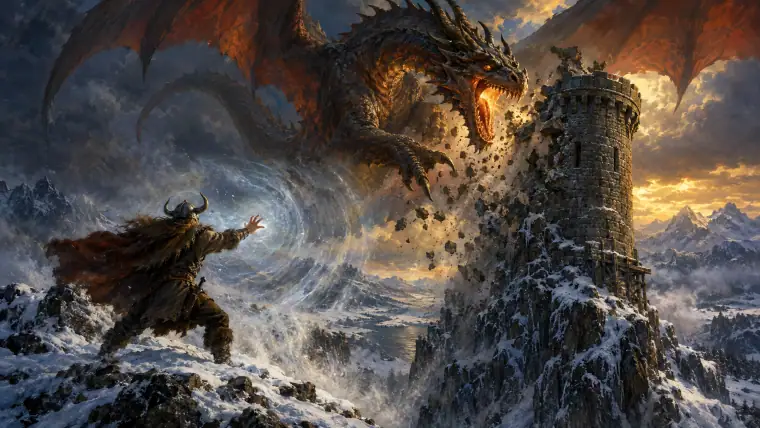
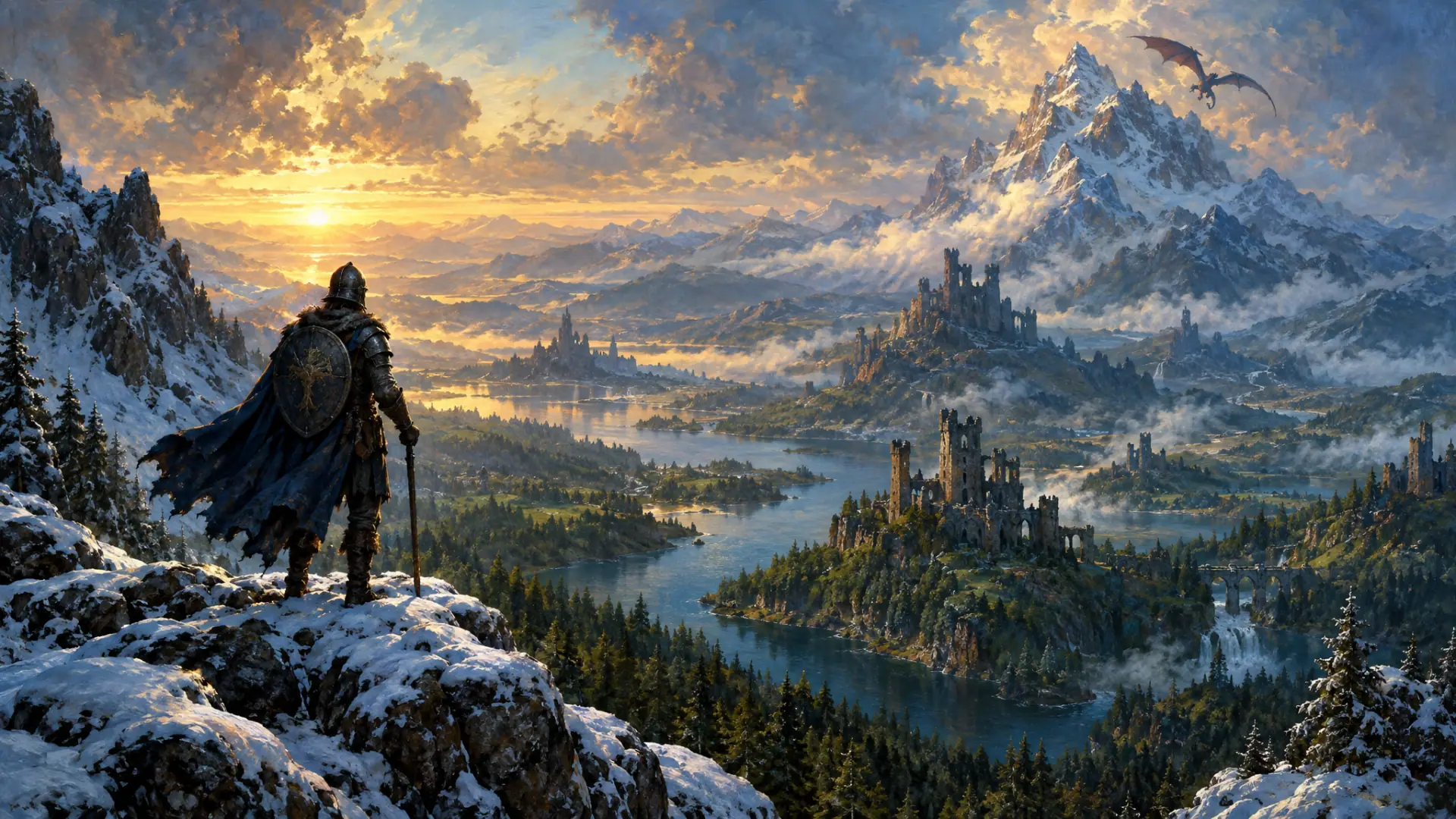
The Elder Scrolls IV: Oblivion, developed by Bethesda Game Studios and released for Windows and Xbox 360 on March 20, 2006, followed Morrowind (2002) as the next chapter in Bethesda's series of open-world role-playing games. It was billed by critics as the first true "next-generation" game on the new Xbox 360, and it delivered: forests that stretched to the horizon, a fully voiced cast, characters with daily routines, and a main quest in which demonic gates to the realm of Oblivion tear open across the land. It sold more than three million copies in under a year, won a host of Game of the Year awards, and set up the phenomenon of Skyrim.
Origins
Work began shortly after Morrowind shipped in 2002, with Morrowind's lead designer Ken Rolston again leading design and Todd Howard as executive producer. The game was announced in September 2004. Bethesda wanted a more believable world than Morrowind's, with a clearer story, stronger characters and better quests, and new technology to support it. Procedural generation tools, including erosion algorithms, shaped a landscape of about 16 square miles. The Havok engine supplied physics, and high-dynamic-range lighting made full use of the new consoles.
The biggest ambition was Radiant AI. Rather than following scripts, non-player characters were given needs such as eating, sleeping and working, and personalities that shaped how they met them. A hungry character with no money might steal. The results could be chaotic, with characters stealing from and attacking one another, and Bethesda scaled the system back in its later games. Every line of dialogue was recorded, a first for the series, and Bethesda hired Patrick Stewart, Sean Bean, Terence Stamp and Lynda Carter. Rolston later admitted that he preferred Morrowind's partial voicing, but "I'm told that voiced dialogue is what the kids want."
The game made its public debut at E3 in May 2005, where it won the Game Critics Awards' Best Role Playing Game. Its publisher, 2K Games, had hoped to launch alongside the Xbox 360 in November 2005, but the date slipped to March 2006. A PlayStation 3 version followed in March 2007.
How it plays
Oblivion uses the series' classless system: players pick a race and birthsign, choose major skills, and improve any skill by using it, from blade and destruction magic to lockpicking and speechcraft. Combat is real-time in first or third person. The main quest follows the search for Martin Septim, the Emperor's illegitimate son (Sean Bean), and the closing of the Oblivion gates, portals to hellish planes ruled by the Daedric prince Mehrunes Dagon. Much of the game's reputation, though, rests elsewhere: in guild questlines for the Fighters Guild, Mages Guild, Thieves Guild and the assassins of the Dark Brotherhood, in the arena of the Imperial City, and in the pleasure of wandering off the road into a random ruin.
Enemies and loot scaled with the player's level, so bandits wore glass armor by the late game, the most common complaint. Other critics noted the repetitive voices and the uncanny faces. Bethesda released its Construction Set editor to PC players, who began modifying the game almost at once.
Reception & impact
Reviews were rapturous. GameSpot's Greg Kasavin called it "hands-down better" than Morrowind, and it was named best role-playing game of 2006 by IGN, GameSpot, GameSpy, 1UP.com and PC Gamer US, among others. It won Game of the Year at the Spike TV Video Game Awards and the Golden Joystick Awards' top prize, and the Academy of Interactive Arts & Sciences named it Role-Playing Game and Computer Game of the Year. In 2007 PC Gamer ranked it the greatest game of all time. It had shipped 1.7 million copies by April 10, 2006, and sold more than three million by January 2007.
Two controversies shaped the industry. On April 3, 2006, Bethesda began selling small downloadable extras, starting with armor for the player's horse. The pack cost a few dollars and did almost nothing, and "horse armor" became gamers' shorthand for exploitative micropayments. A month later came the ESRB re-rating: on May 3 the board changed the game's rating from Teen to Mature, citing gore and a locked texture file that a fan-made tool could use to make female characters topless. Bethesda disagreed but complied, and the episode chilled developers who had embraced modding.
Legacy
Bethesda's later downloadable content was better value. Knights of the Nine (November 2006) added a crusader quest, and Shivering Isles (March 2007), set in the realm of the mad god Sheogorath, is often counted among the best expansions of its era. The same studio used the engine and design lessons for Fallout 3 (2008) and then for Skyrim (2011), which inherited Oblivion's radiant quests, voiced world and modding culture and took them to a far larger audience.
In April 2025, after images leaked from the co-developer Virtuos, Bethesda announced The Elder Scrolls IV: Oblivion Remastered in a livestream and released it the same day, April 22, for Windows, PlayStation 5 and Xbox Series X/S. Rebuilt with Unreal Engine 5 rendering over the original Gamebryo game logic, it reached 4 million players in three days and 9 million in three months, was the best-selling game in the U.S. in April 2025, and won Best Remake/Remaster at the 2025 Golden Joystick Awards. A Nintendo Switch 2 version followed in August 2026.
Did you know?
Jeremy Soule's score won the inaugural MTV Video Music Award for Best Original Score, decided by popular vote. Soule said the music's theme of the preciousness of life came from a car accident he survived while composing it.
Marginalia
- Patrick Stewart voiced the doomed Emperor Uriel Septim VII, whose assassination opens the game; Sean Bean played his heir, Martin.
- Bethesda's 'Radiant AI' gave characters needs and personalities rather than scripts; a hungry character with no money might steal.
- Procedural erosion tools helped build a landscape of about 16 square miles, far craggier than Morrowind's smoothed terrain.
- On April 3, 2006, Bethesda sold armor for the player's horse as downloadable content; 'horse armor' became shorthand for overpriced micropayments.
- The ESRB re-rated it from Teen to Mature on May 3, 2006, citing gore and a locked-away topless texture unlocked by a fan mod.
- In 2007 PC Gamer ranked it number one on its list of the 100 greatest games of all time.
- The 2025 remaster was announced and released on the same day and reached 4 million players in three days.
Quick answers
- When was The Elder Scrolls IV: Oblivion first released?
- The Elder Scrolls IV: Oblivion was first released in 2006 (Windows, Xbox 360); 2007 (PS3).
- Who created The Elder Scrolls IV: Oblivion?
- The Elder Scrolls IV: Oblivion was made by Todd Howard (executive producer & game director).
- Who published or developed The Elder Scrolls IV: Oblivion?
- Bethesda Softworks.
- What kind of work is The Elder Scrolls IV: Oblivion?
- The Elder Scrolls IV: Oblivion is an action RPG in the Open-World RPGs, Action RPGs & Hack-and-Slash and Western Computer RPGs (CRPG) tradition, released for Microsoft Windows, Xbox 360 and PlayStation 3.
- Why is The Elder Scrolls IV: Oblivion important?
- Oblivion carried Bethesda's open-world Elder Scrolls formula onto high-definition consoles and into the mainstream, with a fully voiced world and schedule-driven characters. It also gave the industry two lasting lessons: the horse-armor micropayment and the power of a modding community.