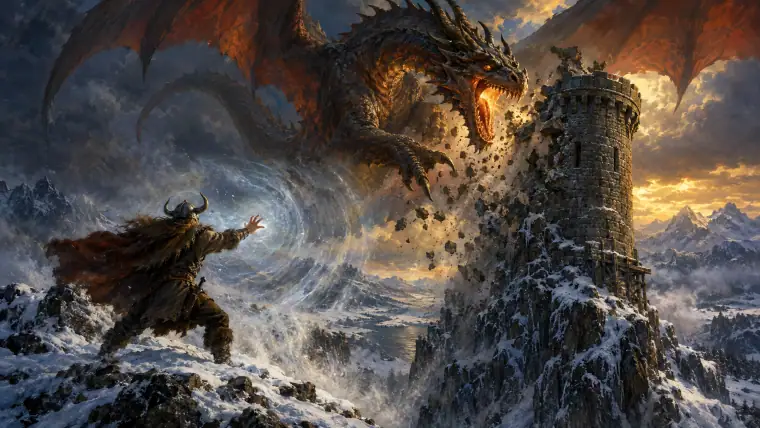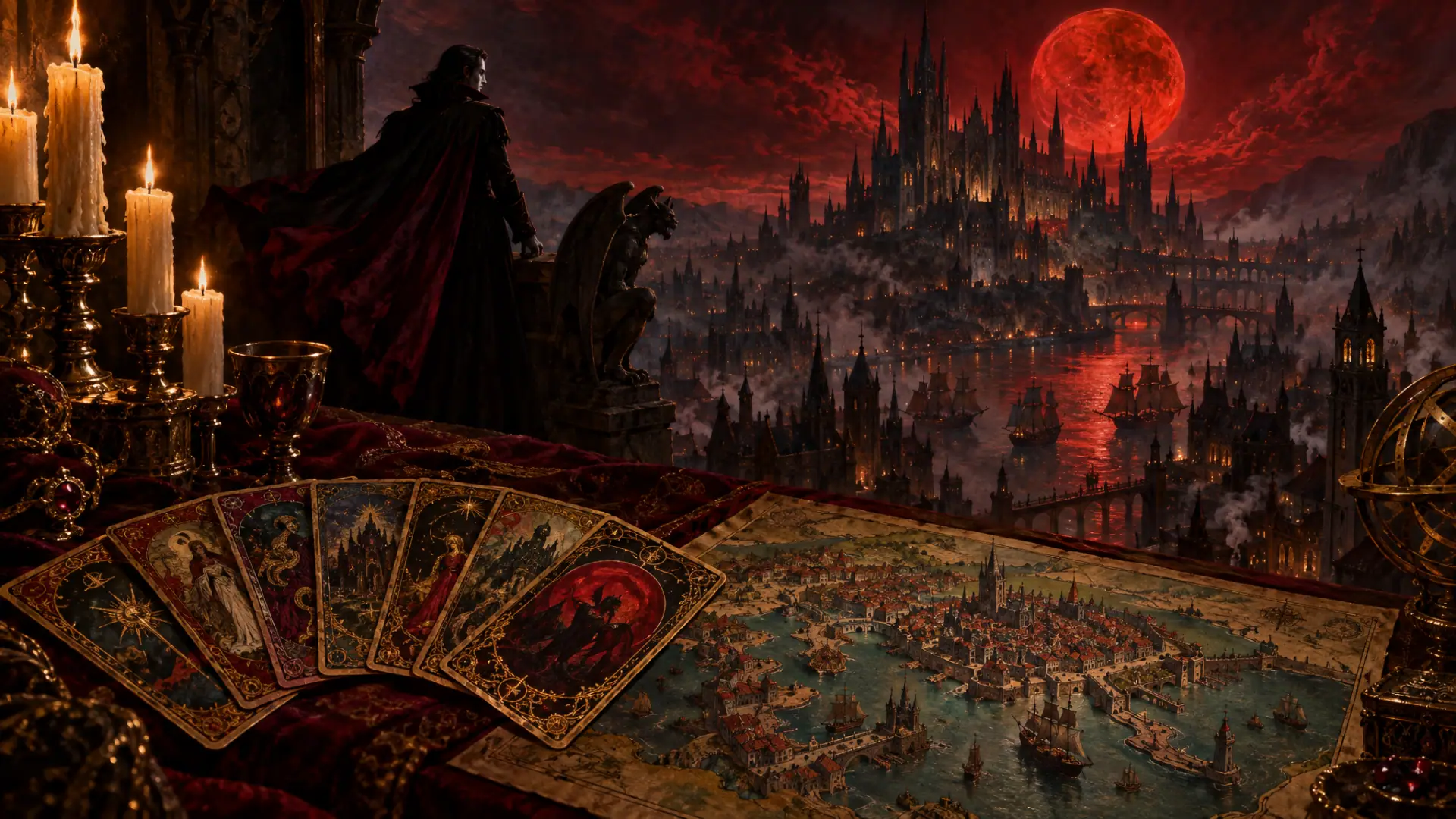
LeFay was the technical and creative driving force behind Bethesda's first Elder Scrolls games, establishing the open-world, do-anything RPG lineage that became one of the medium's great traditions.
Life
Julian LeFay was born Benni Jensen in Denmark on October 30, 1965. Before he wrote a line of game code he was a musician, playing in the Danish electro-pop band Russia Heat, and music remained part of his craft when he moved into software. His early work spanned the home computers and consoles of the late 1980s: he wrote the music for the Amiga action game Sword of Sodan (1988), handled design, programming and music on Wayne Gretzky Hockey (1988), programmed the MS-DOS version of Dragon's Lair (1989), and composed for Where's Waldo? (1991).
Working as Julian LeFay, he joined Bethesda Softworks in its early years, around 1987. The small Maryland company was then known for sports games; LeFay became its chief engineer, and in that role he helped lead it through the projects that turned it into an RPG studio.
Work
LeFay was chief programmer of The Terminator 2029 (1992), a first-person action game set in the Terminator universe. With designers Ted Peterson and Vijay Lakshman, longtime fans of pencil-and-paper role-playing games like LeFay himself, he then built The Elder Scrolls: Arena. It began as a medieval gladiator game in which a team would fight its way from arena to arena, but grew into a sprawling role-playing game set across the continent of Tamriel. Peterson later credited himself, Lakshman and LeFay with spearheading the series. Released for MS-DOS on March 25, 1994, The Elder Scrolls: Arena was huge by the standards of the day, won Computer Gaming World's Role-Playing Game of the Year award for 1994, and established the series' promise: a first-person world where the player could go almost anywhere.
LeFay was project leader and programmer of the sequel, The Elder Scrolls II: Daggerfall (1996). Daggerfall pushed the premise to an extreme, using Procedural generation to build a map commonly compared to the size of Great Britain, with thousands of towns, dungeons and wilderness areas, a full reputation system and multiple endings. It was also notoriously buggy, a combination of grandeur and fragility that became part of Bethesda's identity. Among the young designers who worked on it was Todd Howard. LeFay then served as lead programmer and designer of An Elder Scrolls Legend: Battlespire (1997), a smaller, more focused spin-off.
He left Bethesda in 1998, returning briefly as a contractor on The Elder Scrolls III: Morrowind (2002). His later career ranged widely: a stint at Sega, involvement in the fighting game Skullgirls, work as vice president of research and development at Blockbuster on information retrieval and natural-language parsing (during which he learned Ancient Greek and wrote a parser for it), and, from January 2021, the post of chief technology officer at the company Licorice.
In 2019 he reunited with Peterson and Lakshman to found OnceLost Games and begin The Wayward Realms, an open-world RPG conceived as a spiritual successor to Daggerfall. The team reportedly declined an $8 million publisher offer because they believed the game required at least $12 million; it was unveiled in 2021, and a Kickstarter launched on May 30, 2024, with a $500,000 goal met successfully. On July 17, 2025, OnceLost announced that LeFay had terminal cancer and was stepping away. He died on July 22, 2025, at 59.
Legacy
Tributes after his death made clear how his colleagues saw him. Todd Howard, who had grown into the leader of the series, called LeFay "the driving force in the creation of The Elder Scrolls and the foundations of Bethesda as a game studio," adding: "simply put, without Julian, we would not be here today." Players had long known him as the "Father of The Elder Scrolls," and the setting itself honors him through Julianos, the Tamrielic god of wisdom and logic.
The lineage he started runs from Arena and Daggerfall through The Elder Scrolls III: Morrowind, The Elder Scrolls IV: Oblivion and The Elder Scrolls V: Skyrim to The Elder Scrolls Online, and his early insistence on vast, systemic worlds in which the player writes the story shaped the modern Open-World RPGs. The Wayward Realms, still in development at his death, is a final argument for the maximalist vision he brought to Bethesda in the early 1990s.
Marginalia
- Born Benni Jensen in Denmark on October 30, 1965, he played in the Danish electro-pop band Russia Heat before turning to programming.
- He wrote the music for the Amiga action game Sword of Sodan (1988) and co-created Bethesda's Wayne Gretzky Hockey (1988).
- He was lead programmer of The Elder Scrolls: Arena, released for MS-DOS on March 25, 1994.
- The Elder Scrolls deity Julianos, god of wisdom and logic, is named after him.
- In 2019 he co-founded OnceLost Games with Ted Peterson and Vijay Lakshman to make The Wayward Realms, a spiritual successor to Daggerfall.
- He died on July 22, 2025; Todd Howard said that "without Julian, we would not be here today."
Quick answers
- Who was Julian LeFay?
- The Danish musician-turned-programmer called the "Father of The Elder Scrolls," who engineered Arena and led Daggerfall, the vast procedurally built worlds from which Morrowind and Skyrim descend.
- When was Julian LeFay born?
- Julian LeFay was born in 1965 in Denmark and died in 2025.
- What is Julian LeFay known for?
- Julian LeFay is best known for The Elder Scrolls: Arena and The Elder Scrolls II: Daggerfall.
- Why does Julian LeFay matter to fantasy and games?
- LeFay was the technical and creative driving force behind Bethesda's first Elder Scrolls games, establishing the open-world, do-anything RPG lineage that became one of the medium's great traditions.