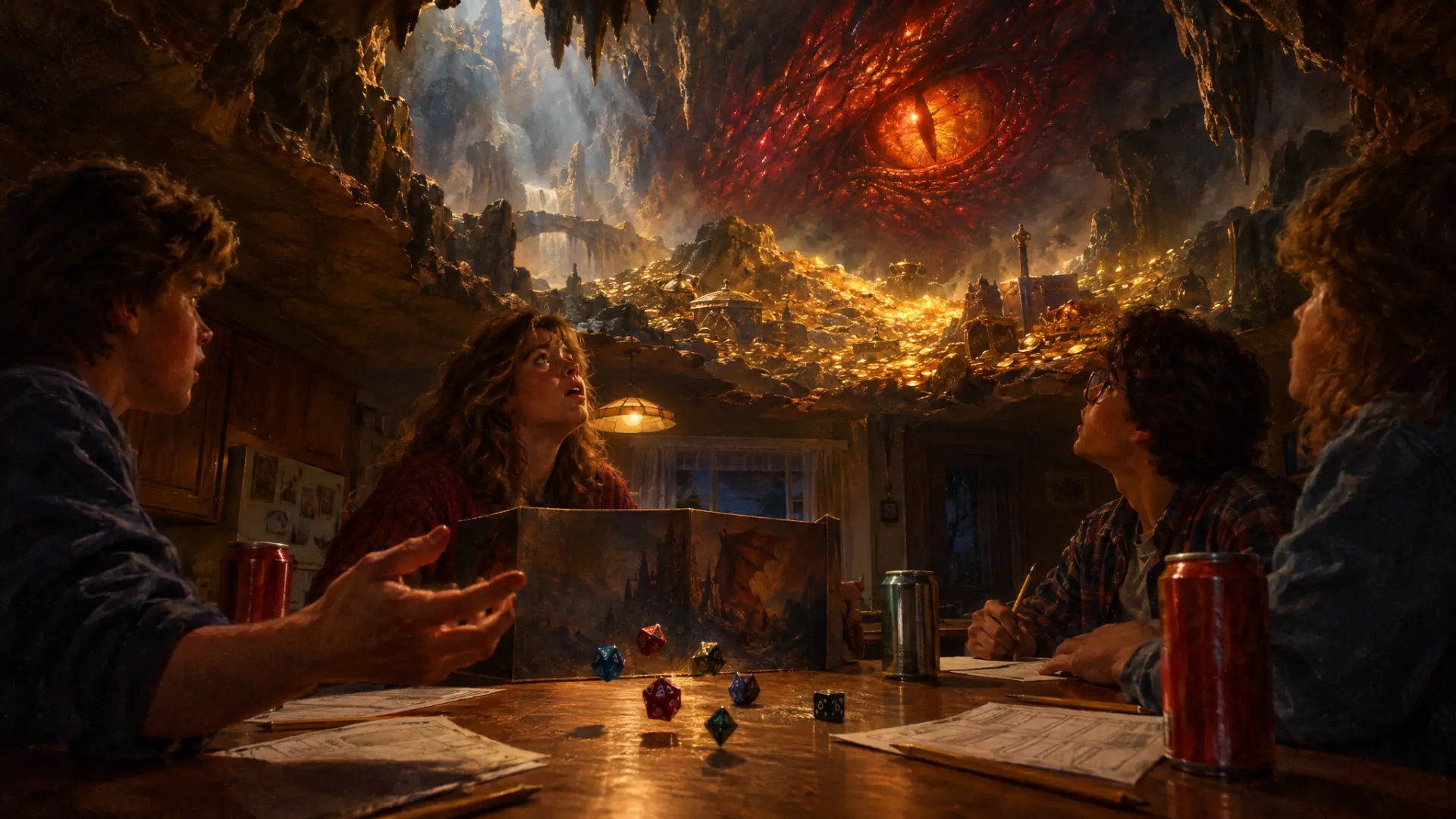
RuneQuest, led by Perrin, was the first major alternative to D&D's classes and levels: characters improved skill by skill, combat was lethal and detailed, and religion and culture mattered. Its Basic Role-Playing system powered a family of Chaosium games still in print.
Life
Stephen Herbert Perrin was born on January 22, 1946, and grew up to study English at San Francisco State University, taking a bachelor's degree. He was part of the Bay Area's science fiction and medievalist culture of the 1960s, and in 1966 he was among the founding members of the Society for Creative Anachronism, the re-creation society that grew out of a Berkeley backyard tournament and spread across the world. The SCA's hands-on experience of armor, weapons and medieval life would show in his games.
He remained a working designer for more than four decades, in tabletop and then in computer games, and in 2019 returned to Chaosium, the company where he had made his name, as a creative consultant. He died on August 13, 2021.
Work
Perrin entered the roleplaying world as an early D&D fan with firm ideas about how it could be better. In 1976 he circulated The Perrin Conventions, a set of alternative combat rules for D&D that addressed what many players saw as the abstract, all-or-nothing nature of its fights. The next year he compiled, with Jeff Pimper, All the Worlds' Monsters (1977), a fan-sourced bestiary published by Chaosium.
That connection led to RuneQuest. Greg Stafford wanted a roleplaying game for his world of Glorantha, and Perrin led the design, with Steve Henderson, Warren James and Ray Turney, drawing on their experience in the SCA. Published by Chaosium in 1978, RuneQuest discarded character classes and levels. Characters had percentile skills that improved through use; combat used hit locations, so that a sword blow could land on a leg or an arm, and armor protected particular parts of the body; weapons could parry; and magic was tied to cults and gods, making religion part of every character's life. It was realistic and dangerous in a way D&D was not, and it made culture, rather than the dungeon, the center of play.
The core of the system was distilled into the short Basic Role-Playing rules in 1980, and it spread through Chaosium's line. Perrin worked on many of those games: Worlds of Wonder (1982), a boxed set of three genre mini-games; Superworld (1983), which grew out of one of them into a full superhero RPG; the Chaosium boxed set for the Thieves' World shared-world anthologies (1981), with statistics for several game systems; Stormbringer (1981), with Ken St. Andre, based on Michael Moorcock's Elric; and Elfquest (1984), adapting the Pinis' comic. The same engine underlies Sandy Petersen's Call of Cthulhu (1981), which Perrin also contributed to.
Through the 1980s he freelanced for TSR, Inc., FASA Corporation, West End Games and Iron Crown Enterprises. In the 1990s he moved into computer games, working for Interplay Productions, Maxis and Spectrum HoloByte, including on Star Trek: Starfleet Academy.
Legacy
RuneQuest was the first great "other" system of the tabletop world, and its influence runs deep. Its skill-based advancement, hit locations and cult-driven magic found echoes in later tabletop games such as Warhammer Fantasy Roleplay, and its principle that skills improve through use anticipated computer RPGs such as The Elder Scrolls II: Daggerfall. Basic Role-Playing, rooted in Perrin's design, is still the engine of Call of Cthulhu, one of the longest-running RPGs in print.
Perrin's life also exemplified a link the museum returns to often: between the living-history medievalism of the SCA, the fantasy fandom of the Bay Area, and the tabletop games that tried to capture both. His return to Chaosium shortly before his death closed a circle that had begun with a fan's rules for making D&D combat feel more real.
Marginalia
- Stephen Herbert Perrin was born on January 22, 1946, and died on August 13, 2021.
- He was a founding member, in 1966, of the Society for Creative Anachronism, the medieval reenactment society born in Berkeley.
- His Perrin Conventions (1976) offered alternative combat rules for D&D and circulated widely in early fandom.
- He co-designed RuneQuest (1978) with Steve Henderson, Warren James and Ray Turney, for Greg Stafford's world of Glorantha.
- He worked on the Chaosium boxed set for Thieves' World (1981) and designed the superhero game Superworld (1983).
- In the 1990s he worked on computer games for Interplay, Maxis and Spectrum HoloByte, including Star Trek: Starfleet Academy.
Quick answers
- Who was Steve Perrin?
- The Bay Area medievalist and lead designer of RuneQuest (1978), whose skill-based percentile system became the engine of Chaosium's games from Call of Cthulhu to Stormbringer.
- When was Steve Perrin born?
- Steve Perrin was born in 1946 and died in 2021.
- What is Steve Perrin known for?
- Steve Perrin is best known for RuneQuest and Thieves' World.
- Why does Steve Perrin matter to fantasy and games?
- RuneQuest, led by Perrin, was the first major alternative to D&D's classes and levels: characters improved skill by skill, combat was lethal and detailed, and religion and culture mattered. Its Basic Role-Playing system powered a family of Chaosium games still in print.