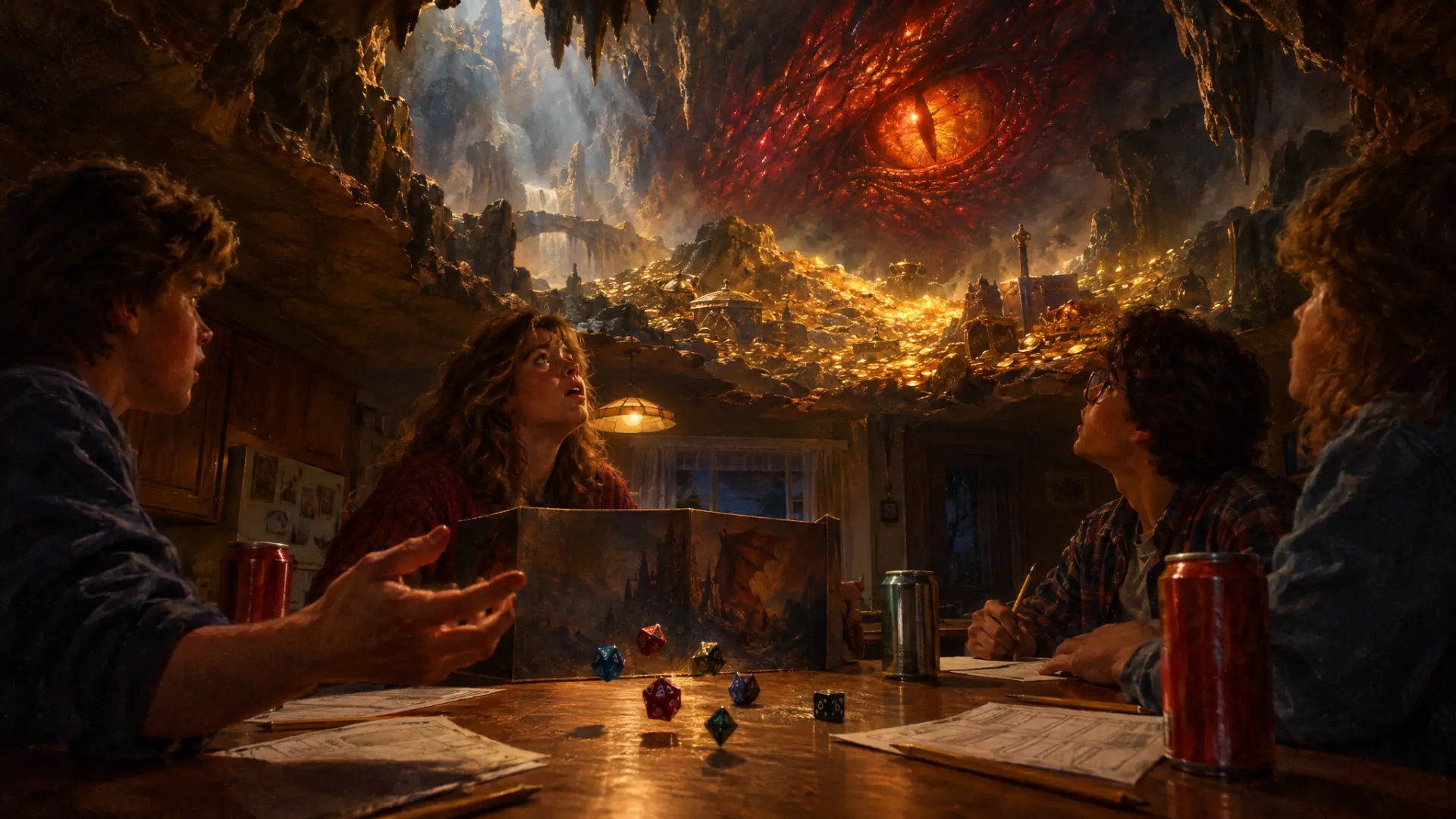
Chaosium proved there was a serious alternative to D&D: skill-based percentile rules, mythic worlds, and horror in which knowledge destroys you. Its Call of Cthulhu remains one of the most-played roleplaying games in the world.
History
Greg Stafford had been inventing the mythic world of Glorantha since his student days, and in 1975 he founded "The Chaosium" to publish a board game set there, White Bear and Red Moon (later reissued as Dragon Pass). The name came from his apartment near the Oakland Coliseum, which he called a house of chaos. The company stayed rooted in the San Francisco Bay Area for four decades.
Its breakthrough was a roleplaying game. RuneQuest (1978), designed by Steve Perrin and colleagues and set in Glorantha, replaced D&D's classes and levels with skills that improved through use, percentile dice, hit locations and a world with living religions and cultures. A second edition followed in 1980, the year the company incorporated as Chaosium Inc. That year Stafford and Lynn Willis distilled the RuneQuest rules into Basic Role-Playing, a 16-page generic system. On that chassis Sandy Petersen built Call of Cthulhu (1981), which turned H. P. Lovecraft's fiction into a game where investigators research, go mad and usually lose. It became Chaosium's most enduring line. In 1983 Chaosium licensed RuneQuest to Avalon Hill, which published the third edition in 1984, while Games Workshop printed Chaosium games in Britain. Stafford's own King Arthur Pendragon (1985) made Malory's Arthurian romance a generational game about knights, families and passions. Chaosium also co-designed West End Games' Ghostbusters (1986), which introduced the dice-pool mechanic later used in Star Wars.
The 1990s were harder. A collectible card game, Mythos, failed, and in 1998 Stafford resigned as president and left with Petersen. Chaosium effectively split up: Stafford took Glorantha to his new company, Issaries, while Charlie Krank and Lynn Willis kept Chaosium alive on Call of Cthulhu. The line survived, but a 2013 Kickstarter for Call of Cthulhu's seventh edition ran into long delays. In June 2015 Stafford and Petersen returned, and at Gen Con that year they announced that Moon Design Publications, keepers of Glorantha, had joined Chaosium's ownership; its principals, Rick Meints, Jeff Richard, Michael O'Brien and Neil Robinson, became the management. The new team closed the Hayward, California, office and moved the company to Ann Arbor, Michigan. The delayed seventh edition shipped in 2016 and won nine of the ten ENnie Awards it was up for in 2017.
Stafford died in October 2018 and Perrin in 2021. Chaosium has since reacquired Pendragon (2018), bought 7th Sea (2019), licensed Ben Aaronovitch's Rivers of London (2019), and in 2021 formed The Chaosium Group with Poland's Black Monk Games.
Notable work
RuneQuest and Glorantha; Basic Role-Playing and its many offshoots, including Stormbringer, Elfquest and Superworld; Call of Cthulhu and campaigns such as Masks of Nyarlathotep; King Arthur Pendragon; and Different Worlds, the magazine it published from 1979 to 1985.
Legacy
Chaosium's influence far exceeds its size. Its percentile skill systems showed designers a path away from classes and levels, and Basic Role-Playing's descendants run through many games of the 1980s. Call of Cthulhu made cosmic horror, with investigation replacing combat and sanity as a resource, a permanent genre of play, and its influence can be traced in horror games on paper and on screen. The idea that a setting's mythology could be the point of a game, not just its backdrop, is Stafford's gift to the hobby.
Marginalia
- Stafford coined the name from his apartment near the Oakland Coliseum, a 'house of chaos': chaos plus coliseum.
- Its first product was the board game White Bear and Red Moon (later Dragon Pass), set in Stafford's world of Glorantha.
- RuneQuest (1978) was designed by Steve Perrin with others and set in Glorantha.
- In 1980 Stafford and Lynn Willis boiled RuneQuest down to the 16-page Basic Role-Playing, the engine behind Call of Cthulhu (1981) and later d100 games.
- Chaosium licensed RuneQuest's third edition to Avalon Hill in 1983; Avalon Hill manufactured and marketed it.
- The failure of the Mythos card game led Stafford and Sandy Petersen to leave in 1998; both returned in 2015 to rescue a troubled Call of Cthulhu 7th edition Kickstarter.
- Call of Cthulhu 7th edition won nine of the ten ENnie Awards it was nominated for in 2017.
Quick answers
- What is Chaosium?
- Greg Stafford's Bay Area 'house of chaos' that gave the hobby RuneQuest, the percentile Basic Role-Playing system, Call of Cthulhu and Pendragon, and survived half a century of near-collapses.
- When was Chaosium founded?
- Chaosium was founded in 1975 and is based in Ann Arbor, Michigan (long based in the San Francisco Bay Area).
- Who founded Chaosium?
- Greg Stafford.
- What is Chaosium known for?
- RuneQuest, Call of Cthulhu and King Arthur Pendragon.
- What happened to Chaosium?
- Still publishing; reorganized in 2015 when Moon Design Publications' principals took over management, and part of The Chaosium Group since 2021.