Mearls co-led the design of D&D 5th Edition (2014), a deliberately accessible, open-playtested edition that became the rules behind the game's 2010s renaissance, from actual-play streams to Baldur's Gate 3.
Life
Michael Mearls is an American writer and designer of fantasy roleplaying games and related fiction. Few details of his early life are public, and no reliable source gives his birth date. He is an alumnus of Dartmouth College, where he was known on campus for a satirical letter to the student newspaper. He came into the industry the way many of his generation did, through the flood of third-party books the Open Game License made possible after 2000.
Work
His early credits were d20 adventures and rules. He wrote To Stand on Hallowed Ground for Fiery Dragon Productions (2001), and Fear the Worst (2002), an adventure for Warhammer Fantasy Roleplay that became the last product of Hogshead Publishing, which released it free online. For Monte Cook's Malhavoc Press he designed Iron Heroes (2005), a d20 variant for low-magic fantasy. On the strength of this work, Wizards of the Coast hired him as a designer in June 2005.
He arrived as Wizards was secretly rethinking the game. With Andy Collins, David Noonan and Jesse Decker, he joined the "Flywheel" team led by Rob Heinsoo, which completed the concept work for Dungeons & Dragons 4th Edition between May and September 2006. He also tested some of its ideas in print: the encounter-based powers of 4th Edition first appeared in his Tome of Battle: The Book of Nine Swords (2006). When Heinsoo was laid off in 2009, Mearls became lead designer of D&D, and in 2010 he was promoted to group manager of the D&D research and development team. He oversaw the Essentials line, a more approachable repackaging of 4th Edition. With Bill Slavicsek he co-designed the Castle Ravenloft board game (2010), a cooperative dungeon crawl set in the world of Ravenloft.
By 2011 D&D's audience was divided, and many 3.5 players had moved to Pathfinder Roleplaying Game. Development of a new edition began, first under Monte Cook and then, after Cook left in 2012, led by Mearls and Jeremy Crawford as co-lead designers. The project, called "D&D Next," was developed through a large public playtest from 2012, in which players downloaded draft rules and returned surveys. The result, Dungeons & Dragons 5th Edition, appeared in 2014. It deliberately drew on every earlier edition: the bounded accuracy of its math kept low-level monsters relevant, advantage and disadvantage replaced piles of modifiers, and it relied heavily on the judgment of the Dungeon Master. The design aimed to be simple enough for a new player and familiar enough for a returning one.
Mearls became senior manager of D&D research and design and, by 2018, the franchise's creative director. In 2019 he left the tabletop D&D team; Ray Winninger took over as executive producer in 2020, and Mearls moved to exploratory and vision design for Magic: The Gathering. He received "special thanks" in the credits of Larian's Baldur's Gate 3 (2023), and in a 2019 interview described his role there as "story and system support." Wizards laid him off in December 2023. In May 2024 Chaosium named him executive producer of roleplaying games; he left in June 2025 for a role at Asmodee, while continuing to work on Chaosium projects such as a new edition of RuneQuest.
Legacy
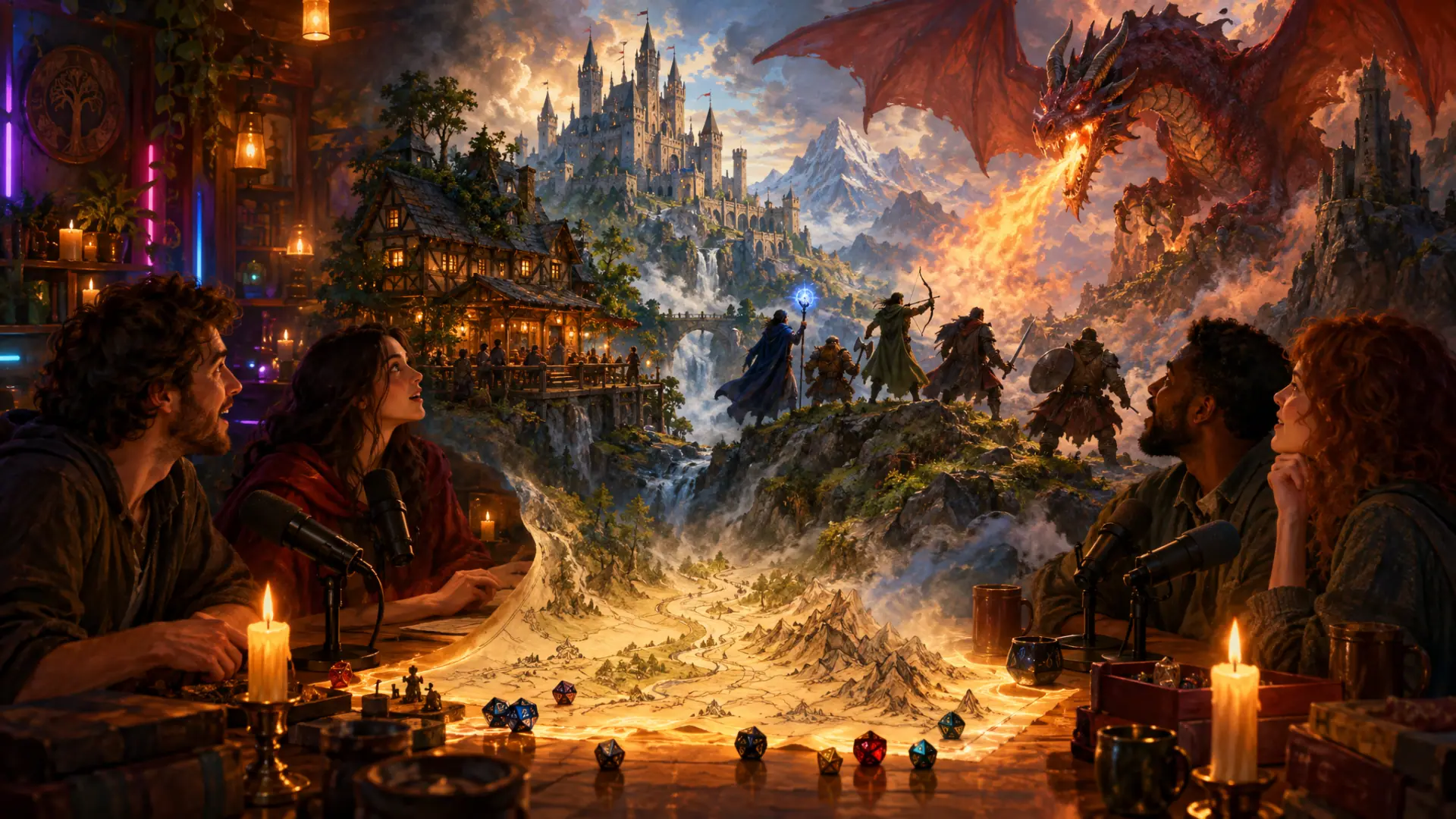
By most accounts Fifth Edition has drawn the largest audience in the game's history. Hasbro reported in 2020 that D&D revenues had grown for seven consecutive years, and the edition underlies much of the game's 2010s cultural boom. It is the system behind Critical Role and the wider The Actual-Play Boom, the Virtual Tabletops that sustained play during the pandemic, and much of the rules framework adapted for Baldur's Gate 3. Its accessibility, built into the design by Mearls and Crawford, made it possible to learn by watching.
Mearls's career also reflects the modern structure of the hobby: open licenses that allowed freelancers to build careers, a corporate owner that repeatedly reorganized its studios, and designers who move between D&D, card games and heritage publishers such as Chaosium.
Marginalia
- He wrote Fear the Worst (2002), a Warhammer adventure that was the last product from Hogshead Publishing, released free online.
- Wizards of the Coast hired him in June 2005 on the strength of his third-party d20 work, including Iron Heroes for Monte Cook's Malhavoc Press.
- He was on the 'Flywheel' team that completed the concept work for D&D 4th Edition in 2006.
- Shannon Appelcline called 4th Edition's Essentials line 'primarily the brain child of Mike Mearls.'
- He co-designed the Castle Ravenloft cooperative board game (2010).
- He received 'special thanks' in the credits of Baldur's Gate 3 for story and system support.
Quick answers
- Who is Mike Mearls?
- A d20 freelancer who rose through Wizards of the Coast to lead D&D's design, helped build 4th Edition, and co-led the fifth edition that brought Dungeons & Dragons its largest audience.
- What is Mike Mearls known for?
- Mike Mearls is best known for Dungeons & Dragons 5th Edition and Dungeons & Dragons 4th Edition.
- Why does Mike Mearls matter to fantasy and games?
- Mearls co-led the design of D&D 5th Edition (2014), a deliberately accessible, open-playtested edition that became the rules behind the game's 2010s renaissance, from actual-play streams to Baldur's Gate 3.