Greenberg co-designed Wizardry (1981), often called the first true party-based computer RPG and the model for the Bard's Tale in America and for Dragon Quest and Final Fantasy in Japan.
Life
Andrew Clifford Greenberg was born in 1957 and studied at Cornell University, where, like many students of the late 1970s, he was drawn both to Dungeons & Dragons and to the new possibilities of computers. The mainframe dungeon games of the PLATO network, above all the 1977 multiplayer RPG Oubliette, showed what a computer could do with D&D's rules, and Greenberg set out to bring that experience to the personal computer. He was also a proficient tuba player.
Work
Greenberg began the project that became Wizardry: Proving Grounds of the Mad Overlord in 1978, and by the fall of 1979 an early version was playable and popular among his fellow students. He first wrote it in Applesoft BASIC for the Apple II, but it was too slow to play, so he and his collaborator Robert Woodhead rewrote it in UCSD Pascal. They then had to wait for a run-time system that would let them sell a Pascal program, which did not arrive until early 1981. The delay proved a blessing: the game spent almost a year in playtesting and balancing, a luxury most early computer RPGs never had.
Woodhead had co-founded Sirotech Software, soon Sir-Tech Software, with Norman Sirotek and his family in 1979, and the company showed a beta of the game at the Boston Computer Convention in 1980 before releasing Wizardry: Proving Grounds of the Mad Overlord in September 1981. Norman's father, Frederick Sirotek, the company's financier, insisted on professional packaging and documentation, which set the game apart from rivals sold in Ziploc bags.
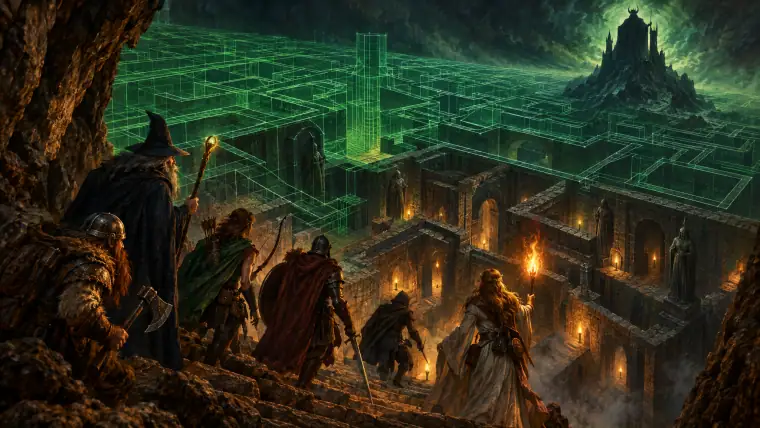
What players found in the box is often called the first true The party-based computer RPG. They created up to six adventurers from five races, including hobbits and gnomes, three alignments and four basic classes, with elite classes such as the samurai, lord and ninja earned through advancement. They then led the party into the ten-level maze beneath the castle of Trebor, the Mad Overlord, drawing maps on graph paper as they went, with a first-person wire-frame view and color monster portraits. At the bottom waited the wizard Werdna, Greenberg's first name reversed, as Trebor was Woodhead's. The difficulty was unforgiving: progress could not be saved in the dungeon, and a party wiped out below stayed there until another party recovered the bodies. Completing the scenario let players carry their characters into its sequels, Wizardry II: The Knight of Diamonds and Wizardry III: Legacy of Llylgamyn, which Greenberg helped create alongside later entries in the 1980s.
Greenberg's later games included, with Rick Dutton, Walter Freitag and Michael Massimilla, Star Saga: One – Beyond the Boundary (1988) and Star Saga: Two – The Clathran Menace (1989), hybrid games that combined computer play with printed text. He then built a second career in law, working as a patent attorney with the firm Carlton Fields in Tampa, Florida, before moving to San Francisco as an executive and general counsel for a renewable-energy company. He chaired the IEEE's Intellectual Property Committee and received its National Citation of Honor. He married Sheila McDonald, a Wizardry playtester, and they had two children.
Legacy
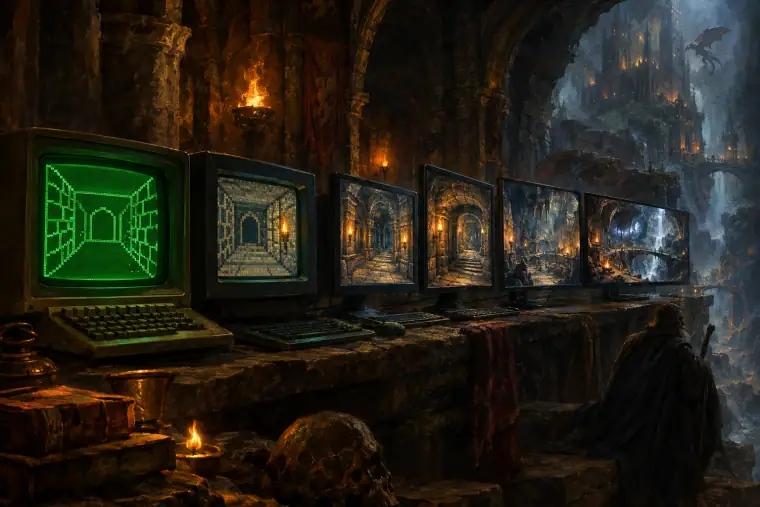
Wizardry became one of the defining computer RPGs and a founding work of the first-person party First-Person Dungeon Crawlers ('Blobbers'), or Blobber. In the United States it set the pattern that The Bard's Tale explicitly competed with, even letting players import Wizardry characters. In Japan its influence was even larger: Hironobu Sakaguchi skipped university classes to play it, and Yuji Horii discovered it at a Macworld exhibition and drew on it for Dragon Quest, so that its menus, parties and random battles run through Final Fantasy and the whole Japanese RPGs (JRPG) tradition. The first game alone was ported to a long list of Japanese computers and consoles, from the PC-98 to the Super Famicom and WonderSwan Color.
Greenberg died in August 2024 at the age of 66; his death was reported by Robert Woodhead and game designer David Mullich.
Marginalia
- Greenberg began developing Wizardry as a Cornell University student in 1978; by fall 1979 an early version was popular with fellow students.
- The evil archmage at the bottom of Wizardry's ten-level maze is Werdna: "Andrew" spelled backward.
- Wizardry was first written in Applesoft BASIC, then rewritten in UCSD Pascal when BASIC proved too slow.
- He married Sheila McDonald, one of the Wizardry series' playtesters.
- With Rick Dutton, Walter Freitag and Michael Massimilla he created the Star Saga games (1988–89).
- He was a proficient tuba player and later chaired the IEEE's Intellectual Property Committee.
Quick answers
- Who was Andrew C. Greenberg?
- The Cornell student who began a dungeon game in 1978, co-created Wizardry with Robert Woodhead, lent his reversed first name to its villain Werdna, and later became a patent attorney.
- When was Andrew C. Greenberg born?
- Andrew C. Greenberg was born in 1957 and died in 2024.
- What is Andrew C. Greenberg known for?
- Andrew C. Greenberg is best known for Wizardry: Proving Grounds of the Mad Overlord.
- Why does Andrew C. Greenberg matter to fantasy and games?
- Greenberg co-designed Wizardry (1981), often called the first true party-based computer RPG and the model for the Bard's Tale in America and for Dragon Quest and Final Fantasy in Japan.