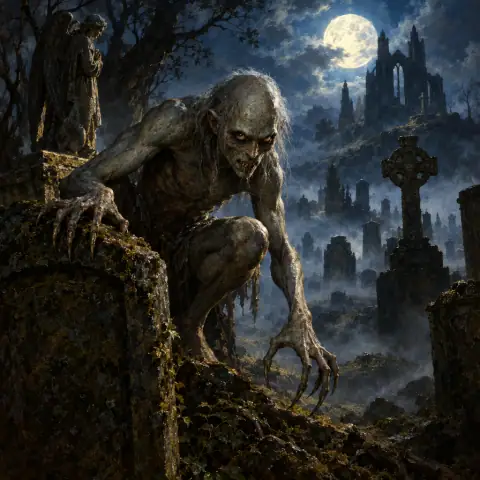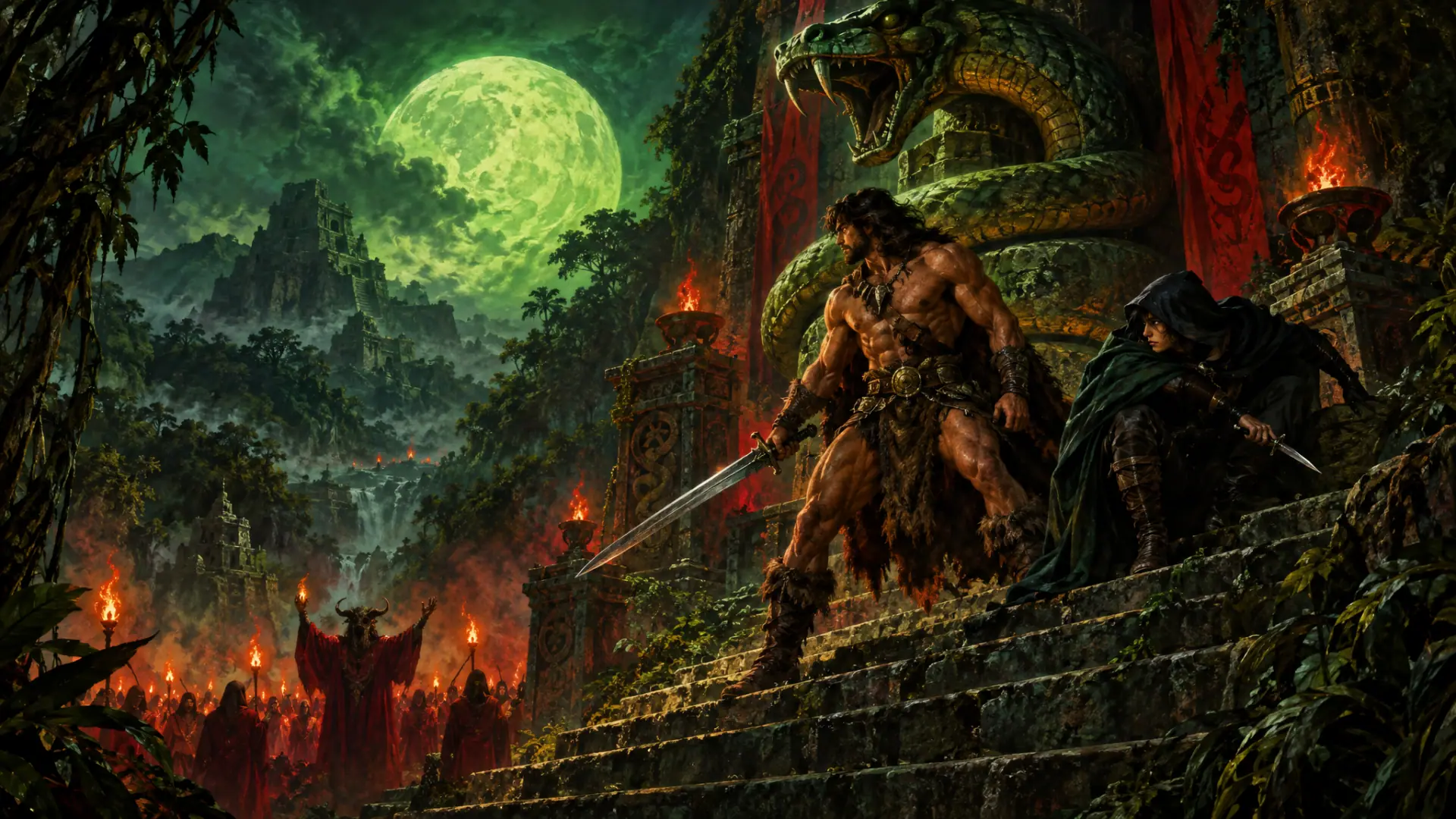
Weird fiction is where fantasy's cosmic horror comes from. Through Weird Tales it seeded sword and sorcery, and through Chaosium's Call of Cthulhu it gave roleplaying its sanity rules and a second great tradition beside D&D.
Hallmarks
- Dread of vast, alien, indifferent forces rather than ghosts and vampires
- Monsters with no folklore precedent — tentacles, geometry, colors out of space
- The suspension of natural law as the ultimate horror
- Awe mixed with fear: the numinous, the sublime, the incomprehensible
- A genre-blurring blend of horror, fantasy and science fiction
- In the New Weird: grotesque, teeming secondary-world cities
What it is
Weird fiction is a strain of speculative fiction that produces awe and dread by confronting its characters with forces that are vast, alien and indifferent. It deliberately sets aside the ghosts, vampires and werewolves of Gothic horror in favor of things with no folkloric pedigree: beings from outside space, geometries that should not exist, colors no eye has seen. H. P. Lovecraft gave its best-known definition in "Supernatural Horror in Literature" (1927): the true weird tale needs "a certain atmosphere of breathless and unexplainable dread of outer, unknown forces," and a hint of the defeat of the "fixed laws of Nature" that protect us from chaos.
Critics stress that "weird" is as much a mode as a genre. It moves freely between horror, fantasy and science fiction; Jeff and Ann VanderMeer describe it as a mood that can appear anywhere. China Miéville has proposed the tentacle as its emblem, and a sense of the numinous — terror shading into wonder — as its effect.
Origins
Edgar Allan Poe is often named the pioneer, and Lovecraft himself traced the line to him. In the decades around 1900 — what S. T. Joshi and Miéville have called the "haute weird" of roughly 1880–1940 — British writers created the form: Arthur Machen's pagan horrors, Algernon Blackwood's hostile wildernesses, M. R. James's antiquarian ghosts, William Hope Hodgson's abhuman seas, and the dream-realms of Lord Dunsany.
The American pulp Weird Tales, launched in March 1923, gave the mode its home and name. Its authors — Lovecraft, Clark Ashton Smith, Robert Bloch, and Robert E. Howard — wrote cosmic horror, fantasy and early Sword & Sorcery side by side, and borrowed freely from each other. Lovecraft's Cthulhu Mythos became a shared playground, extended after his death in 1937 by August Derleth's Arkham House.
Evolution
The weird never quite left. Mid-century it survived in the small press and in writers such as Shirley Jackson and Ramsey Campbell; Mervyn Peake's grotesque Gormenghast offered a strange, crumbling secondary world. Around 2000 a revival arrived: China Miéville's Perdido Street Station (2000) — a teeming, steam-and-thaumaturgy city of insect-headed artists and dream-eating moths — became its manifesto. M. John Harrison named the movement "New Weird" in his introduction to Miéville's The Tain (2002), then asked online in 2003 whether it was "even anything." The VanderMeers' anthologies The New Weird (2008) and The Weird (2011) mapped the tradition.
Games have been among the weird's most faithful readers. Chaosium's Call of Cthulhu (1981), designed by Sandy Petersen, turned Lovecraft into a roleplaying game in which investigators lose Sanity as they approach the truth, a design idea that reverberates through horror gaming. D&D's Deities & Demigods (1980) printed the Cthulhu Mythos until a clash with Chaosium, which held the license, led TSR to drop it from 1981 printings. Critics have called Bethesda's The Elder Scrolls III: Morrowind (2002), with its giant-insect architecture and alien gods, a New Weird world, and Lovecraftian cosmic horror runs through Darkest Dungeon and FromSoftware's Bloodborne.
The weird's monsters migrated into games almost from the start. D&D's Mind Flayer (Illithid), a tentacle-faced brain-eater introduced in 1975, and the floating many-eyed Beholder are among the game's most Lovecraftian creations, and later editions of D&D added the Far Realm, a plane of alien madness lying outside the ordered cosmos.
How to tell it apart
- Weird vs. Dark Fantasy: dark fantasy's evil is usually moral and Gothic — the vampire lord, the cursed king. Weird fiction's horror is cosmic and indifferent: the universe is not wicked, merely vast and uninterested in us.
- vs. Sword & Sorcery: the two were born in the same magazine. When a barbarian cuts down a Lovecraftian horror, it is S&S; when the horror is unbeatable and the hero goes mad, it is weird.
- vs. Science Fantasy: both blend genres, but science fantasy seeks wonder and adventure; weird fiction seeks unease.
- New Weird vs. High / Epic Fantasy: New Weird builds secondary worlds too, but its cities are grotesque, political and industrial — deliberately undoing high fantasy's romantic medievalism.
Where to start
- The Willows (Algernon Blackwood, 1907) — nature as an alien presence.
- H. P. Lovecraft, "The Colour Out of Space" and At the Mountains of Madness.
- Clark Ashton Smith's Zothique and Averoigne tales.
- Perdido Street Station (China Miéville, 2000) — the New Weird's calling card.
- Call of Cthulhu — the weird as a game you are meant to lose.
Marginalia
- Weird Tales ran from March 1923 to September 1954 in its original incarnation; its editor Farnsworth Wright often used "weird fiction" for what it published.
- In "Supernatural Horror in Literature" (1927), H. P. Lovecraft demanded "a certain atmosphere of breathless and unexplainable dread of outer, unknown forces."
- China Miéville has used "the tentacle" as the emblem of the weird: a limb almost absent from Gothic monsters but everywhere in weird fiction.
- Chaosium's Call of Cthulhu (1981), designed by Sandy Petersen, gave investigators a Sanity score that erodes as they learn the truth.
- D&D's Deities & Demigods (1980) included the Cthulhu Mythos, removed from 1981 printings after a licensing clash with Chaosium.
- M. John Harrison coined "New Weird" in his introduction to China Miéville's novella The Tain (2002).
Quick answers
- What is Weird Fiction?
- Tentacles, forbidden geometry and gods that do not care: the uncanny tradition of Machen, Blackwood and Lovecraft's Weird Tales, reborn in the New Weird and at every Call of Cthulhu table.
- What are the hallmarks of Weird Fiction?
- Dread of vast, alien, indifferent forces rather than ghosts and vampires; Monsters with no folklore precedent — tentacles, geometry, colors out of space; The suspension of natural law as the ultimate horror; Awe mixed with fear: the numinous, the sublime, the incomprehensible; A genre-blurring blend of horror, fantasy and science fiction; In the New Weird: grotesque, teeming secondary-world cities.
- When did Weird Fiction emerge?
- c. 1880–1940 "haute weird"; Weird Tales from 1923; New Weird from c. 2000.
- Where does the name “Weird Fiction” come from?
- Popularized by Weird Tales (1923) and H. P. Lovecraft's essays; M. John Harrison coined "New Weird" in 2002.
- What are the key works of Weird Fiction?
- Call of Cthulhu, Gormenghast, The Elder Scrolls III: Morrowind and The Dying Earth.