Comic fantasy is how the genre talks about itself. Terry Pratchett's Discworld made parody of fantasy tropes into one of the bestselling bodies of work in British publishing, and gaming culture has its own rich comic tradition of dungeon jokes and rules lawyers.
Hallmarks
- Humor as the primary intent, not a relief from the drama
- Parody and pastiche of fantasy's own conventions and bestsellers
- Magic with ridiculous side effects, bureaucracies and fine print
- Puns, footnotes and knowing narrators
- Satire of the real world smuggled in through an imaginary one
- Protagonists who are cowards, clerks, incompetents or tourists
What it is
Comic fantasy is fantasy whose primary intent is to make you laugh. It may be gentle or savage, silly or satirical, but the humor is the point rather than a break from the drama. Much of it is parody: the genre's conventions — prophecies, chosen ones, Dark Lords, quest maps, elves who talk like the King James Bible — are so familiar that simply taking them literally becomes funny. At its best, as in Terry Pratchett, the laughter carries real satire about religion, war, money and prejudice, using the imaginary world as a mirror.
Origins
Nonsense and whimsy run through Victorian fantasy — Hans Christian Andersen's tales, Dickens's Christmas books and, above all, Lewis Carroll's Alice's Adventures in Wonderland (1865). The first writer to specialize in comic fantasy was F. Anstey, whose Vice Versa (1882) swaps a pompous father and his schoolboy son by magic. E. Nesbit's comic children's fantasies followed. In America James Branch Cabell's Jurgen (1919) satirized romance and religion so boldly that it was prosecuted for obscenity, unsuccessfully; Thorne Smith's ghost farces such as Topper became films.
The pulp magazine Unknown (1939–43) made comedy a house style. L. Sprague de Camp and Fletcher Pratt's Harold Shea stories, starting with "The Roaring Trumpet" (1940), send a psychologist into the worlds of Norse myth, The Faerie Queene and Orlando Furioso, where he tries to reason out magic by symbolic logic, with chaotic results. Fritz Leiber's Fafhrd and the Gray Mouser brought wit to sword and sorcery, and T. H. White's The Sword in the Stone (1938), later part of The Once and Future King, found comedy in Arthurian legend.
Evolution
After Tolkien, parody was inevitable; the Harvard Lampoon's Bored of the Rings (1969) was an early hit. Piers Anthony's pun-laden Xanth (from 1977) and Robert Asprin's MythAdventures, begun with Another Fine Myth (1978), became long-running series. William Goldman's The Princess Bride (1973) wrapped a sincere adventure in a comic frame, and Rob Reiner's 1987 film made it beloved.
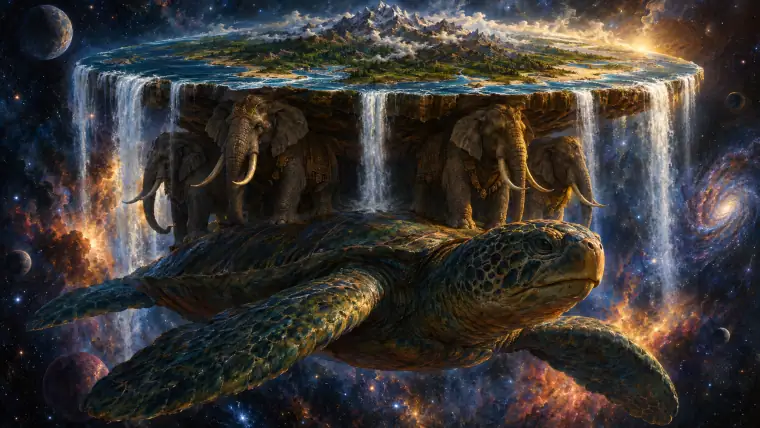
Terry Pratchett's Discworld transformed the field. The Colour of Magic (1983) began as an affectionate parody of Leiber, McCaffrey and fantasy clichés, set on a flat world riding on four elephants atop a giant turtle; over 41 novels to The Shepherd's Crown (2015), the series grew into sustained satire of policing, religion, journalism and prejudice. Pratchett was knighted in 2009.
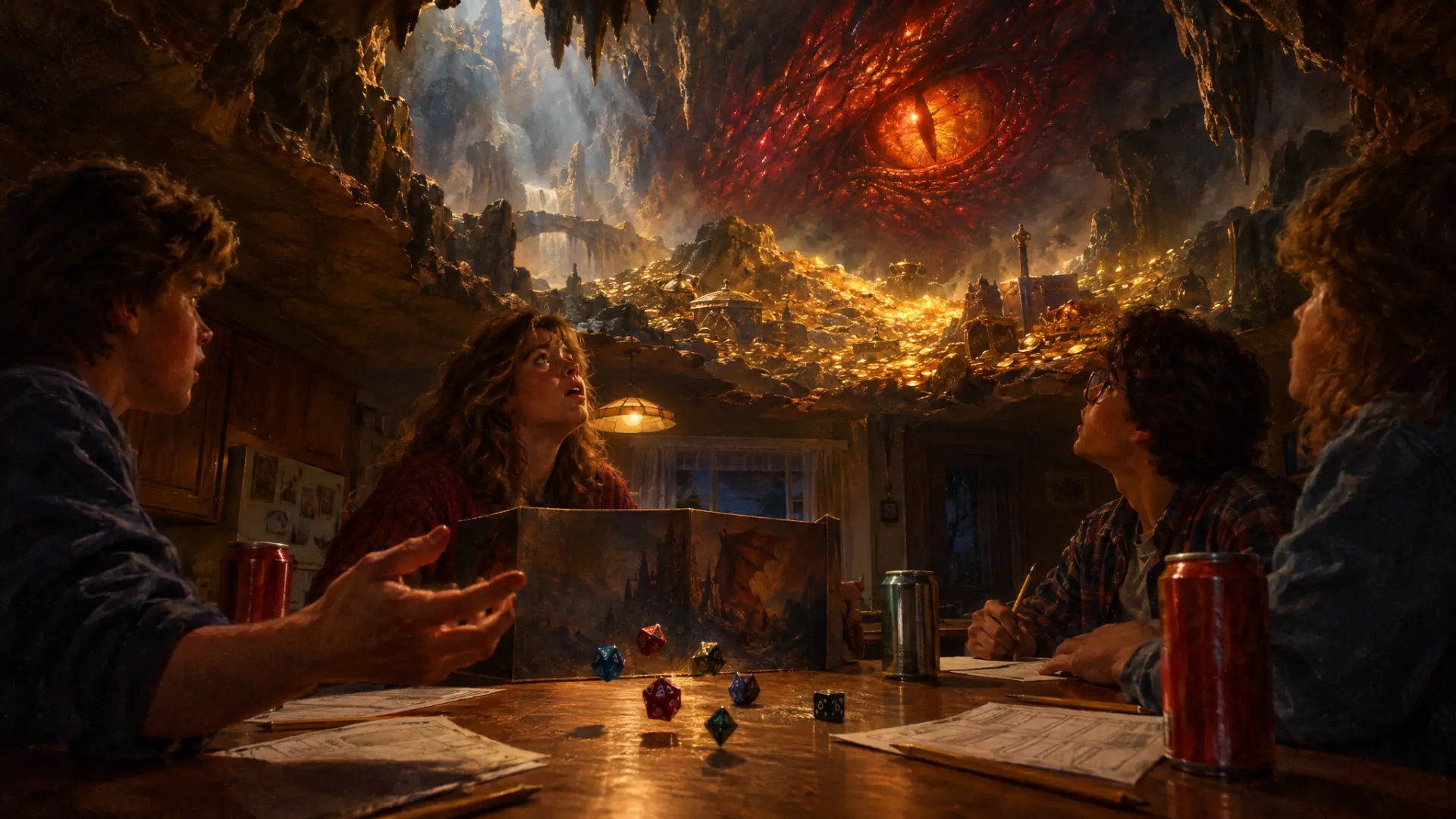
Gaming developed a comic tradition of its own, because tabletop play is so often funny. Jolly Blackburn's comic Knights of the Dinner Table (1990) and Rich Burlew's webcomic The Order of the Stick (2003) mined rules lawyers and Min-maxing; Steve Jackson Games' Munchkin (2001) made greed a card game. In the 2020s, Dungeons & Dragons: Honor Among Thieves brought D&D to cinemas as a comic caper, and Matt Dinniman's Dungeon Crawler Carl became a bestseller by crossing LitRPG & Progression Fantasy with satire.
Comic fantasy also proved remarkably portable. Perfect Entertainment's Discworld adventure game (1995) cast Eric Idle as the hapless wizard Rincewind, and Burlew's 2012 Kickstarter to reprint The Order of the Stick raised more than $1.2 million, a sign of how large the audience for gaming comedy had grown. On screen, Shrek (2001) made the fractured fairy tale a blockbuster franchise.
How to tell it apart
- Comic fantasy vs. fantasy with jokes: most fantasy has humor; comic fantasy is built so that humor is the governing aim. The Hobbit is funny; Discworld is comedy.
- vs. Fairy-Tale Fantasy: fractured fairy tales (Shrek, The Princess Bride) sit in both; the test is whether the tale is being mocked or re-enchanted.
- vs. Sword & Sorcery: Leiber proved S&S can be witty, but its jeopardy is real. Parodies like Pratchett's Cohen the Barbarian — an elderly Conan — are comic fantasy.
- vs. Cozy Fantasy: cozy fantasy is gentle and low-stakes; comic fantasy can be sharp, satirical and full of peril, played for laughs.
- vs. Children's & YA Fantasy: much comic fantasy began as children's reading (Nesbit, Carroll), but Pratchett, Cabell and Asprin wrote for adults, and satire is their business.
Where to start
- Discworld — try Guards! Guards! (1989) or Small Gods (1992) rather than book one.
- The Princess Bride — the novel, then the film.
- Harold Shea — collected as The Incomplete Enchanter (1941).
- Another Fine Myth (Robert Asprin, 1978) — a demon, an apprentice and a lot of puns.
- Dungeon Crawler Carl — gaming satire for the streaming age.
Marginalia
- F. Anstey's Vice Versa (1882), in which a father and son magically swap bodies, made him the first writer to specialize in comic fantasy.
- James Branch Cabell's satirical Jurgen (1919) was prosecuted for obscenity; the prosecution failed.
- In L. Sprague de Camp and Fletcher Pratt's Harold Shea stories (from 1940), a psychologist uses symbolic logic to project himself into myths — and misses, landing in Norse myth instead of Irish.
- Terry Pratchett's Discworld ran to 41 novels, from The Colour of Magic (1983) to The Shepherd's Crown (2015).
- Pratchett's first Discworld book affectionately parodied, among others, Fritz Leiber's Lankhmar and Anne McCaffrey's Pern.
- Steve Jackson Games' card game Munchkin (2001) turned the greed and rules-lawyering of dungeon crawls into a comedy of backstabbing.
Quick answers
- What is Comic Fantasy?
- Fantasy played for laughs — from Wonderland's nonsense and Harold Shea's botched spells to Discworld's turtle-borne satire, The Princess Bride and the rules-lawyering of gaming comedy.
- What are the hallmarks of Comic Fantasy?
- Humor as the primary intent, not a relief from the drama; Parody and pastiche of fantasy's own conventions and bestsellers; Magic with ridiculous side effects, bureaucracies and fine print; Puns, footnotes and knowing narrators; Satire of the real world smuggled in through an imaginary one; Protagonists who are cowards, clerks, incompetents or tourists.
- When did Comic Fantasy emerge?
- 1882 (F. Anstey's Vice Versa); the modern boom from 1983 (Discworld).
- What are the key works of Comic Fantasy?
- Discworld, The Princess Bride, Alice's Adventures in Wonderland, The Once and Future King, Dungeon Crawler Carl and Dungeons & Dragons: Honor Among Thieves.