Leiber named sword and sorcery, gave fantasy its definitive rogue and its first great thieves' guild, and shaped D&D's thief, its Nehwon pantheon and the urban-adventure setting.
Overview
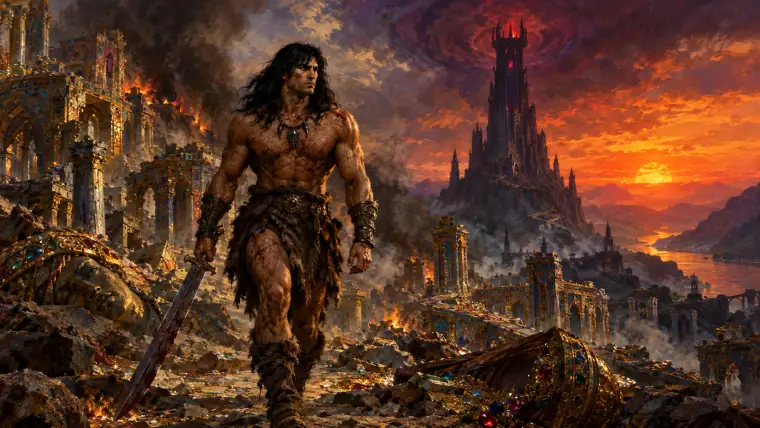
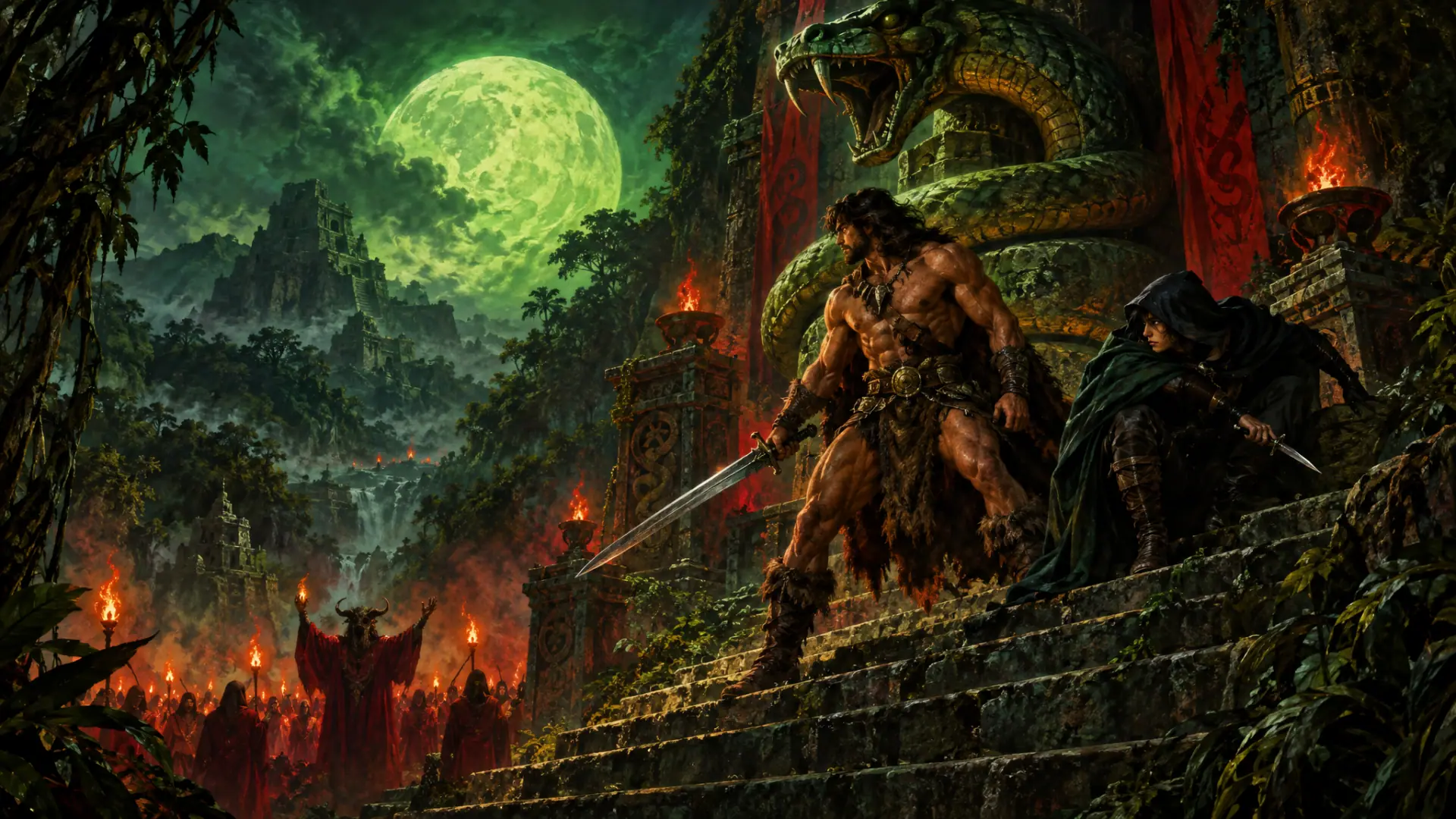
Fafhrd is a nearly seven-foot barbarian from the Cold Waste, with a longsword and a romantic streak. The Gray Mouser is small, quick, vain and cunning, a thief and one-time wizard's apprentice who fights with a rapier called Scalpel and a dagger called Cat's Claw. Together they are the best-loved partnership in fantasy: two friends who drink, gamble, steal, chase women, get cheated by their sorcerous patrons and blunder into cosmic trouble, mostly in and around the teeming city of Lankhmar on the world of Nehwon.
Fritz Leiber wrote their adventures for half a century, from 1939 to 1988. The stories are funnier, sadder and more literary than most of their pulp contemporaries, and their influence on fantasy — and above all on fantasy games — has been enormous.
Origins
The pair were born in correspondence. In 1934 Leiber's friend Harry Otto Fischer wrote him a letter introducing two adventurers and a city called Lankhmar; Leiber, the son of a Shakespearean actor, saw himself in the tall, bookish Fafhrd and his friend in the Mouser. The two young men developed the world together in letters and play. Leiber began writing the stories in the late 1930s, influenced by Robert E. Howard and by his correspondent H. P. Lovecraft, but deliberately making his heroes more human and fallible than Howard's Conan.
The first story to see print, "Two Sought Adventure", appeared in John W. Campbell's magazine Unknown in August 1939, and "Thieves' House" followed there in 1943. The series then went quiet for long stretches while Leiber wrote science fiction and horror, before a great revival in the 1960s. In 1961, in fanzine exchanges prompted by Michael Moorcock's call for a name for Howard-style fantasy, Leiber proposed "sword-and-sorcery", the name the genre has carried ever since.
The story
Ace Books gathered the stories from 1968 into a loosely chronological series: Swords and Deviltry, Swords Against Death, Swords in the Mist, Swords Against Wizardry, The Swords of Lankhmar, Swords and Ice Magic, and finally The Knight and Knave of Swords (1988). "Ill Met in Lankhmar" (1970), which tells how the heroes meet on the night they both rob the Thieves' Guild and lose the women they love to its sorcery, won the Hugo and Nebula awards for best novella.
The heroes serve two wizards who send them on dangerous errands: Ningauble of the Seven Eyes, Fafhrd's patron, and Sheelba of the Eyeless Face, the Mouser's. They face rat armies under Lankhmar, the petty and dangerous gods of Nehwon, and plenty of rivals. They age, lose, love and finally find something like settled lives on the icy island of Rime.
Reception & impact
Leiber became one of the most honored writers of his generation in science fiction and fantasy, and Fafhrd and the Mouser became the model for the comic, rogueish strain of Sword & Sorcery. The heroes' Lankhmar — a filthy, crowded, corrupt metropolis of guilds, cults and back-alley temples — made the city itself a fantasy adventure setting, and its organized Thieves' Guild became one of the genre's most imitated institutions. The shared-world anthology Thieves' World (1979) is set in exactly that kind of city.
Legacy
Leiber's imprint on Dungeons & Dragons is everywhere. He is on Gary Gygax's Appendix N list. TSR published the Lankhmar board game in 1976, reportedly adapted from a war game Leiber and Fischer had devised in the 1930s. The first printing of Deities & Demigods (1980) included the Nehwon mythos, which — unlike the Cthulhu and Melnibonéan sections — remained in later printings, and TSR later produced Lankhmar: City of Adventure (1985) for AD&D.
The thief Character class is often traced to the Mouser, but the record is more tangled. The idea came to Gygax by phone from Gary Switzer, whose gaming group had developed it; Gygax published a prototype in May 1974 and the class entered the rules in the 1975 Greyhawk supplement. Gygax later stressed the influence of Vance's Cugel and Zelazny's Shadowjack (Jack of Shadows) on the class. Still, the thief who picks locks, climbs walls and belongs to a guild comes straight out of Lankhmar's streets — and so does the thieves' guild quest line that became a fixture of computer RPGs, from the Shadow Thieves of Baldur's Gate II to the Thieves Guild of The Elder Scrolls.
Marginalia
- Leiber's friend Harry Otto Fischer invented the pair and named the city of Lankhmar in a 1934 letter.
- The first published story, 'Two Sought Adventure', appeared in the magazine Unknown in August 1939.
- 'Ill Met in Lankhmar' (1970), the story of how the heroes meet, won both the Hugo and Nebula awards for best novella.
- In 1961 Leiber proposed the name 'sword-and-sorcery' for the genre Robert E. Howard had begun.
- The Nehwon gods appeared in the first printing of AD&D's Deities & Demigods (1980) and stayed in when the Cthulhu and Melnibonéan mythoi were dropped.
- Gygax credited Jack Vance's Cugel and Roger Zelazny's Shadowjack, not only the Mouser, as models for D&D's thief.
Quick answers
- When was Fafhrd and the Gray Mouser first published?
- Fafhrd and the Gray Mouser was first published in 1939–1988.
- Who created Fafhrd and the Gray Mouser?
- Fafhrd and the Gray Mouser was made by Fritz Leiber (author).
- Who published or developed Fafhrd and the Gray Mouser?
- Ace Books.
- What kind of work is Fafhrd and the Gray Mouser?
- Fafhrd and the Gray Mouser is a book series in the Sword & Sorcery, Comic Fantasy and Dark Fantasy tradition.
- Why is Fafhrd and the Gray Mouser important?
- Leiber named sword and sorcery, gave fantasy its definitive rogue and its first great thieves' guild, and shaped D&D's thief, its Nehwon pantheon and the urban-adventure setting.