Ariosto invented the hippogriff, made the paladins of Charlemagne a byword for chivalric heroes, and perfected the interlaced multi-hero adventure — the Matter of France that reached D&D's paladin via Spenser and Poul Anderson.
Overview
Orlando Furioso ("Orlando Gone Mad") is a Renaissance epic that behaves like a modern fantasy series: dozens of heroes, a war between empires, sorcerers' castles, flying mounts, enchanted weapons, and a narrator who cuts away from one cliffhanger to another with a wink. Its nominal subject is the war between Charlemagne's Christian knights and the Saracen armies besieging Paris. Its real subjects are love, desire and folly — above all the madness of Orlando, the greatest of Charlemagne's paladins, who loses his reason for the pagan princess Angelica.
Ludovico Ariosto wrote in ottava rima, and the finished poem runs to 46 cantos and 38,736 lines — one of the longest poems in European literature, and for three centuries one of the most widely read.
Origins
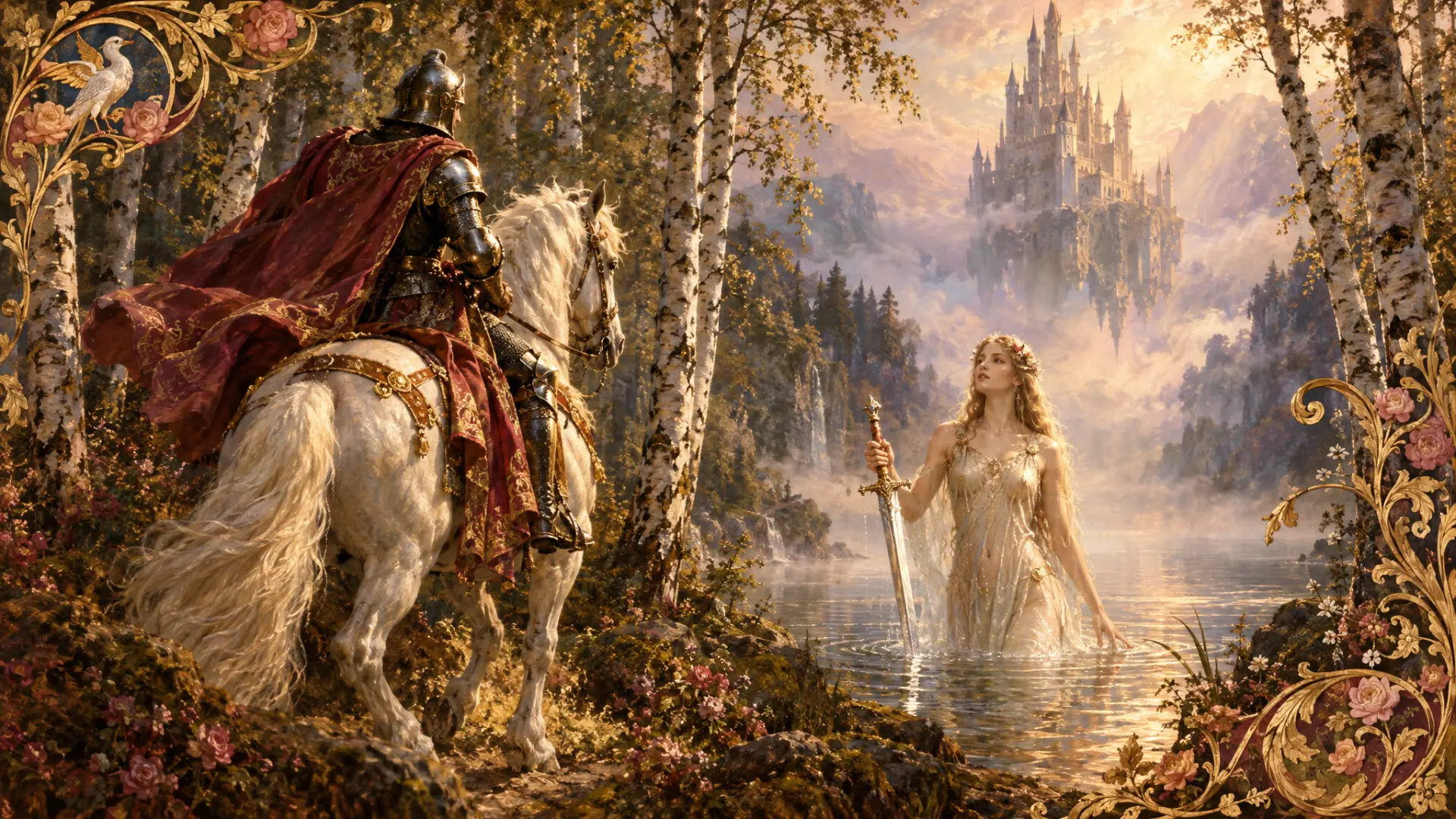
Ariosto served the Este family, rulers of Ferrara, and wrote the poem as a continuation of Matteo Maria Boiardo's Orlando innamorato ("Orlando in Love"), left unfinished at Boiardo's death in 1494. Both poems draw on the Matter of France, the medieval cycle of songs and romances about Charlemagne and his twelve peers or "paladins", whose most famous episode is the Song of Roland — Orlando is the Italian Roland. Ariosto blended that heroic tradition with the magic and love-intrigue of Arthurian romance.
He worked on the poem from about 1506, published a 40-canto first edition in 1516, revised it in 1521, and issued the final 46-canto version in 1532, the year before his death. Flattering his patrons, he made the lovers Ruggiero and Bradamante the legendary ancestors of the house of Este.
The story
The plots interlace. Angelica flees across Europe pursued by suitors, protected by a magic ring that makes the wearer invisible when held in the mouth. Orlando, finding carved proof that she has married a humble Saracen soldier, goes berserk — tearing off his armor, uprooting trees and rampaging across France and Africa. The English knight Astolfo, riding the hippogriff, reaches the Earthly Paradise and then travels by Elijah's chariot to the Moon, where everything lost on Earth is kept; he returns with Orlando's wits in a flask.
Meanwhile the Saracen knight Ruggiero and the Christian woman knight Bradamante move toward a destined marriage, thwarted by the wizard Atlante's illusory palace, the enchantress Alcina's island (where discarded lovers are turned into trees and rocks), and a sea monster — an "orca" — from which Ruggiero rescues a chained Angelica using a dazzling magic shield. The poem ends with Ruggiero's conversion, his marriage to Bradamante, and his victory in single combat over the Saracen champion Rodomonte.
Reception & impact
The Furioso was a Renaissance bestseller and a touchstone across Europe. Sir John Harington's English translation appeared in 1591, a year after Edmund Spenser published the first books of The Faerie Queene, which openly competes with Ariosto — Spenser's woman knight Britomart is modeled on Bradamante. Cervantes has Don Quixote's library feature the poem and has him contemplate imitating Orlando's madness; Handel (Orlando, Alcina, Ariodante) and Vivaldi made operas from it; Gustave Doré illustrated it in 1879.
Legacy
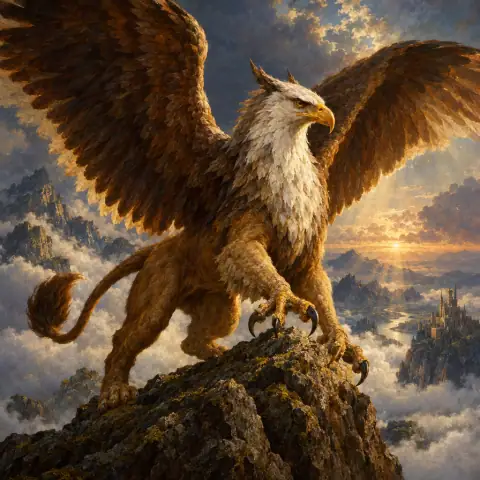
The hippogriff is Ariosto's creation: an impossible cross of a Griffin and a mare, faster than any horse and able to fly to the ends of the world. From his poem it flew into English fantasy — E. R. Eddison's The Worm Ouroboros (1922) turns a hippogriff's egg into a quest object — and then into games: the original Dungeons & Dragons (1974) lists it among its monsters. J. K. Rowling's Buckbeak brought it to a new generation.
Ariosto also helped make "paladin" the word for a champion of chivalry. That Matter of France thread ran to Poul Anderson's Three Hearts and Three Lions (1953; expanded 1961), whose hero turns out to be Holger Danske, the paladin Ogier the Dane — a novel credited as an inspiration for the holy-warrior paladin Character class added to D&D in its 1975 Greyhawk supplement. The Ballantine Adult Fantasy line issued the first (and only) volume of Richard Hodgens's planned English version, The Ring of Angelica, in 1973, and Type-Moon's Fate/Apocrypha made the cheerful Astolfo a summoned hero, his hippogriff in tow.
Perhaps the deepest inheritance is formal. Ariosto's interlaced storytelling — many heroes pursuing separate quests, stories breaking off at their peaks, a large cast converging on a final battle — is the architecture of the multi-viewpoint epic fantasy series and of the party-based adventure in which each character has a thread of their own.
Marginalia
- The hippogriff — half eagle, half horse — is Ariosto's invention; the original 1974 D&D rules list it among their monsters.
- Knight Astolfo flies the hippogriff to the Earthly Paradise, then rides Elijah's chariot to the Moon, where everything lost on Earth is kept — including Orlando's wits, stored in a flask.
- Angelica's magic ring makes its wearer invisible when held in the mouth.
- Ruggiero rescues Angelica from a sea monster Ariosto calls an 'orca'.
- The woman knight Bradamante is one of the poem's true heroes, and the model for Spenser's Britomart.
- Ariosto spent sixteen years revising the poem, growing it from 40 cantos in 1516 to 46 in 1532.
Quick answers
- When was Orlando Furioso first published?
- Orlando Furioso was first published in 1516 (40 cantos); final edition 1532 (46 cantos).
- What kind of work is Orlando Furioso?
- Orlando Furioso is an epic poem in the Myth & Epic and High / Epic Fantasy tradition.
- Why is Orlando Furioso important?
- Ariosto invented the hippogriff, made the paladins of Charlemagne a byword for chivalric heroes, and perfected the interlaced multi-hero adventure — the Matter of France that reached D&D's paladin via Spenser and Poul Anderson.